

Art and Corn and The Corndog
The Corn Dog Standard
By Gary Gardiner, The Westerville News
My two reasons for going to the Westerville Music & Arts Festival are to discover a new artist and eat a corn dog. The two have more in common than I once realized.
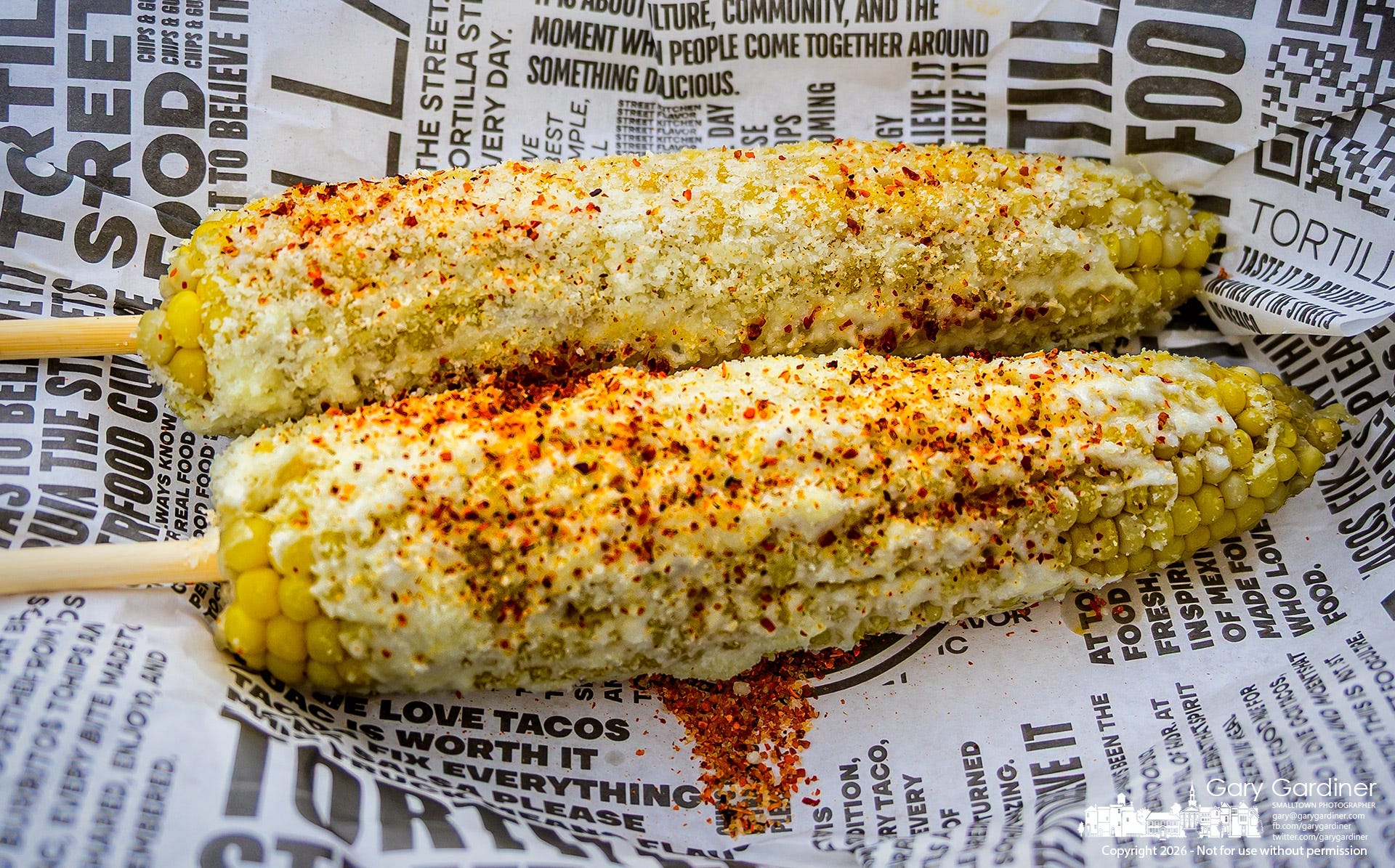
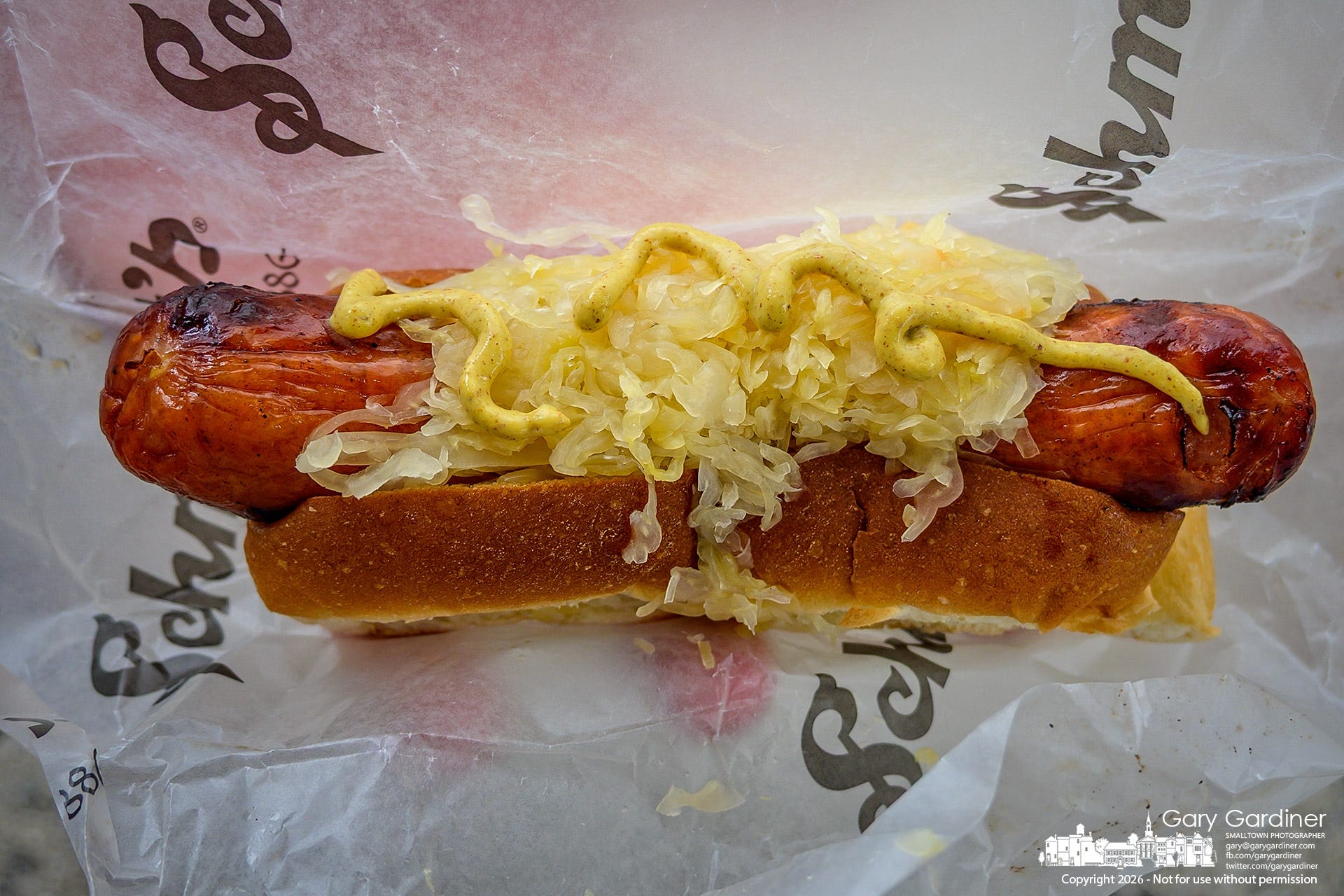
The closest I came to a corn dog this year was Mexican street corn and a Bahama Mama from Schmidt’s. Both satisfied, but neither delivered the particular joy of wrestling with gravity, a hot, oily crust and the constant threat of mustard or ketchup landing on my shirt or shoes.
Corn dogs belong to carnivals and county fairs, where food is expected to be portable, excessive and a little ridiculous. At heart, a corn dog is only a sausage covered in sweet cornmeal batter and fried in oil. Neither part is remarkable on its own. Put them together, however, and something familiar is transformed beyond expectation.
That may be a useful standard for approaching art at a local festival. I want to recognize the material, subject or technique, then see an artist take it somewhere I did not expect. A bowl can remain a bowl, jewelry can remain jewelry, and a photograph can record a familiar place. But the best work asks us to see each of them differently.
More than 20 years ago, I attended the festival with that expectation. Some of the pieces I bought still hang on my walls because they continue to reward another look. They became more than purchases. They became reminders of moments when artists changed the way I saw something.
The festival has changed, as festivals and communities inevitably do. It has become a broad summer gathering with music, food, family activities and rows of artists and craftspeople. Much of the work is attractive, skillfully made and useful. It deserves an audience, and the festival provides one. It also gives neighbors a place to gather, hear local performers and spend time together.
There is value in all of that. Still, I miss the expectation that somewhere among the tents I might encounter work unlike anything I had seen before.
That does not require dismissing craft. Craft is where much art begins. Woodworkers learn how grain responds to a blade. Jewelers learn the limits of metal and stone. Potters learn how clay behaves beneath their hands and inside a kiln. Technical skill gives artists the means to express an idea, but skill alone is not always the final destination.
The distinction is not simply between art and craft. It is between the expected and the transformed.
Westerville is not alone in finding that transformation difficult to sustain. Local arts festivals are now expected to serve as exhibitions, craft markets, family outings, tourist attractions and promotions for nearby businesses.
No recent national study shows that arts festivals everywhere have shifted from original art toward more commercial craft. Newer research does, however, document pressures that can produce such a shift.
A 2024 Drexel University study based on interviews with nine regional festival artists found that lower-priced pieces and reproductions were often necessary for dependable sales, while large original works sold much less frequently. Sculpture and other media that are difficult to reproduce faced an additional disadvantage.
The artists also described the financial risk of booth fees, hotels, transportation, materials and unpredictable weather. Participating successfully required not only artistic ability but also retail, marketing and business skills. The study was small and concentrated primarily in the Northeast, so it cannot describe every festival. But it helps explain why portable, affordable and repeatable work can come to dominate a booth.
Organizers face their own pressures. Americans for the Arts estimated that nonprofit arts and cultural organizations and their audiences generated $151.7 billion in economic activity in 2022, including $78.4 billion in spending by people attending events.
Those figures show the value of cultural activity. They also help explain why municipalities, sponsors and organizers increasingly judge festivals by attendance, tourism, visitor spending and benefits to nearby businesses. Artistic quality remains important, but it must compete with a growing list of civic and economic expectations.
The audience has changed as well. The National Endowment for the Arts found that the share of American adults attending a craft fair or visual arts festival fell from 23.8 percent in 2017 to 17.1 percent in 2022. The pandemic affected the later survey period, so the decline cannot be attributed entirely to festival programming or public interest. Even so, the figures show the difficult environment in which festivals are trying to attract visitors and remain financially sustainable.
These pressures do not mean that art has disappeared. They change the balance.
Original painting, sculpture and less commercial work must compete with jewelry, clothing, prints, functional pottery and decorative objects that can appeal quickly to a passing crowd. Fine craft can be imaginative and profound. But a festival organized around dependable sales offers a different experience from one organized around discovery.
Artists who make large, unfamiliar or less commercially predictable work take the greatest risks. Emerging artists may face the same expenses as established exhibitors without an existing customer base to support them. Lower booth fees and programs specifically for new artists, as the Drexel research suggests, could make experimentation more feasible.
That does not make the Westerville Music & Arts Festival less important. It makes it more important.
At a time when festivals and arts organizations are working harder to attract audiences, a community festival may be the most direct encounter many visitors have with original art. They may arrive for music, lunch or an afternoon with their children, but the festival can place serious creative work in their path.
I watched another Ohio institution broaden its appeal without surrendering the reason it existed. I photographed the Ohio State Fair from 1982 until 2004, years in which it added concerts, commercial displays and attractions for visitors with little connection to farming. Yet livestock, 4-H competitors, barns and agricultural exhibitions remained central to the experience.
Someone could arrive for a concert, a carnival ride or a corn dog and encounter agriculture along the way. The fair expanded its audience while continuing to explain why it existed.
The Westerville Music & Arts Festival faces a similar challenge. Food, music and family activities are not necessarily distractions. They may be the reason someone comes and then discovers an artist. The question is whether discovery remains central enough to give the event its identity.
Expectation changes an event. When visitors expect ambitious work, artists have a reason to bring it. Organizers have a reason to select it. Sponsors have a reason to support it. Children grow up understanding that art is not an ornament added to community life, but part of how a community sees and expresses itself.
Westerville has the audience for such work. The festival can give emerging artists room to experiment, encourage returning artists to show how their work has grown, and make selections based not only on craftsmanship and saleability but also on originality, risk and the ability to make a viewer pause.
None of that requires turning the festival into a solemn gallery. Art can be playful, useful, decorative and fun. It can share a park with children, music, food trucks and oversized cups of lemonade.
It can even coexist with a corn dog.
In fact, the corn dog may be the proper standard. It begins with something ordinary, changes its form, ignores restraint and becomes inseparable from the occasion. It is familiar enough to recognize and unusual enough to anticipate all year.
That is what I hope to find in the art: familiar materials transformed by imagination, familiar subjects reconsidered through another person’s experience, and craft elevated into something that inspires awe.
The Westerville Music & Arts Festival already gives the community a place to gather. Its greater opportunity is to make artistic discovery as memorable as the music, the summer heat and the food.
And next year, perhaps, the corn dog.

Because this post is public, you’re encouraged to share it on social media.
The Westerville News is a reader-supported publication by Gary Gardiner, a lifelong journalist who believes hyper-local reporting is the future of news. This publication focuses exclusively on Westerville—its local news, its influence on Central Ohio, and how surrounding areas shape the community.
Reader funding, including subscribers, protects editorial independence, so coverage is guided by journalists rather than owners or corporate profit goals. It also reduces pressure to chase clicks, letting the newsroom focus on stories worth readers’ time. And it helps keep the site accessible to everyone, including people who can’t pay or live in places where a free press is under threat.
Explore more hyper-local reporting by subscribing to The Hilliard Beacon, Civic Capacity, Marysville Matters, The Ohio Roundtable, Shelby News Reporter, This Week in Toledo, and Into the Morning by Krista Steele.
