

Becoming A Journalist At the Westerville History Museum
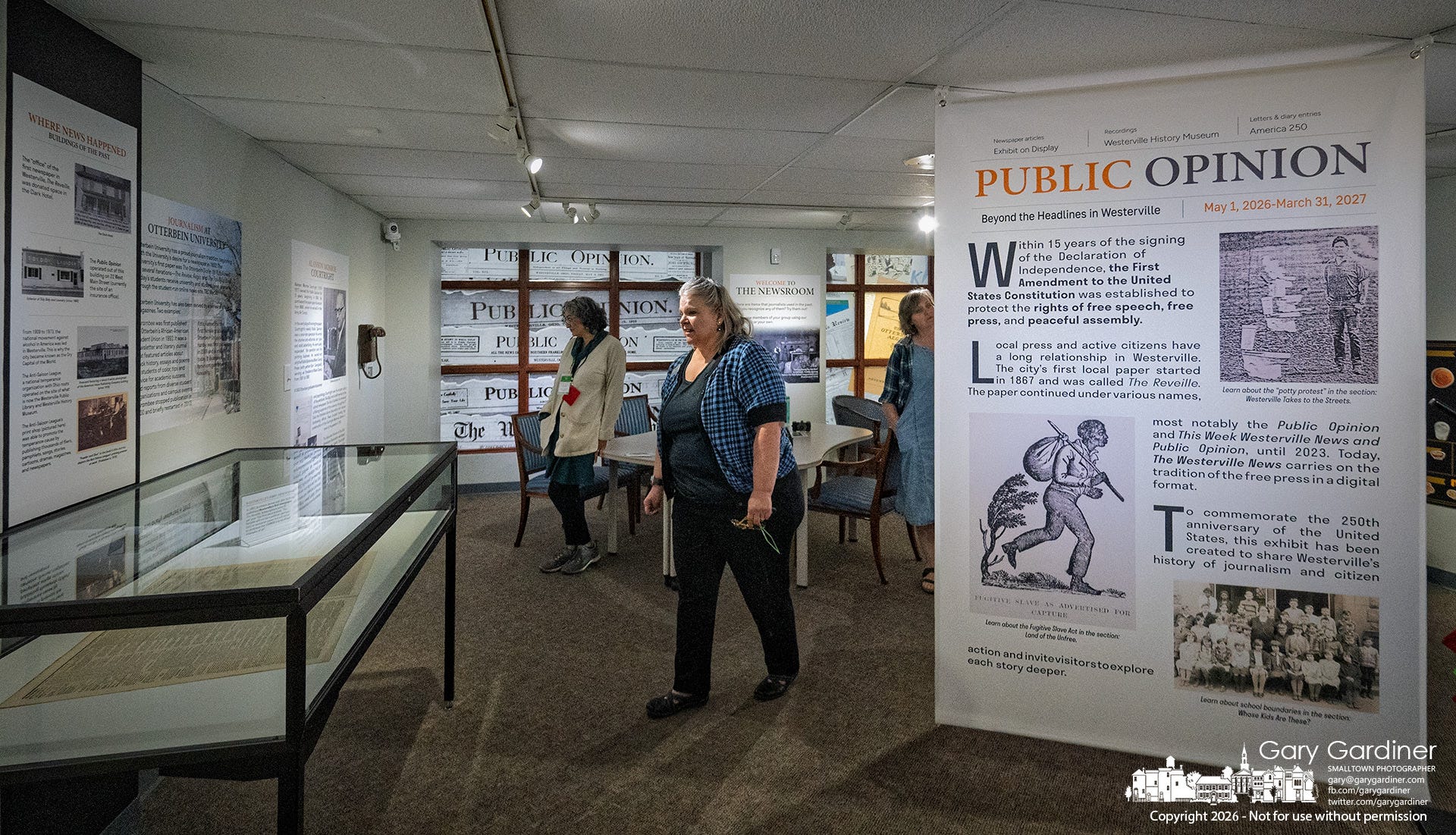
In an age of endless headlines, partisan news feeds, and information overload, the Westerville History Museum is asking visitors to slow down, pick up the tools of a journalist, and start asking their own questions.
That is the idea behind “Public Opinion: Beyond the Headlines in Westerville,” a new exhibit opening May 1 that gives visitors five stories from the city’s past to investigate, each with the power to complicate what they thought they knew about Westerville, the free press, and public debate.
The exhibit, curated by the Westerville History Museum, will be open through March 31, 2027. It was created to coincide with the 250th anniversary of the United States and uses that national milestone to explore one of the foundations of American democracy: the First Amendment protection of free speech, free press, and peaceful assembly.
But this is not an exhibit built only for reading.
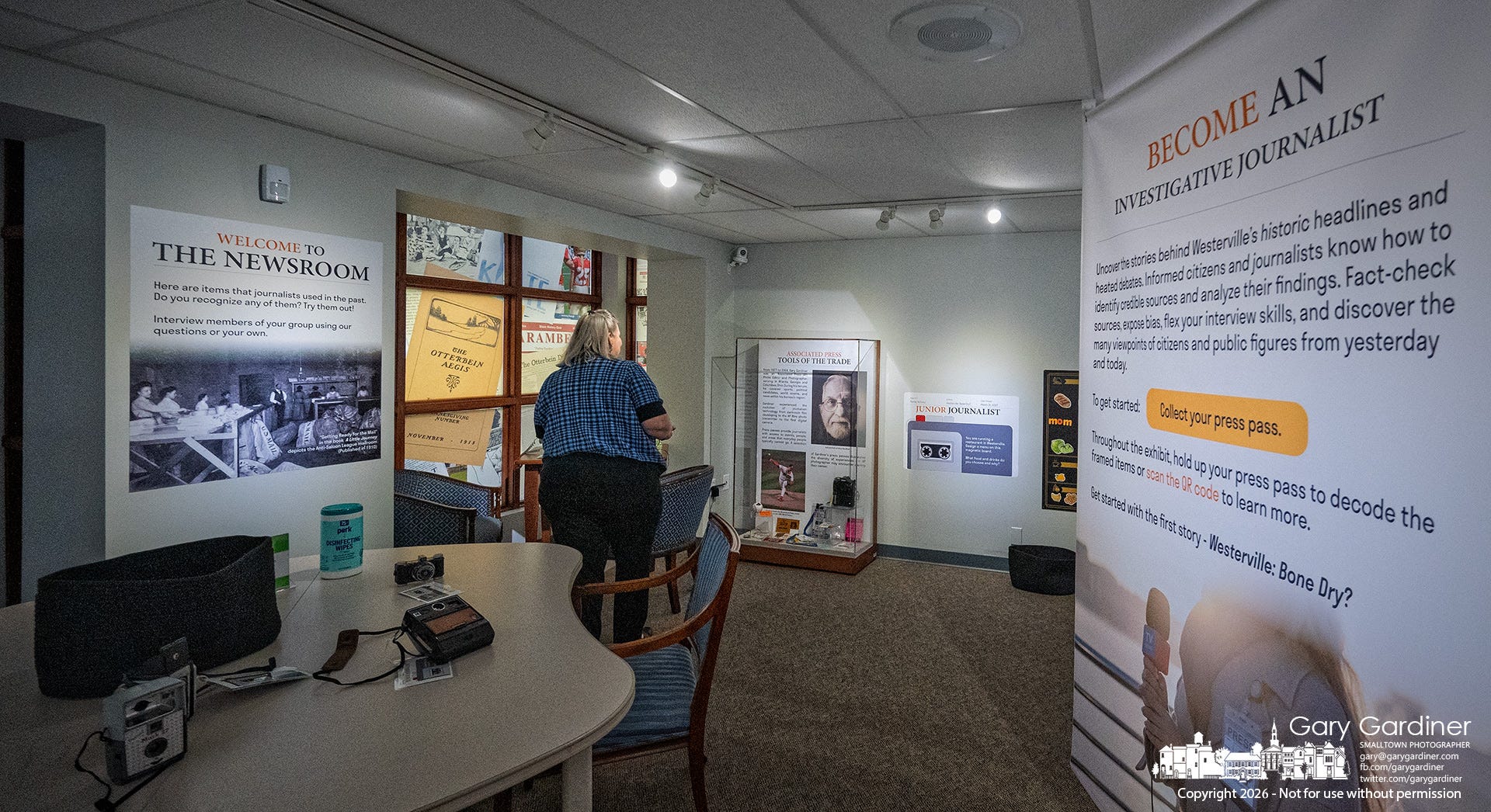
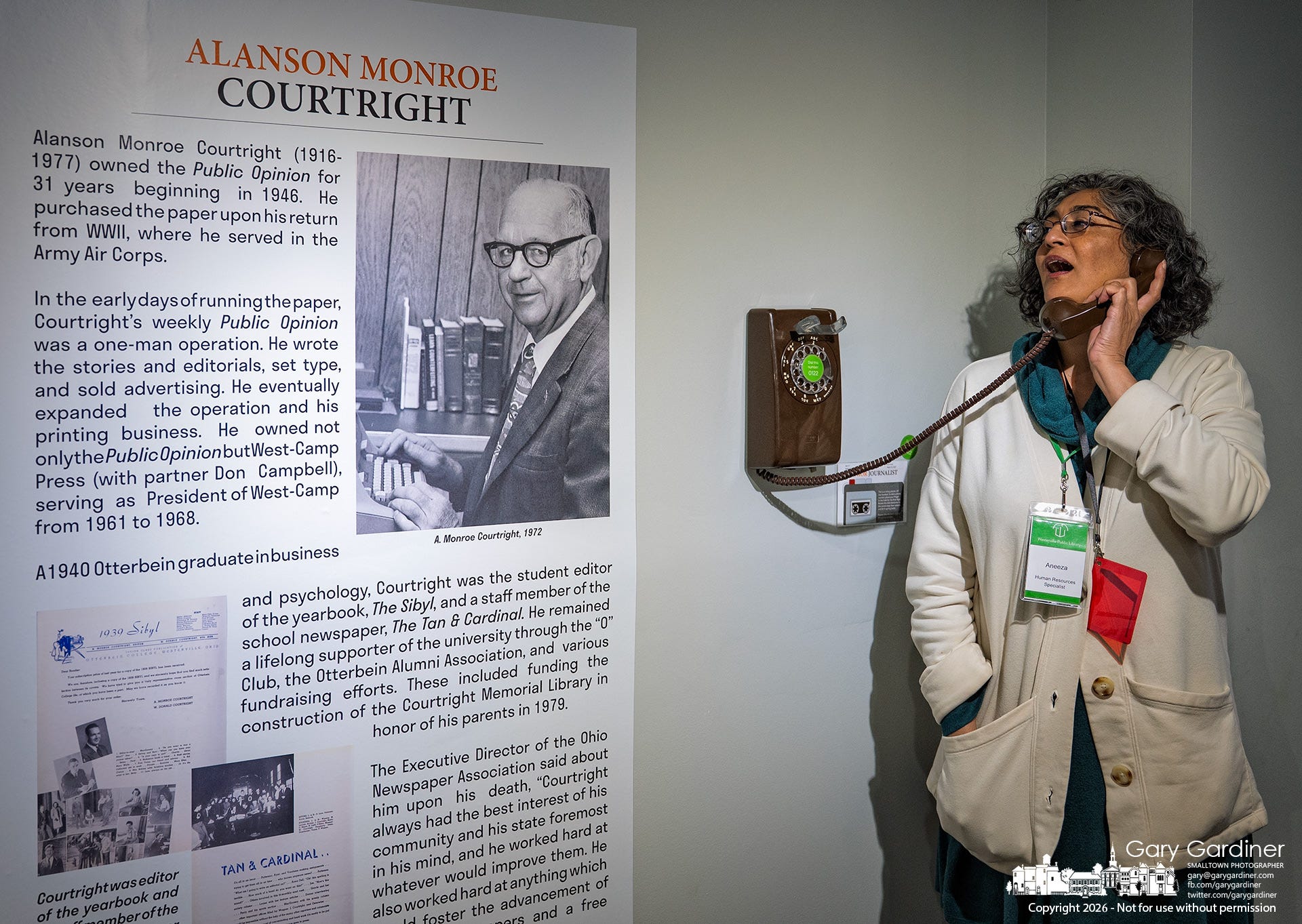
On one wall, visitors are invited to “Become an Investigative Journalist.” Nearby are press passes, vintage newsroom tools, old cameras, rotary phones and displays that turn the gallery into a working space for questions. Visitors can collect a press pass or use QR codes as they move through the exhibit, gathering clues and testing the stories in front of them.
The assignment begins inside a temporary newsroom. The goal is to look beyond the first version of a story, ask what evidence supports it, and consider whose voices may have been missing when the story was first told.
Jackie Barton, manager of the Westerville History Museum, said the exhibit began with a simple connection: America 250, democracy, and the free press.
“Free press is an integral part of representative democracy and being able to function,” Barton said in an interview about the exhibit. Westerville, she said, has had a long tradition of local journalism and an engaged public life.
That history gave the museum its subject. The present gave it its method.
Barton said the exhibit also responds to how people consume information today, with news, opinion, and commentary arriving constantly from sources they often choose themselves.
“We have all this information coming in all the time from all these places,” she said. “People are self-selecting exactly what they want to know or want to hear.”
The museum’s answer is to let history become the instructor. Instead of simply presenting five Westerville stories as settled facts, the exhibit asks visitors to work through them as journalists might: checking sources, recognizing bias, asking follow-up questions, and looking for perspectives that may not have appeared in the public record.
The five stories begin with questions.
Was Westerville really “Bone Dry?” After Prohibition, a national article claimed the city was filled with speakeasies. Visitors are asked to investigate whether that image of Westerville was true, exaggerated, or shaped by the reputation of a town long associated with temperance.
In “Land of the Unfree,” the exhibit looks at Westerville’s connection to the Underground Railroad. The story asks whether reaching Westerville meant reaching freedom, or whether the Fugitive Slave Act meant freedom was still farther north, across the Canadian border.
In “The War of the Words,” visitors examine a 1957 debate over minstrel shows. Newspaper coverage showed public criticism of a minister who objected to the performances, but the exhibit asks what other voices existed beyond newspaper columns, including those who privately supported his stand or expressed it within Black churches.
In “Whose Kids Are These? Westerville School District Boundaries,” the exhibit explores arguments over whether Columbus students were being unfairly denied access to Westerville schools. Visitors are asked to look past the headlines and consider the history of the boundaries themselves.
And in “Westerville Takes to the Streets,” the exhibit studies protests in Westerville over time. The question there is not only how people protested, but what they were trying to change. Barton said journalists often focus on protest methods rather than the message behind them, and the exhibit asks visitors to consider both.
Together, the stories show how public opinion forms, hardens, and sometimes changes. They also show how easily a headline can become the version of events people remember, even when the fuller record is more complicated.
Barton said the point is not to teach people to distrust everything. It is to help them become more thoughtful readers, listeners, and citizens.
The exhibit includes a section on media bias, featuring a media bias chart from AllSides, and asks visitors to reflect on where their own news sources fall. The idea is not to tell visitors what to think, but to remind them that every source has limits, every story has a frame and every reader has a responsibility.
“This isn’t saying you never believe anything, no matter who’s saying it or how many people are saying it,” Barton said. “It’s more just being aware that bias exists.”
The exhibit also carries a content note. Some materials address racial tensions and include records that reflect the language and attitudes of the periods in which they were created. The exhibit also includes historical topics related to alcohol.
For Barton, the connection between history and media literacy is natural. In the history field, she said, it is often called historical thinking. In public life, it may be called media literacy or good citizenship.
But the habit is the same: read carefully, ask questions, and do not stop at the headline.
“Public Opinion: Beyond the Headlines in Westerville” opens May 1 at the Westerville History Museum and continues through March 31, 2027.

This message from THE REVEILLE, Westerville’s first newspaper on display at “Public Opinion: Beyond the Headlines in Westerville.”
LOCAL ITEMS. In order to make any local paper interesting and valuable to the subscriber, so far as the local department is concerned, it is absolutely necessary to pay thorough attention to the gathering of all interesting items, events, incidents and accidents occurring in localities where the paper is taken, making it replete with home intelligence. To do this well, we would request our friends to communicate, verbally or by writing, such items of interest that may come under their observation. Ministers and others will oblige us by furnishing marriage notices, deaths, &c.
We are determined to make THE REVEILLE an indispensable in every household by paying strict observance to those things that will please, instruct and interest; by giving news from all parts of the county, Columbus and Westerville especially; and filling each department with the choicest variety of reading.
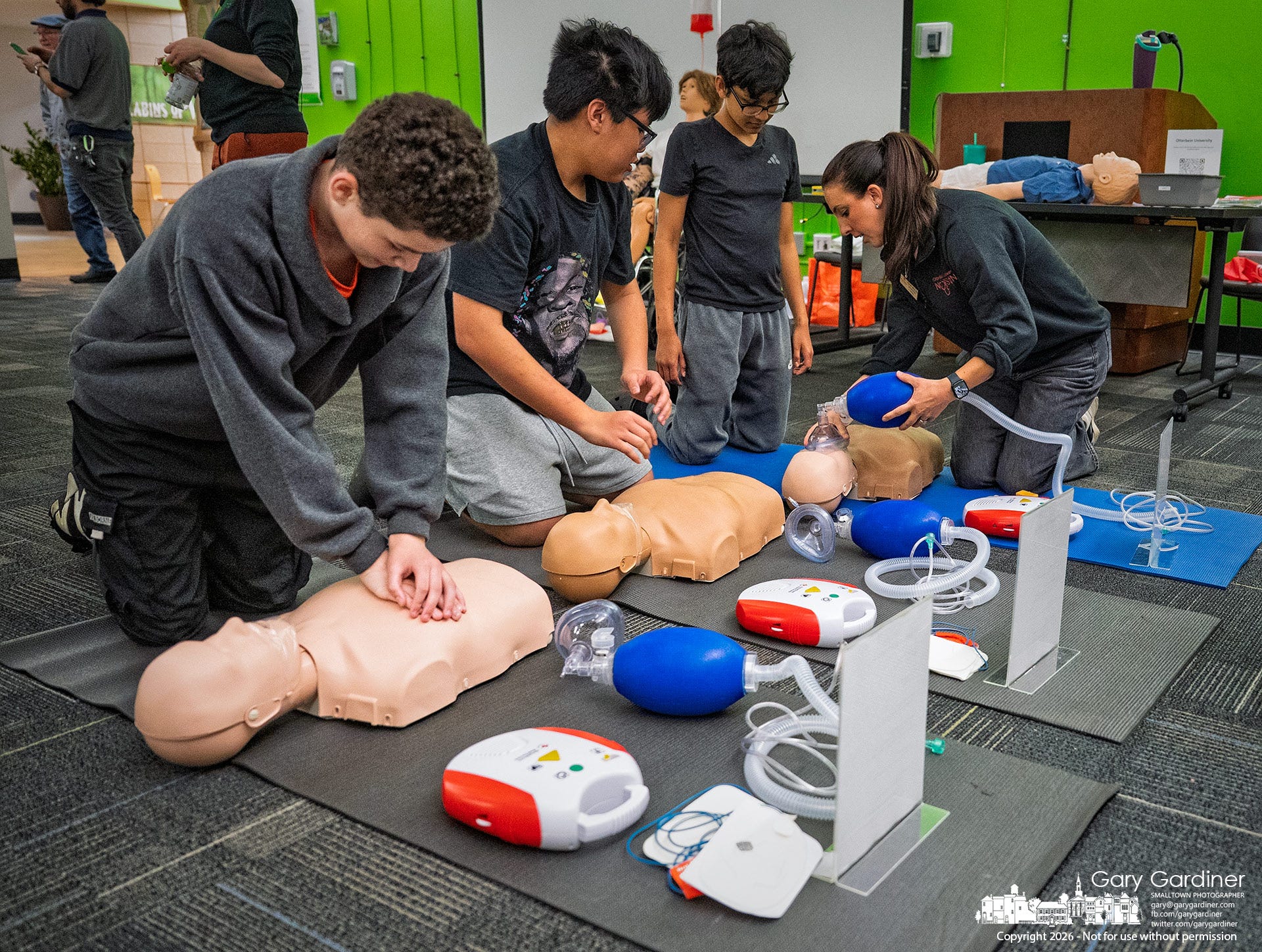
Students practice CPR and emergency airway procedures on training mannequins during the COSI Science Festival biomedical engineering program at the Westerville Public Library. (My Final Photo for April 29, 2026, by Gary Gardiner)
Because this post is public, you’re encouraged to share it on social media.

The Westerville News is a reader-supported publication by Gary Gardiner, a lifelong journalist who believes hyper-local reporting is the future of news. This publication focuses exclusively on Westerville—its local news, influence on Central Ohio, and how surrounding areas shape the community.
Reader funding, including subscribers, protects editorial independence, so coverage is guided by journalists rather than owners or corporate profit goals. It also reduces pressure to chase clicks, letting the newsroom focus on stories worth readers’ time. And it helps keep the site accessible to everyone, including people who can’t pay or live in places where a free press is under threat.
Explore more hyper-local reporting by subscribing to The Hilliard Beacon, Civic Capacity, Marysville Matters, The Ohio Roundtable, Shelby News Reporter, This Week in Toledo, and Into the Morning by Krista Steele.
