

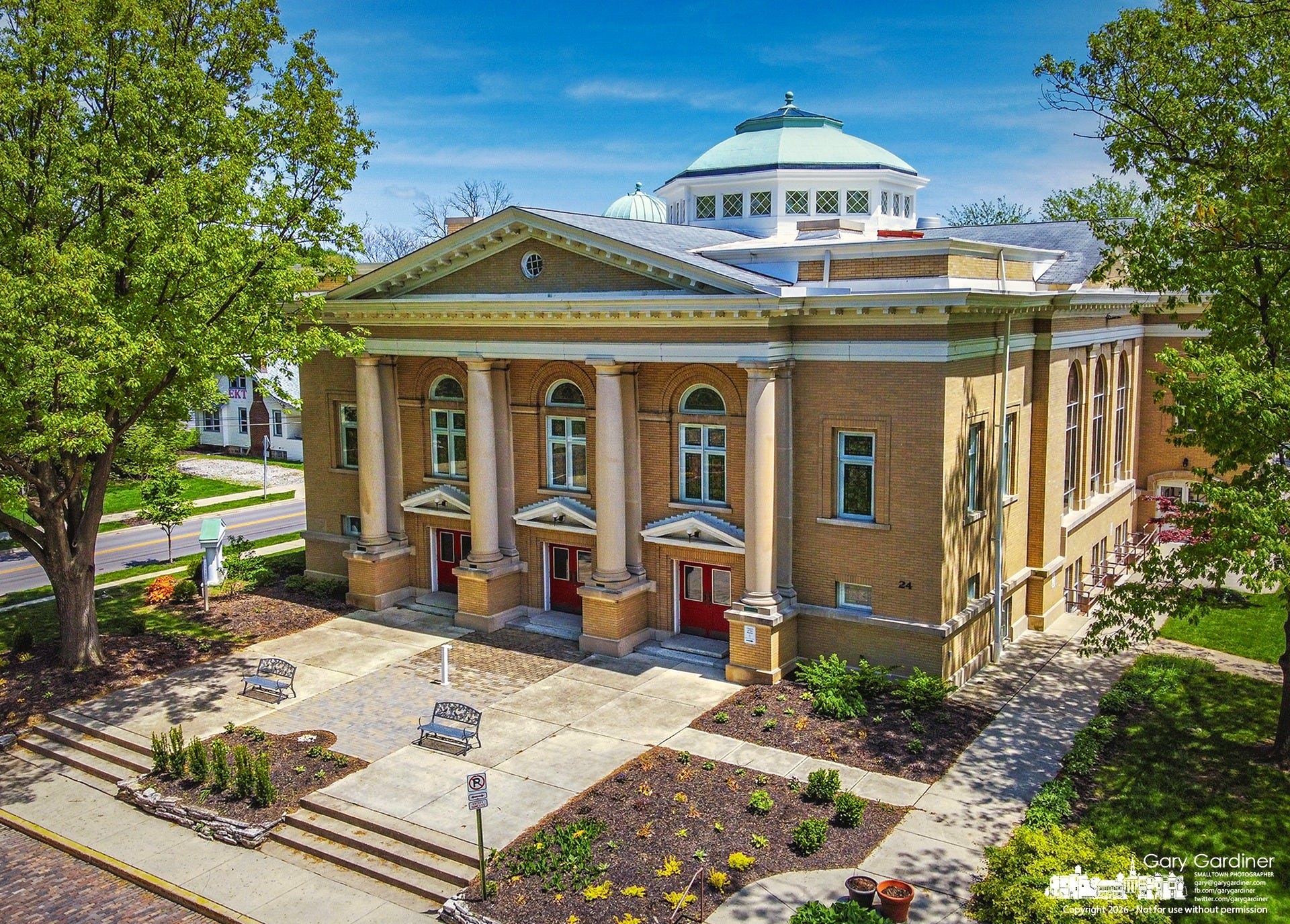
Church of the Master has stood at the corner of Grove and Main streets in Westerville since 1916, its colonnaded entrance facing Otterbein University, where the congregation’s history began 175 years ago.
Founded in 1851 as Otterbein Station, the congregation grew alongside the university and the community that developed around it. Its members became involved in education, abolitionism, temperance, and charitable work, helping shape chapters of Westerville’s history that extended far beyond the church.
Now, as Church of the Master celebrates its 175th anniversary, the congregation is reflecting on that history while continuing its relationship with Otterbein and the broader community through campus ministry, outreach and service.
The celebration will culminate Sunday, Sept. 27, with a Celebration Day Festival and a visit from Bishop Hee Soo Jung.
For Beth Strobel, who joined the congregation after moving to Westerville two years ago, the anniversary is an opportunity to reflect on how the church’s history continues to influence the lives of its members.
Strobel and her husband had retired when their daughter accepted a position at Otterbein, making central Ohio an appealing place to settle. As United Methodists, they visited Church of the Master to see whether it might become their new church home.
They quickly found what they were looking for.
“We went to Church of the Master, we are United Methodist, and went there to just check it out, and instantly felt so welcomed and that it would be a place where we could feel at home and serve the community,” Strobel said.
Today, she serves on the church’s anniversary committee and participates in its campus ministry team, continuing a relationship between the congregation and Otterbein that dates to the university’s earliest years.
The relationship between Church of the Master and Otterbein University began before the congregation itself was established.
In the mid-1840s, United Brethren ministers Lewis Davis and William Hanby promoted establishing a university in Ohio. Their efforts led to the purchase of a former Methodist seminary in Westerville, where Otterbein opened in 1847.
Four years later, five founding members established Otterbein Station, providing the growing university community with a United Brethren congregation.
Among those founding members were Davis and his wife, Rebecca; Daniel Bonebrake; Professor John Haywood; and Mary Jane Price.
Davis, who served twice as Otterbein’s president, became the congregation’s first minister. For years, the relationship between the two institutions was so close that the university found the church’s pastor, often assigning a professor to the task without additional pay.
The congregation belonged to the Church of the United Brethren in Christ, a denomination whose origins trace to an encounter between German Reformed minister Philip William Otterbein and Mennonite preacher Martin Boehm.
Boehm’s preaching at a religious gathering in Pennsylvania in 1767 moved Otterbein to embrace the minister after the sermon and proclaim to those assembled, “Wir sind Brüder!” or “We are brethren!”
The declaration inspired the denomination’s name, a religious tradition that would eventually find a home in Westerville.
The congregation’s earliest worship services were held in university facilities, beginning in a building known as White Chapel before moving to the Main Building, a large, church-like structure that stood at the southwest corner of Main and Grove streets.
Following a fire that destroyed the original Main Building in 1871, the congregation moved its services into the chapel of what is now Towers Hall.
For the next 45 years, the chapel served both the church and university, hosting worship services, Sunday school, daily chapel, revival meetings, guest speakers, concerts and other gatherings that brought together students and Westerville residents.
The relationship continued after the congregation built its own sanctuary across the street in 1916.
Until Cowan Hall was completed in 1951, Church of the Master hosted university events, including commencement and daily chapel services.
The sanctuary also became a gathering place for the broader community. In 1921, Vice President Calvin Coolidge addressed nearly 2,000 people at the church. Afterward, he crossed Grove Street to place a wreath at the Civil War Soldiers’ Memorial in front of Towers Hall.
Church of the Master was not alone in establishing a religious presence in the developing community.
Two other historic Uptown congregations, both within walking distance of Church of the Master, trace their beginnings to the early 19th century.
First Presbyterian Church dates to 1820, when its congregation began meeting as Lebanon Church. The congregation eventually moved to West College Avenue.
Church of the Messiah traces its Methodist roots to 1815, when worshippers gathered in a log meetinghouse near Alum Creek.
Together, the congregations illustrate how different religious traditions took root in the developing village, with Church of the Master emerging from the United Brethren community associated with Otterbein and Church of the Messiah developing from the Methodist tradition.
For Church of the Master, faith and community extended beyond worship services.
The congregation’s historical account records members' involvement in abolitionism, the Underground Railroad, the temperance movement, education, and charitable work.
Among those early members was Bishop William Hanby, whose family home once stood on the property now occupied by the church sanctuary.
Hanby and Lewis Davis, both associated with Otterbein's founding, also helped people escape slavery through the Underground Railroad.
Hanby’s son, Benjamin, transformed his experiences with the abolitionist movement into music, composing the antislavery song “Darling Nellie Gray.” The family’s legacy remains visible in Westerville through Hanby House, now a historic site on East Main Street.
The congregation’s history also intersects with Westerville’s temperance movement, including the Whiskey Wars of the 1870s.
The church’s historical account identifies William Hanby, Otterbein President Henry A. Thompson, and the congregation’s minister, the Rev. J. S. Mills, among those involved in the effort.
The congregation’s involvement in community affairs also took the form of charitable work.
In the late 19th and early 20th centuries, members organized service activities that addressed needs within Westerville and elsewhere.
The Society for Church Work, organized by women of the congregation, raised money for church improvements and helped families facing financial hardship, including paying medical expenses for those unable to afford them.
The congregation also supported missionary work overseas, including a United Brethren mission in Sierra Leone established in 1862 by Amanda Hanby Billheimer, William Hanby’s daughter.
The tradition of outreach continued through the 20th century.
During the 1980s and 1990s, the congregation worked with organizations including Habitat for Humanity, the Interfaith Hospitality Network, CROP Walk and NNEMAP, which provides food and other assistance to families in need.
More recently, members have participated in mission trips to Cuba and Central America while continuing service activities closer to home.
As Westerville and Otterbein evolved, so did the congregation.
Church of the Master adopted its present name on June 20, 1968, following the merger of the Methodist Church and the Evangelical United Brethren Church that created the United Methodist Church.
The merger brought together the religious traditions from which Church of the Master and Church of the Messiah had developed.
In 2015, Church of the Master appointed its first female minister, the Rev. Dr. Anna Guillozet.
In 2023, the church became a North Star Congregation, welcoming people whose United Methodist churches had closed or disaffiliated from the denomination.
Strobel described Church of the Master as a purposefully inclusive congregation that welcomes people of different generations, gender identities and backgrounds.
“It’s quite amazing the variety of people that are members of that congregation for such a small community as Westerville,” she said.
She credits the congregation’s pastors, Katya and Lucy, with creating an environment that encourages newcomers to find ways to contribute.
“They are just thoughtful, kind, smart, creative people who welcome anybody who joins to sort of find their spot to use their talents and gifts,” she said.
That sense of belonging also shows up in the sanctuary’s architecture, Strobel said.
Its semicircular seating and sloping floor allow worshippers to see one another while facing the altar, creating a sense of connection within the congregation.
“It’s possible in the congregation to feel like you’re actually sort of part of a community that can see each other at the same time that you can see the front of the church,” she said.
The congregation’s relationship with Otterbein continues today through campus ministry, meals and other activities serving students, faculty and staff.
In 2023, the church and university established a partnership in which the church’s associate pastor also serves as Otterbein’s director of faith and spiritual life.
For Strobel, participating in campus ministry is one way the congregation carries its history into the present.
“I think that the history of the institution, how it began, really is part of the Otterbein community and now has a building that has stood there since 1916 but isn’t trapped in its history,” she said. “It just lives with that heritage and now seeks new ways to build a broader community.”
Along with campus ministry, Strobel pointed to Habitat for Humanity, a laundry ministry and other activities that allow members to contribute according to their interests and abilities.
“That’s a way to say this congregation is an intimate place where you can feel that you’re valued and you belong, but it’s also a place where you can use what you care about to make a difference for the broader world,” she said.
As the congregation prepared to celebrate its 175th anniversary, members of the anniversary committee sought to capture that sense of community through a collection of personal reflections.
The resulting book, Stories of Belonging, will be published Sunday as part of the anniversary celebration.
Strobel worked with Pastor Katya to collect and edit contributions from members aged 4 to 99.
The submissions include personal stories, poetry, photographs and artwork, all addressing what makes Church of the Master a place where members feel welcome.
The collection adds another chapter to the church’s historical record, one focused less on buildings and institutional milestones than on the experiences of the people who make up the congregation.
For Strobel, who found a new church home after moving to Westerville, the project reflects the same sense of welcome that drew her to Church of the Master two years ago.
She hopes the book will also speak to people who are looking for a community of their own.
“What we hope is that reading these stories helps other people who are looking for a place to make their own story, thinking that Church of the Master is that kind of place,” she said.
The church’s anniversary celebration has included a Sept. 8 prayer walk and a Sept. 20 gathering featuring hymns and stories from its history.
The celebration will culminate Sunday, Sept. 27, with a Celebration Day Festival and a visit from Bishop Hee Soo Jung.
For the congregation, the anniversary marks 175 years of worship and service. For Westerville, it offers an opportunity to consider the relationship between a church, a university and the community that developed around them.
The buildings at Main and Grove have changed since five members established Otterbein Station in 1851, but the congregation’s relationship with Otterbein University and Westerville remains part of its identity.
As Strobel sees it, that history matters not simply because it preserves the past, but because it continues to create opportunities for people to find community and contribute to others' lives.

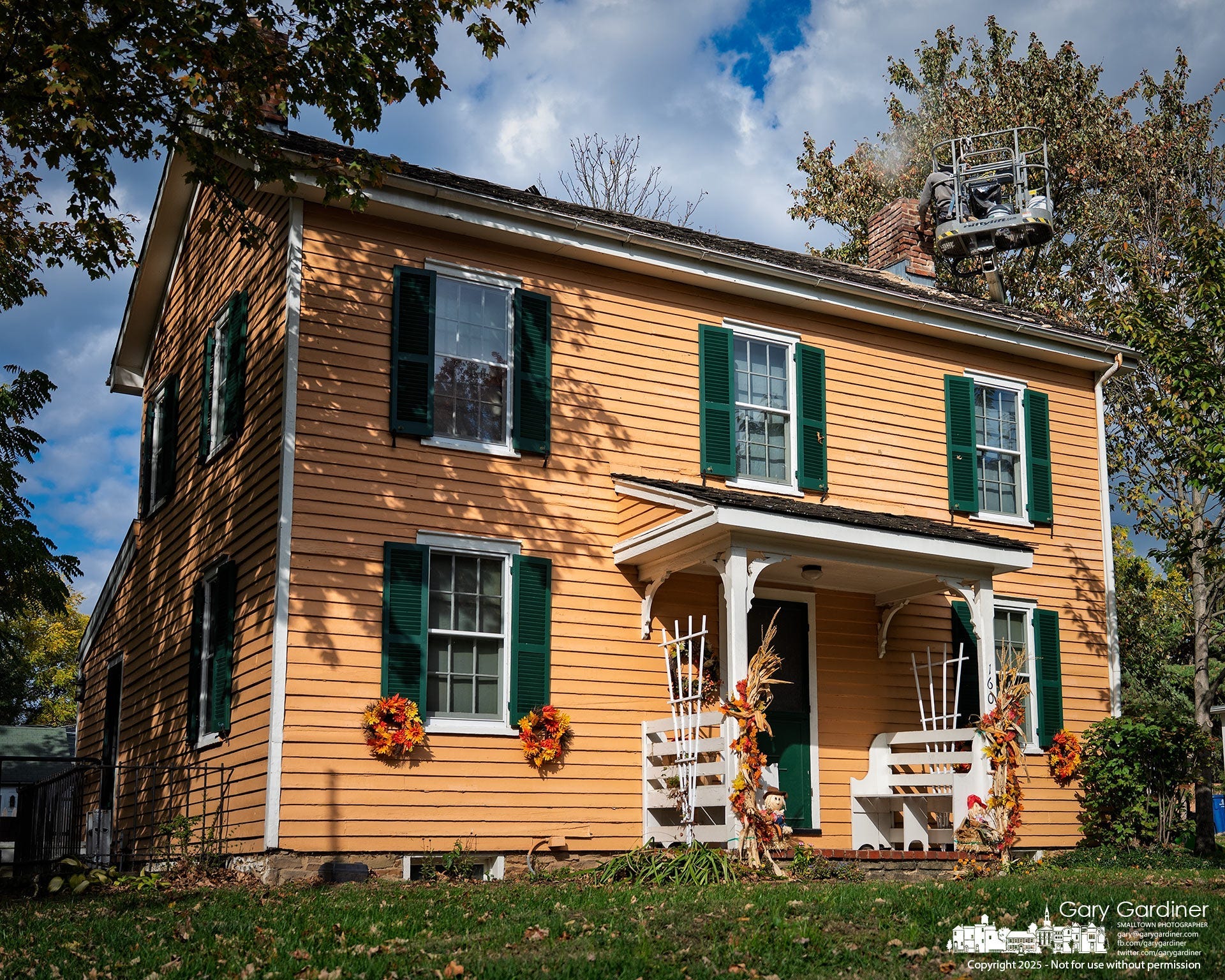
The Hanby House connection: From the Underground Railroad to Westerville’s Whiskey Wars
The home of Bishop William Hanby, who helped establish Otterbein University, once stood at the southeast corner of Main and Grove streets, where Church of the Master’s sanctuary stands today. The Hanby family moved to Westerville in 1853 and became part of a growing community whose religious institutions were closely connected to education and social reform.
According to the church’s history, Hanby and fellow United Brethren minister Lewis Davis were conductors on the Underground Railroad, sheltering people escaping slavery with help from their families. Hanby’s son, Benjamin, became known for composing the antislavery song “Darling Nellie Gray” and the Christmas favorite “Up on the Housetop.”
The family’s involvement in social reform extended to Westerville’s temperance movement. The church’s history identifies Hanby, Otterbein President Henry A. Thompson, and the congregation’s minister, the Rev. J. S. Mills, as leaders in the temperance effort during the 1870s, a period that included Westerville’s Whiskey Wars. The confrontations began in 1875 when Henry Corbin attempted to establish a saloon in the village, contributing to Westerville’s reputation for opposition to alcohol.
That reputation later helped attract the Anti-Saloon League, which established its national headquarters and printing operations in Westerville in 1909. Church of the Master also connected to the organization through congregation member Ila Grindell, who worked as an assistant to League leader Ernest Cherrington.
The Hanby home remained at Main and Grove until 1890, when Squire Fouse, an African American who had moved north after emancipation, moved it to East Home Street. His son, William, became Otterbein’s first African American graduate in 1893. Today, the preserved Hanby House serves as a historic site and museum, while the church sanctuary, dedicated in 1916, occupies the family’s former property.
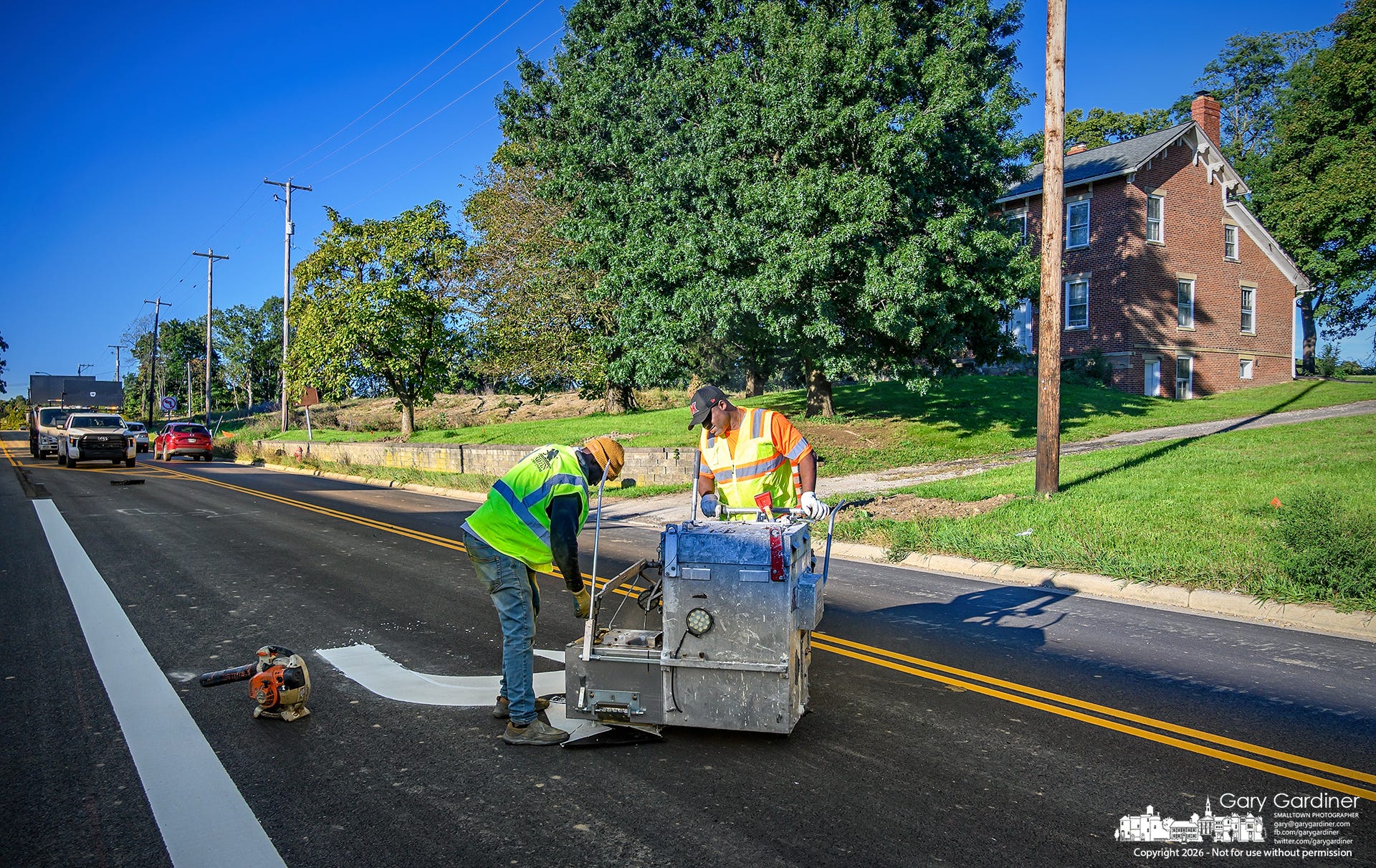
Westar Park Prepares for Friday Opening as Crews Finish Road Striping
The East of Africa development project, now known as Westar Park, is scheduled to open Friday, September 25, after crews complete road striping along Africa Road and at intersections with new streets throughout the 88-acre development.
Groundbreaking for the project took place March 10, 2025.
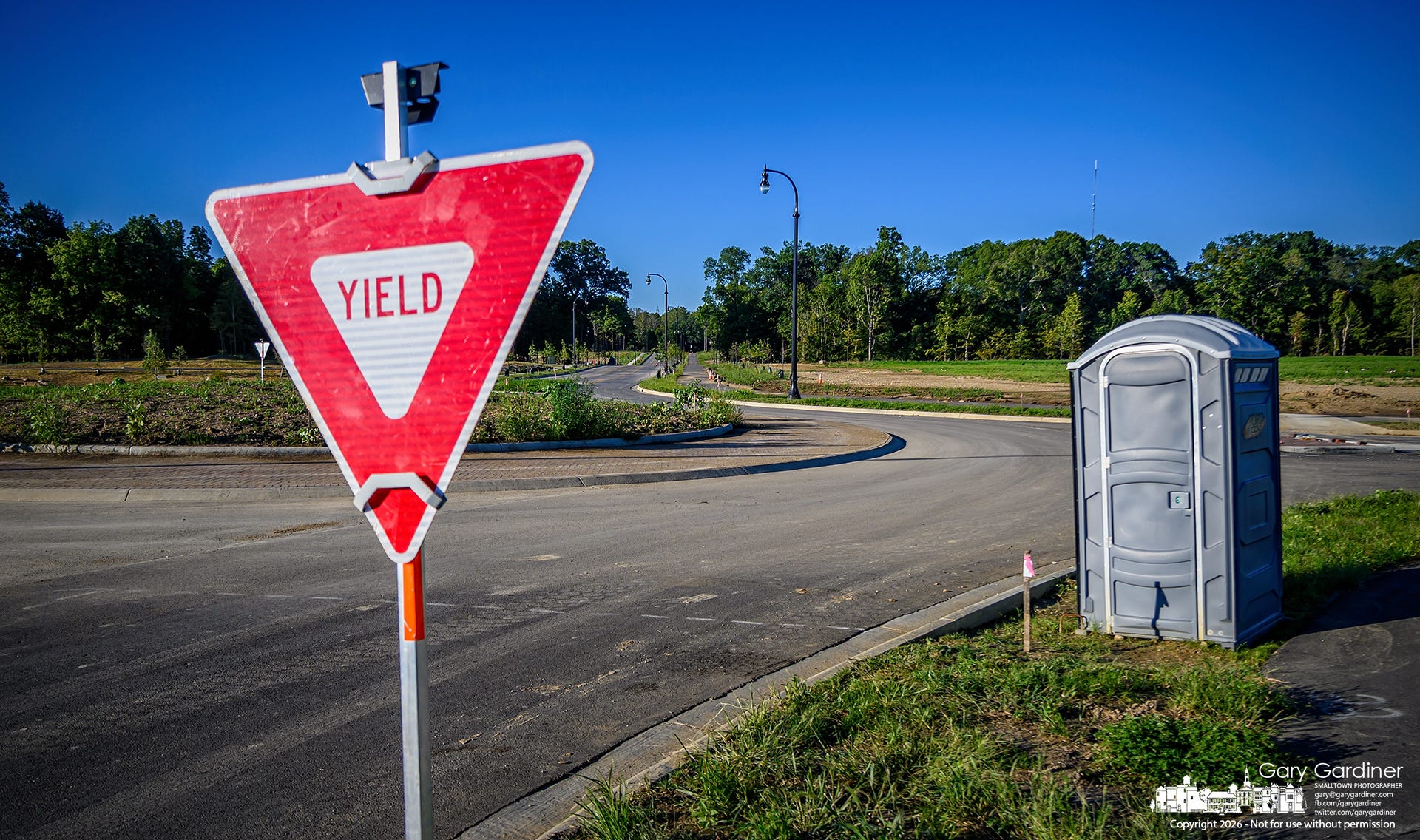
While the roadway markings are complete, the development has not yet installed permanent traffic signs at intersections. Temporary signs direct motorists where to stop and yield.
Construction crews continue work at the entrances to Westar Park, installing decorative and erosion-prevention walls.
Because this post is public, you’re encouraged to share it on social media.
The Westerville News is a reader-supported publication by Gary Gardiner, a lifelong journalist who believes hyper-local reporting is the future of news. This publication focuses exclusively on Westerville—its local news, its influence on Central Ohio, and how surrounding areas shape the community.
Reader funding, including subscribers, protects editorial independence, so coverage is guided by journalists rather than owners or corporate profit goals. It also reduces pressure to chase clicks, letting the newsroom focus on stories worth readers’ time. And it helps keep the site accessible to everyone, including people who can’t pay or live in places where a free press is under threat.
Explore more hyper-local reporting by subscribing to The Hilliard Beacon, Civic Capacity, Marysville Matters, The Ohio Roundtable, Shelby News Reporter, This Week in Toledo, and Into the Morning by Krista Steele.
