
City Council And School Share Goals And Aspirations - Uptown Westerville Inc. Needs Signatures For Ballot Issue
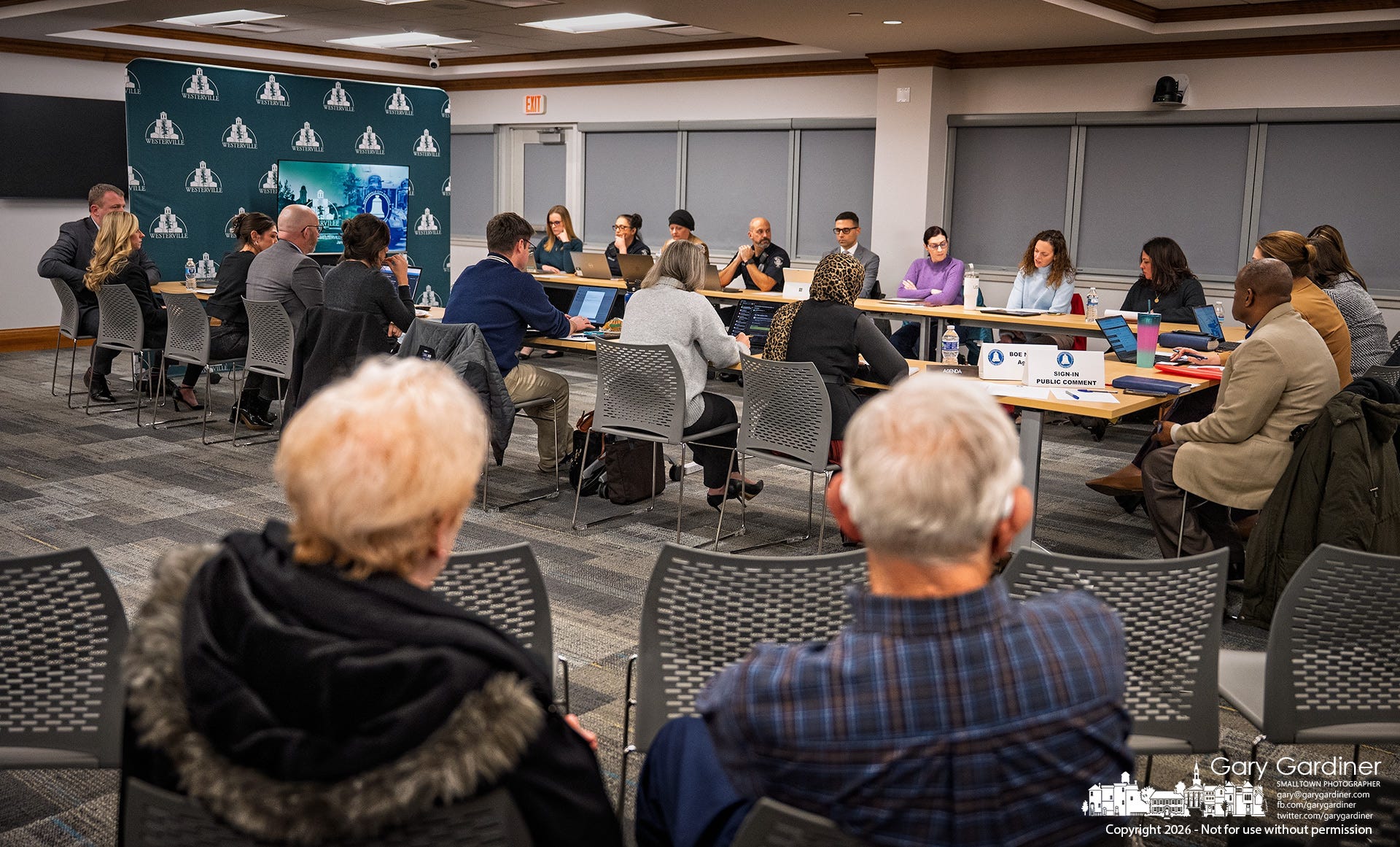
In their first joint meeting since welcoming new members, the Westerville City Council and the Westerville School Board concentrated on how coordinated planning can enhance student education while strengthening the city’s long-term economic stability.
Rachel Ray, the city’s economic development director, explained how Westerville’s use of development incentives works alongside voter-approved school funding measures, including the recently adopted earned-income tax. She said the city’s approach to taxation and development aims to expand the overall tax base over time and provide sustained support for schools, rather than shifting financial responsibility away from them.
Ray explained how tools like tax abatements and tax increment financing are used to promote development aligned with the city’s long-term plans, noting that these strategies aim to increase revenue for all taxing entities, including schools. She highlighted that development incentives are designed to encourage growth while ensuring transparency and accountability.
The discussion also highlighted workforce development efforts that connect students directly with employment opportunities within the city government. City officials described internship and pre-apprenticeship programs that enable students to gain hands-on experience across various municipal departments, including electric utilities, water treatment, information technology, and public safety. City Manager Monica Dupee stated that the goal is to introduce students to careers that do not always require a four-year degree and to build a local talent pipeline for city jobs.
Several of those programs have already shown tangible results. Two recent student interns who trained with the city’s Electric Division were later hired as full-time city employees. Officials highlighted these hires as an example of how collaboration between the city and schools can turn classroom learning into long-term jobs while boosting the city’s workforce.
In addition to student internships, city and school leaders discussed educator externships, which allow teachers and school staff to spend time in local businesses and city departments to better understand workforce needs and career options. Participants said the experience helps connect classroom lessons to real-world skills that are in demand in the local economy.
Transportation access for students was also highlighted as an ongoing concern, especially as more families depend on COTA Plus for daily travel. Council Member David Grimes mentioned that student use of COTA Plus continues to increase and noted that service gaps still exist for some families due to jurisdictional and county boundary restrictions. City Manager Monica Dupee said that overcoming these gaps might require future collaboration with neighboring jurisdictions and regional transit agencies.
She confirmed that students make up a significant portion of COTA Plus riders, but explained that service limitations along county lines prevent the program from serving all students equally. Discussions with regional transit providers are ongoing, though any expansion would require broader intergovernmental cooperation.
Grimes also highlighted the importance of access to parks, recreation, and community resources in supporting students outside the classroom. He mentioned assistance programs funded by the Parks Foundation, explaining that eligibility is based on the same criteria used for free and reduced lunch programs. Grimes stated that these programs help families afford community center memberships and recreation classes, offering safe, structured spaces for children.
Sustainability efforts were also discussed, including the city’s ongoing solar energy initiative, which aims to generate about 10 megawatts of power from renewable sources. City officials outlined plans to install solar infrastructure at municipal facilities and discussed the potential for similar projects at school buildings.
Kari Dennis, the school system's chief operations officer, noted that aging facilities and funding constraints make it difficult to install solar systems on school properties, especially when projects require a large initial investment. Officials also mentioned the timing of expiring federal incentives as a factor hindering progress on some sustainability initiatives.
Housing affordability and development trends were also discussed during the meeting. School Board member Anisa Liban asked whether current development patterns are addressing the needs of families in the district, especially those seeking workforce or “missing middle” housing.
City Manager Monica Dupee stated that interest from developers has not significantly increased, citing high interest rates, inflation, and financing requirements as major obstacles to new housing projects. She mentioned that many current proposals focus on senior housing or luxury development due to market constraints, making it harder to provide workforce housing.
Dupee recognized the challenge this poses for schools, noting that new housing can bring in more students without equal funding if incentives are needed to make projects feasible. School leaders agreed that development decisions should balance housing demands with the district’s ability to support enrollment growth.
Uptown Westerville Inc. Seeks Signatures to Expand Alcohol Options at Uptown Untapped
Uptown Westerville Inc. is asking for community support as it works to expand alcohol offerings at its signature summer event, Uptown Untapped. The nonprofit is currently collecting voter signatures to pursue a site-specific permit that would allow wine, spirits, and cocktails to be served alongside beer during the festival.
For the past eight years, Uptown Untapped has operated as a craft beer festival. While the event has grown into one of the city’s most popular summer traditions, attendees have consistently asked for a wider selection of beverages.
Organizers say the change would allow Uptown Untapped to evolve into a full food and beverage festival, create a more inclusive experience for attendees, and strengthen partnerships with local businesses such as High Bank Distillery, Meza Wine Shop, and Good Vibes Winery.
According to Executive Director Lynn Aventino, the effort reflects how people already experience Uptown.
“This effort is about aligning Uptown Untapped with how people already experience Uptown, as a place for food, drinks, connection, and celebration,” Aventino said. “Expanding beyond beer allows us to better support our local partners and generate more resources to fuel the free community events everyone enjoys.”
Ohio law allows for a site-specific local option that would permit a defined area to become “wet,” even if surrounding areas remain dry. To place the question on the May ballot, organizers must first gather signatures from registered voters within Uptown Precinct A. If approved by voters, Uptown Westerville Inc. would then apply for a permit through the Ohio Division of Liquor Control.
Uptown Untapped is also one of the few ticketed events that directly fund Uptown Westerville Inc.’s work. The nonprofit is a nationally certified Main Street America organization focused on supporting small businesses, activating public spaces, preserving the historic district, and creating community events that draw thousands of visitors to Uptown each year.
Residents registered to vote in Uptown Precinct A can sign the petition through February 2 at Meza Wine Shop during regular business hours. Organizers note that signing the petition does not indicate a vote for or against the measure, but simply allows the question to appear on the ballot.
If successful, the initiative could mark a significant shift for Uptown Untapped and open the door for future growth, increased economic impact, and expanded community programming in Westerville’s historic district.
The Westerville News is a reader-supported publication by Gary Gardiner, a lifelong journalist who believes hyper-local reporting is the future of news. This publication focuses exclusively on Westerville—its local news, influence on Central Ohio, and how surrounding areas shape the community.
Reader funding, including subscribers, protects editorial independence, so coverage is guided by journalists rather than owners or corporate profit goals. It also reduces pressure to chase clicks, letting the newsroom focus on stories worth readers’ time. And it helps keep the site accessible to everyone, including people who can’t pay or live in places where a free press is under threat.
Explore more hyper-local reporting by subscribing to The Hilliard Beacon, Civic Capacity, Marysville Matters, The Ohio Roundtable, Shelby News Reporter, This Week in Toledo, and Into the Morning by Krista Steele.


