Civil War documentary links Westerville history to Black Union soldiers
Library screening connects Camp Delaware, Medal of Honor soldiers, and Westerville’s William Hannibal Thomas.
Film on Camp Delaware highlights the 5th U.S. Colored Troops, Medal of Honor bravery, and William Hannibal Thomas of Otterbein
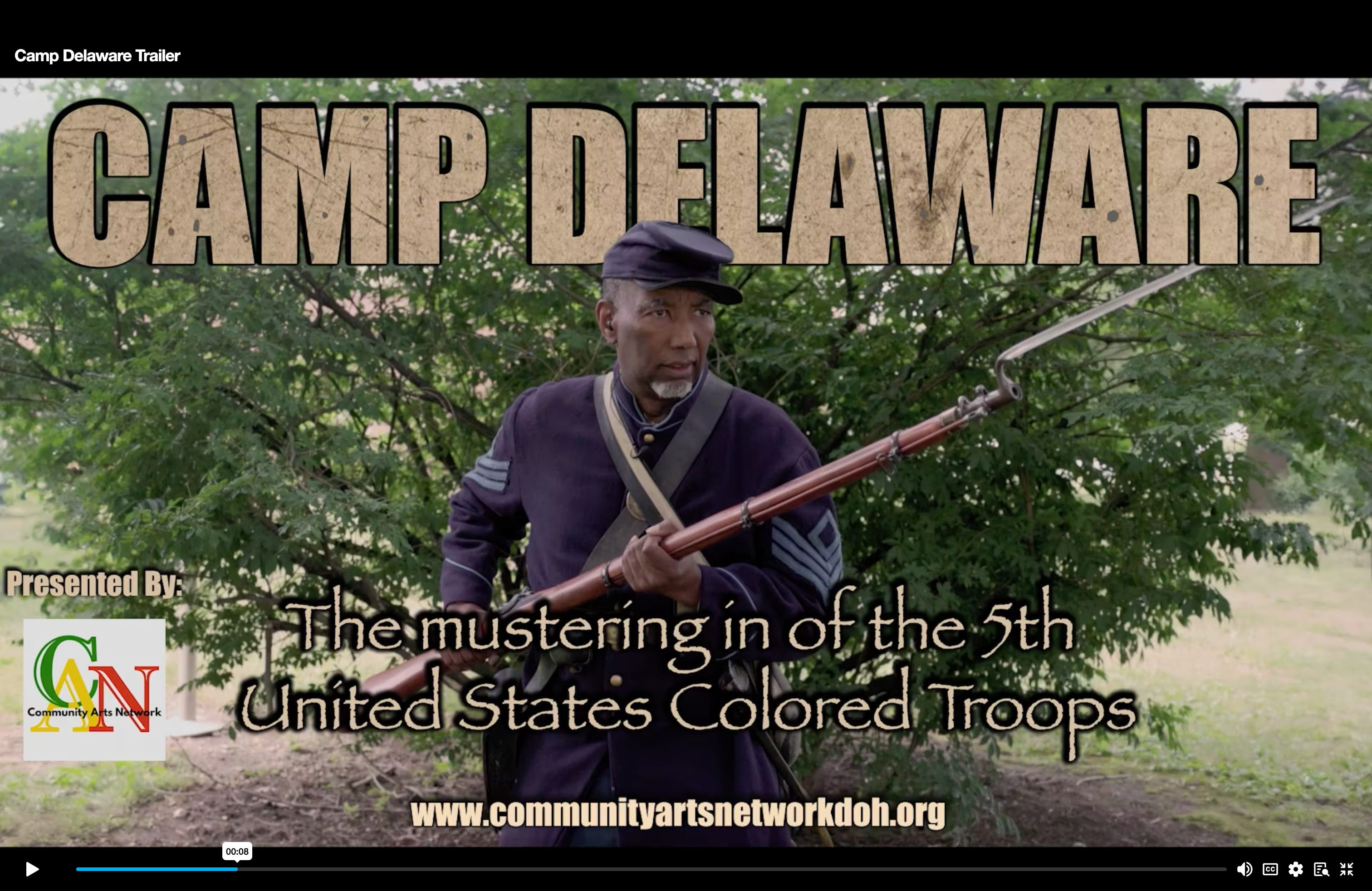
A Civil War story connected to central Ohio will be shown on Monday, Feb. 2, at the Westerville Public Library, when the documentary “Camp Delaware” is screened, followed by a Q&A session with its creators.
The film highlights Camp Delaware in Ohio, a Union Army training and mustering site that played a vital role in organizing both white and African American soldiers during the Civil War. Central to the story is the 5th United States Colored Infantry Regiment, one of the Black units that trained there.
Many Ohioans recognize the Civil War through famous battle names from other states. What’s easier to overlook is that thousands of soldiers, including African American recruits, began their journey in Ohio at places like Camp Delaware. It served as a staging area rather than a battlefield—a location where units were organized, trained, and mustered into federal service before heading south and east into the war.
That story also takes place in Westerville. William Hannibal Thomas, an African American Civil War veteran and the first Black student to attend Otterbein College, exemplifies the hopes many Black soldiers harbored that military service would open doors.
Born in Pickaway County in 1843, Thomas enlisted to serve in the Union Army. He served with Ohio regiments and, later, in the United States Colored Troops, was wounded in battle and lost his right arm. After the war, he pursued education and law, eventually becoming an attorney and serving in the South Carolina legislature during Reconstruction.
Thomas later wrote about race and American life and kept working as a writer and advocate. His life reflected the same fight for recognition, opportunity, and citizenship that shaped the service of Black soldiers trained at places like Camp Delaware.
Two camps, one name
According to the historical marker near the site, the Union Army set up two camps on opposite banks of the Olentangy River, both called Camp Delaware.
The first camp, situated on the west side of the river during the summer of 1862, was where white recruits of the 96th and 121st regiments of Ohio Volunteer Infantry were mustered into service.
A second camp opened on the east side of the Olentangy in the summer of 1863. It served as the primary gathering point for African American Ohioans joining the Union Army. The 127th Ohio Volunteer Infantry, later renamed the 5th Regiment United States Colored Troops, along with the 27th U.S. Colored Troops and members of other African American units, were mustered there.
That physical division, with white soldiers on one side of the river and Black soldiers on the other, reflects the political and social tensions surrounding Black enlistment at the time.
The documentary follows the 5th USCT from its formation and training to combat in Virginia, concluding with the September 29, 1864, assaults at Chaffin’s Farm and New Market Heights.
In the Sept. 29, 1864, assault at Chaffin’s Farm in Virginia, four men from the 5th USCT received the Medal of Honor, largely for taking command under fire when officers were wounded and continuing the advance.
James H. Bronson. A first sergeant with Company D, Bronson took command of his company after its officers were killed or wounded during the assault. He rallied his men under heavy fire and led them forward, helping maintain the momentum of the attack against entrenched Confederate positions.
Robert Pinn. A sergeant in Company I, Pinn assumed leadership when all of his company’s officers were killed or incapacitated. He continued directing the advance despite intense resistance, keeping the unit engaged in the fight even after its chain of command had collapsed.
Milton M. Holland. Serving as a sergeant major, Holland stepped in when officers fell and helped lead troops through the assault. His actions were credited with sustaining the regiment’s push during one of the most dangerous phases of the battle.
Powhatan Beaty. A sergeant in Company G, Beaty took command after his officers became casualties and led his company in a renewed charge. His leadership helped drive Confederate defenders from their fortified position.
“Camp Delaware” started as a live stage show created by Delaware residents Francine and Mark Butler. In 2024, the Butlers made a film version, reaching a larger audience.
“We know the power of performing arts to change lives, to tell stories of marginalized people,” Francine Butler said in an earlier interview. “This story still has an impact on people living today.”
Mark Butler has described the project as reaching beyond local history. “This is not only a central Ohio story, or an Ohio story. It is a national story,” he said in a previous interview.
The screening in Westerville was made possible through collaboration with the Westerville History Museum. “It will be a film screening followed by a Q&A session with producers Mark and Francine Butler of the Community Arts Network,” said Katy K., a museum specialist at the Westerville History Museum. “They originally produced it as a live stage version and turned it into a film in 2024. The film had already been on my radar when the Butlers approached us last year about screening it at the library. We thought it was a good fit because Westerville resident William Thomas served in the unit that later became the 5th USCT, the regiment featured in the film.”
Community Arts Network promotes diversity and Black representation in the performing arts, using storytelling to preserve culture and foster dialogue.
For Westerville audiences, this screening serves as a reminder that the Civil War’s story isn't just about distant battlefields. Camp Delaware was one of the sites where the Union Army organized and where African American soldiers started a journey that linked military service with the broader fight for freedom and equal rights.
The screening takes place Monday, Feb. 2, at the Westerville Public Library, 126 S. State St.
The Westerville News is a reader-supported publication by Gary Gardiner, a lifelong journalist who believes hyper-local reporting is the future of news. This publication focuses exclusively on Westerville—its local news, influence on Central Ohio, and how surrounding areas shape the community.
Reader funding, including subscribers, protects editorial independence, so coverage is guided by journalists rather than owners or corporate profit goals. It also reduces pressure to chase clicks, letting the newsroom focus on stories worth readers’ time. And it helps keep the site accessible to everyone, including people who can’t pay or live in places where a free press is under threat.
Explore more hyper-local reporting by subscribing to The Hilliard Beacon, Civic Capacity, Marysville Matters, The Ohio Roundtable, Shelby News Reporter, This Week in Toledo, and Into the Morning by Krista Steele.