
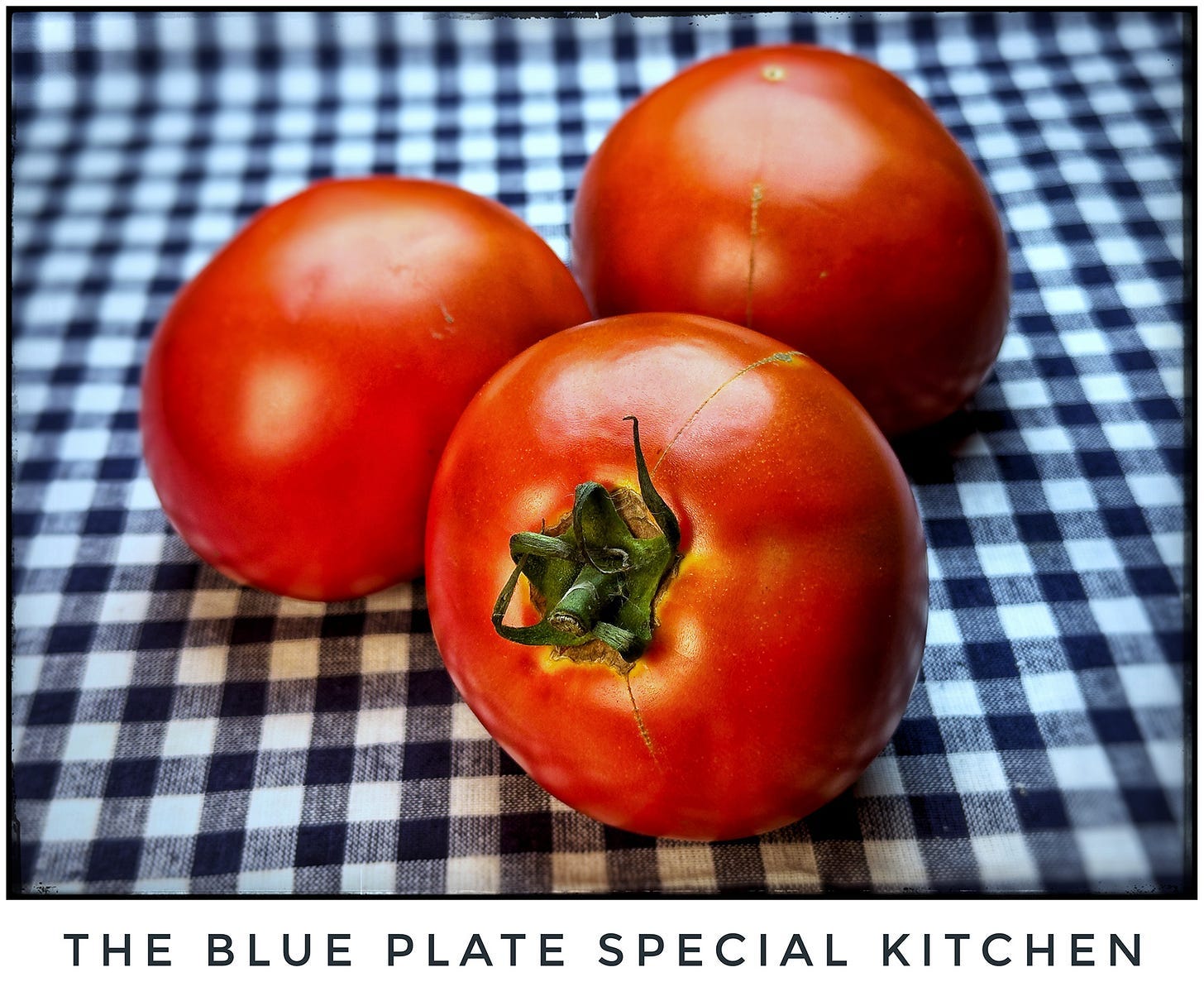
EMWTTSFM: Three Tomatoes at a Time
Place a supermarket tomato beside one from the Saturday Farmers Market, and they may look much the same: round, red and ready to slice. Cut them open, however, and the differences often become clear.
The supermarket tomato is built for a long trip.
Commercial tomatoes may move from fields to packing facilities, warehouses, distribution centers and stores great distances away. Many are harvested at the mature-green stage, when they are developed enough to ripen but still firm enough to withstand sorting, packing and transportation. Some complete the ripening process in temperature-controlled rooms where ethylene encourages color change.
Those methods serve a practical purpose. A tomato sold through a national supply chain must survive days in transit without bruising or collapsing.

Sliced open, a grocery store tomato may have a firm, pale core and thick internal ribs. That helps it hold its shape, but at the table it can seem stiff, watery, or bland.
A tomato from Scratch Farm travels from a nearby field to the Saturday Farmers Market and then to my kitchen. Because it does not have to endure a long distribution chain, it can be picked closer to ripeness.
I tried thick slices from the market on two sandwiches.
The first was a hamburger with cheese, lettuce, horseradish pickles, jalapeños, mayonnaise and mustard. Despite the strong flavors, the tomato remained distinct. Its acidity cut through the beef and cheese, while its sweetness tempered the heat. The slice yielded cleanly with every bite instead of slipping from the bun.
The second went onto a roasted chicken sandwich with Monterey Jack, chipotle mayonnaise, mustard, and lettuce. Again, the tomato was more than decoration. It added freshness and acidity to an otherwise rich sandwich.
That is the difference between the tomatoes I ate. The supermarket tomato had been selected so it could arrive intact. The farm tomato had traveled from Johnstown to reach my plate.
But during local tomato season, durability is not the only quality worth paying for. Flavor and texture matter, too, because they determine whether the tomato is merely sturdy or truly worth eating.


That is why I buy three tomatoes at a time from Scratch Farm. They cost more per tomato than a bulk purchase, but three is enough to eat while they are still ripe.
By the following Saturday, I am ready to buy three more, because the best tomatoes are the ones I can finish while they still taste their best.
Because this post is public, you’re encouraged to share it on social media.
The Westerville News is a reader-supported publication by Gary Gardiner, a lifelong journalist who believes hyper-local reporting is the future of news. This publication focuses exclusively on Westerville—its local news, its influence on Central Ohio, and how surrounding areas shape the community.
Reader funding, including subscribers, protects editorial independence, so coverage is guided by journalists rather than owners or corporate profit goals. It also reduces pressure to chase clicks, letting the newsroom focus on stories worth readers’ time. And it helps keep the site accessible to everyone, including people who can’t pay or live in places where a free press is under threat.
Explore more hyper-local reporting by subscribing to The Hilliard Beacon, Civic Capacity, Marysville Matters, The Ohio Roundtable, Shelby News Reporter, This Week in Toledo, and Into the Morning by Krista Steele.


