First Tomatoes of the Season Packed With Nostalgia - EMWTTSFM

The first tomatoes of summer may not be heirlooms. That doesn’t matter.
The first tomatoes of summer arrived at the Westerville Farmers Market last Saturday bearing one of food’s most powerful labels: heirloom. For many shoppers, the word evokes family gardens, roadside produce stands, and tomatoes that tasted better before modern agriculture got involved. I was among those shoppers.
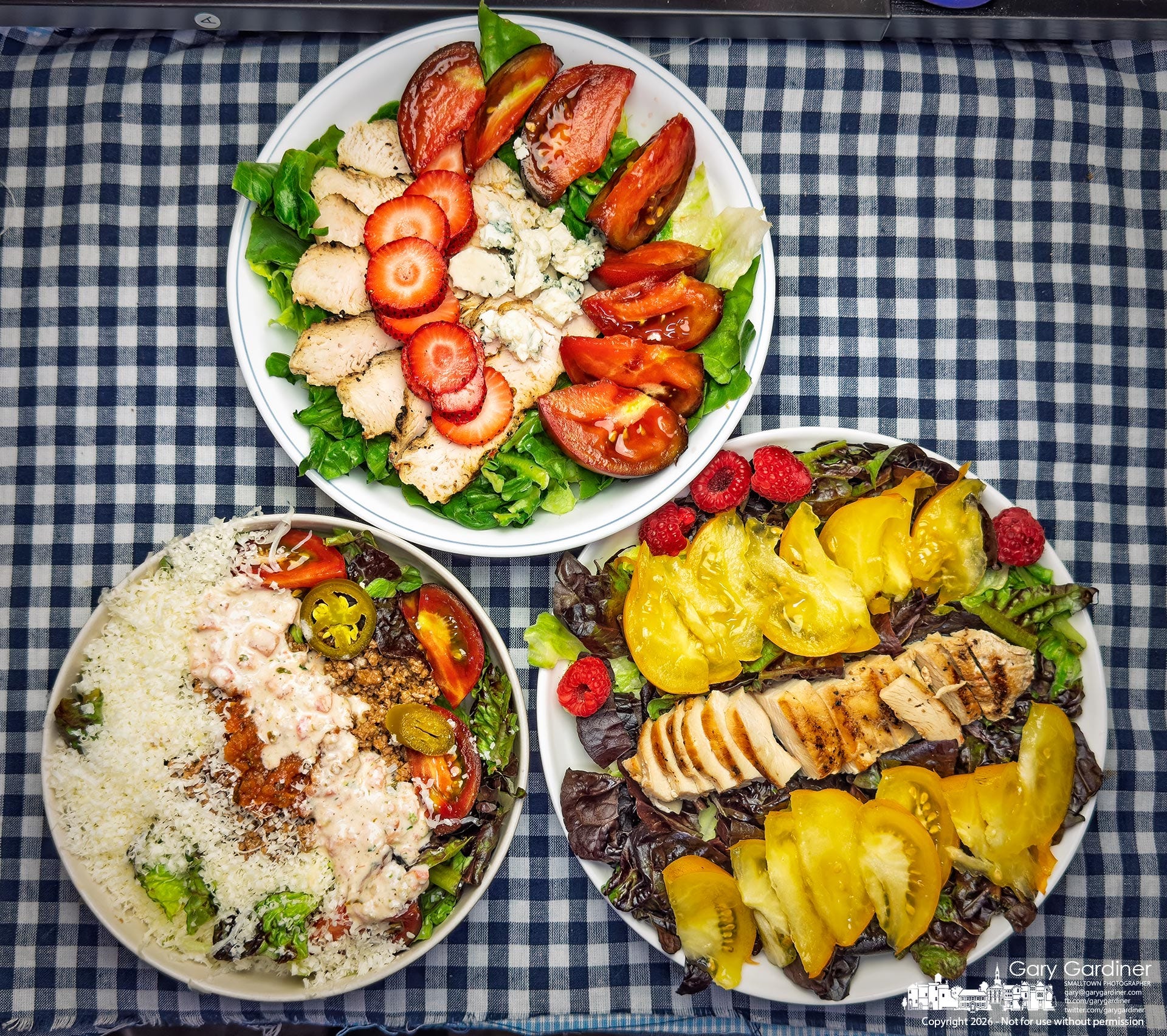
By the time I left the market, I had three tomatoes in my bag: a large yellow tomato, a dark red slicer, and a smaller striped red tomato that looked almost too attractive to cut. Back home, I gave each one its own stage.
The dark red tomato found its way onto a salad of greens, herb turkey breast, blue cheese, and strawberries. The yellow tomato joined grilled chicken and raspberries on mixed greens. The smaller striped tomato became part of a taco salad topped with Monterey Jack cheese, jalapeños-ranch dressing with salsa and hot honey.
What began as a simple meal soon became a question: What exactly are shoppers buying when they buy heirloom tomatoes?
The answer may be more complicated than many people realize. Traditionally, heirlooms are older, open-pollinated varieties passed down through generations. Brandywine, Cherokee Purple, and Mortgage Lifter have become legends among gardeners and tomato enthusiasts.
Farmers’ markets, however, also sell newer specialty tomatoes bred for color, striping, and visual appeal. Some grow true from seed and are cultivated much like heirlooms, yet they lack the history usually associated with the term.
That distinction surprised me. The smaller striped tomato I purchased, with dark purple skin and red streaks, looked more like a modern specialty variety than the family heirloom I had imagined. Without knowing its name or breeding history, however, appearance alone could not settle the question.
It occupied the same display category and commanded the same premium price. Most customers probably never ask what, precisely, makes an heirloom, perhaps because the answer matters less than we think.
The yellow tomato on the grilled chicken salad demonstrated why. Before I tasted it, I noticed it. Against the dark greens and grilled chicken, the golden slices transformed the plate in a way that a standard red tomato would not have.
The dark-red tomato in the herbed-turkey salad made a different impression. Its substantial wedges gave it the heft of a central ingredient, and the fruit was meaty enough to become a major part of the meal rather than a garnish.
Even the smallest tomato proved its worth. Surrounded by seasoned meat, cheese, dressing, and jalapeños, it added freshness and acidity that balanced the taco salad's heavier flavors.
As I worked through the three meals, another question emerged: In a blind tasting against locally grown hybrid tomatoes, how many diners could reliably tell the difference? Some could, but many probably could not.
That raises an uncomfortable possibility for those of us who romanticize heirloom tomatoes. Perhaps we are not paying primarily for flavor. Perhaps we are paying for appearance, novelty, local production, and the stories attached to the food.
Or perhaps we are paying for something less tangible: seasonality.
The first local tomato of summer occupies the same place on the calendar as the first sweet corn in July or the first jug of apple cider in autumn. It announces a change in the season, which means the purchase is partly about the food and partly about the moment.
Every shopper at the farmers’ market passed grocery stores on the way home, where cheaper tomatoes were readily available. Yet people lined up to buy these instead.
I never established whether all three tomatoes were heirlooms in the traditional sense. They may have included historic varieties, newer specialty tomatoes, or both. In the end, the distinction mattered less than I expected.
What I brought home from the farmers’ market was not simply three tomatoes. It was the first taste of summer.
Next is sweet corn.
Because this post is public, you’re encouraged to share it on social media.
The Westerville News is a reader-supported publication by Gary Gardiner, a lifelong journalist who believes hyper-local reporting is the future of news. This publication focuses exclusively on Westerville—its local news, influence on Central Ohio, and how surrounding areas shape the community.
Reader funding, including subscribers, protects editorial independence, so coverage is guided by journalists rather than owners or corporate profit goals. It also reduces pressure to chase clicks, letting the newsroom focus on stories worth readers’ time. And it helps keep the site accessible to everyone, including people who can’t pay or live in places where a free press is under threat.
Explore more hyper-local reporting by subscribing to The Hilliard Beacon, Civic Capacity, Marysville Matters, The Ohio Roundtable, Shelby News Reporter, This Week in Toledo, and Into the Morning by Krista Steele.