

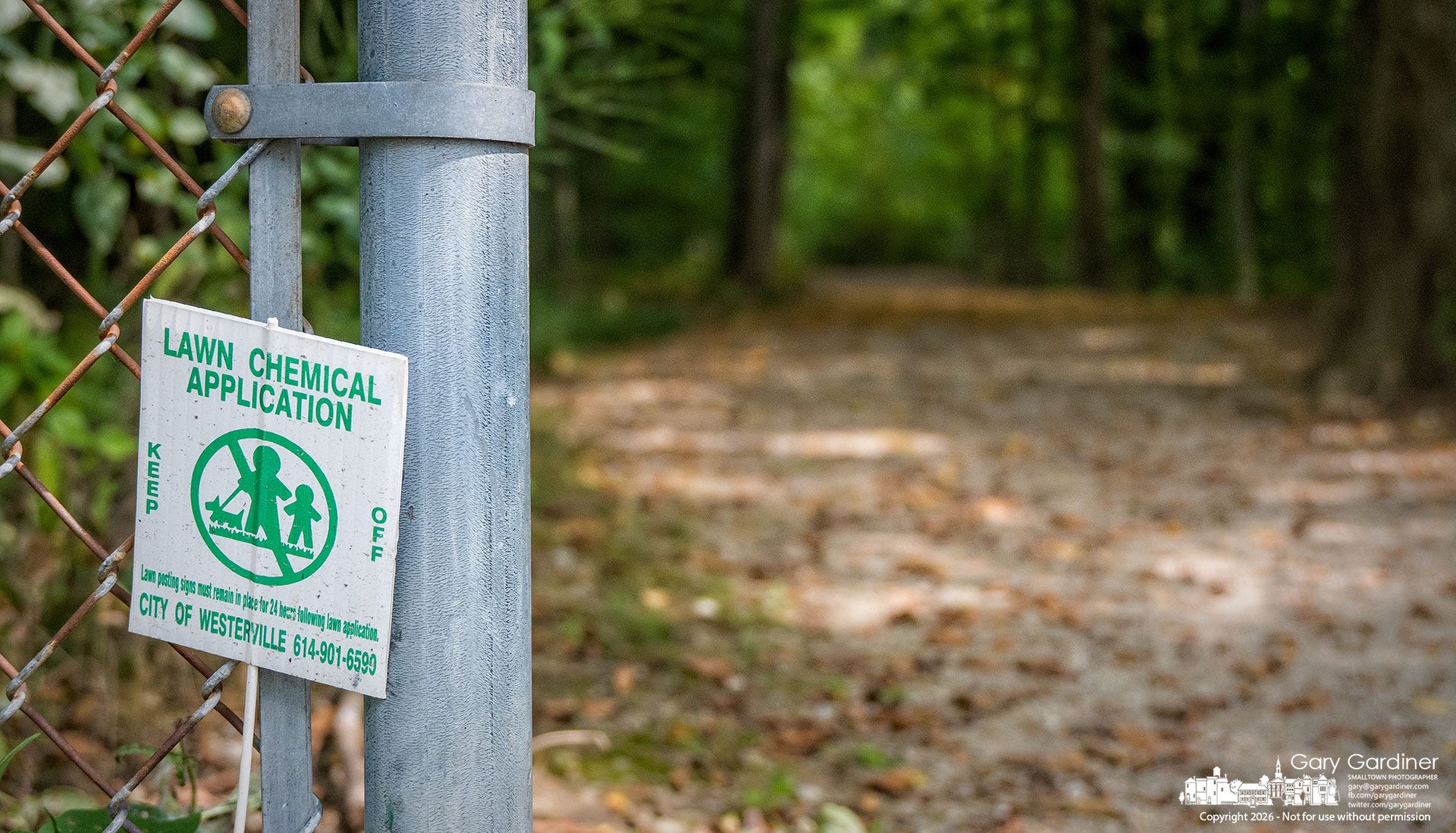
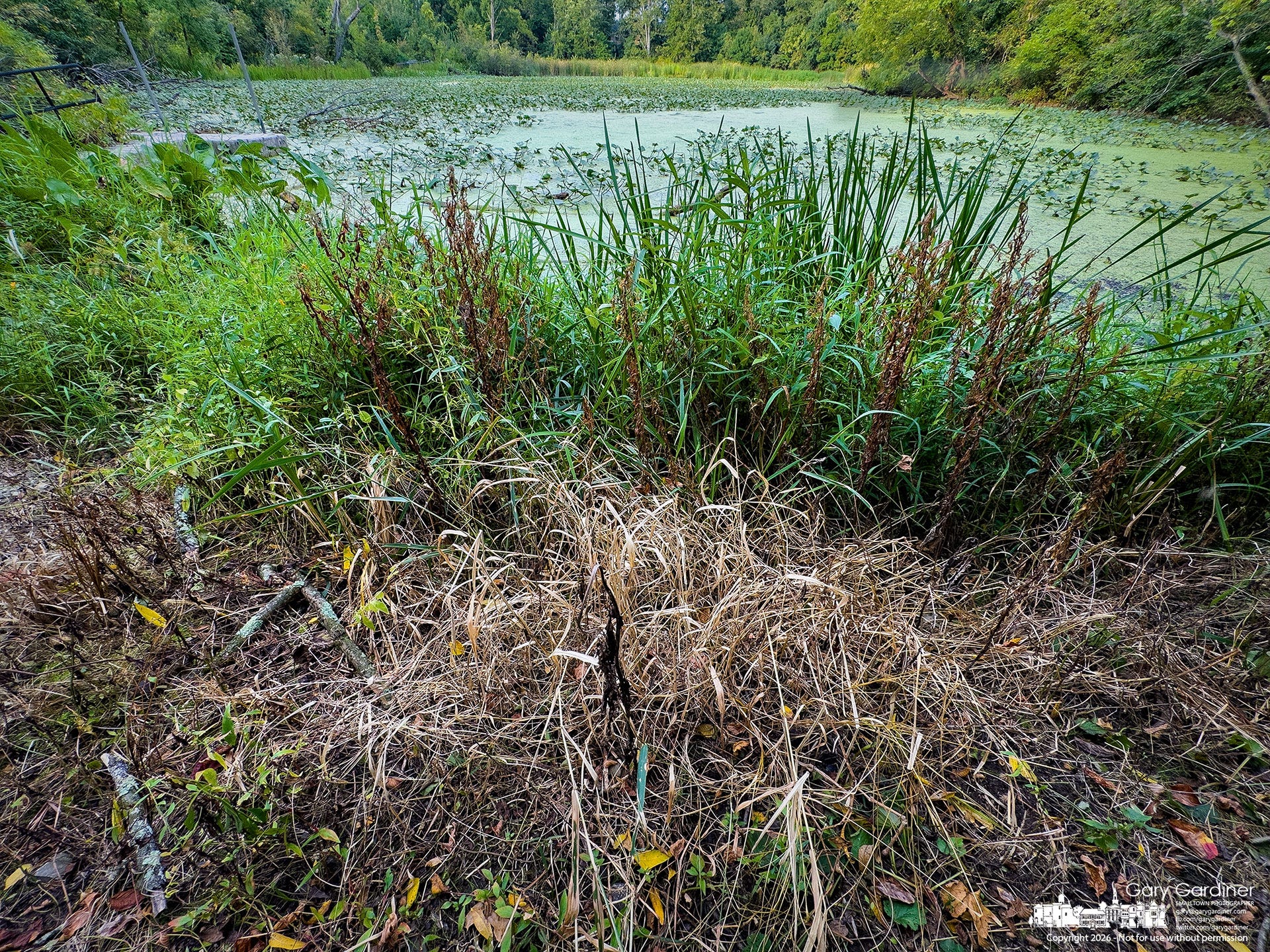
Boyer Nature Preserve sits at the end of East Park Street. A narrow path, in places barely wide enough for two people to walk side by side, circles an Ice Age kettle pond formed as glaciers that once covered much of North America and extended into Ohio retreated.
Last week, Westerville Parks and Recreation responded after a visitor reported that parts of the path had become overgrown, with patches of poison ivy encroaching on the walkway. Crews sprayed herbicide along the trail, leaving a brown swath of dead vegetation around the preserve.
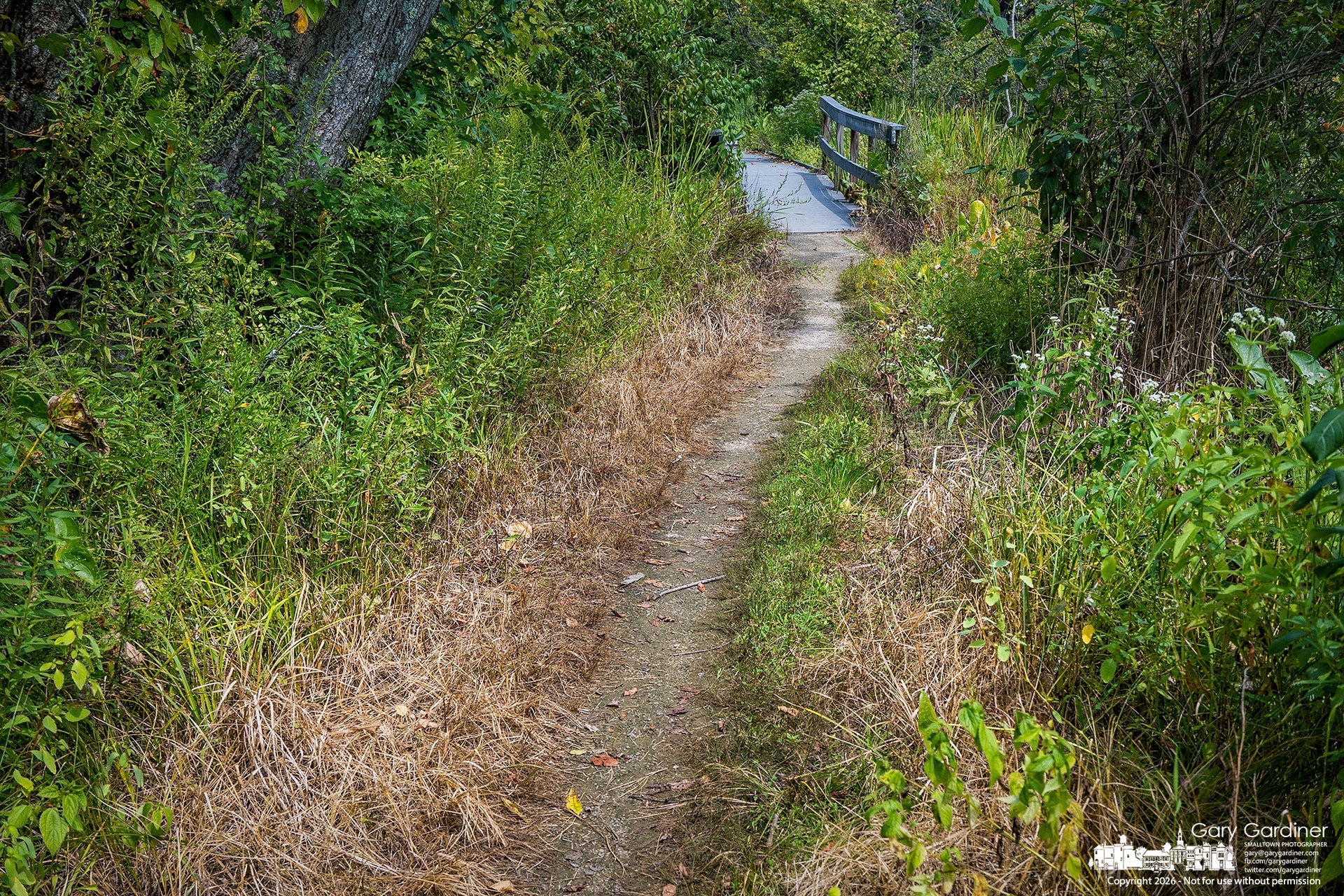
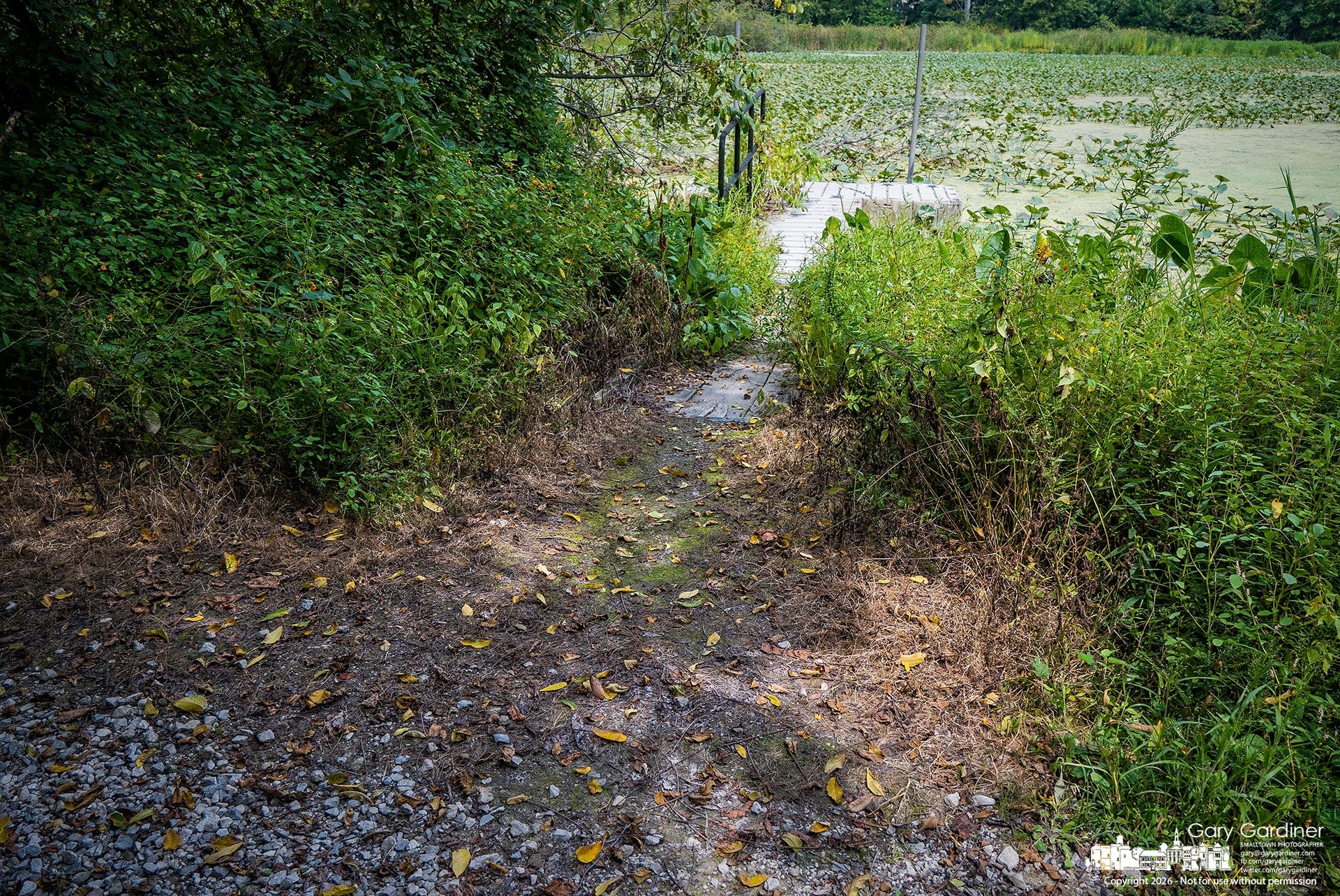
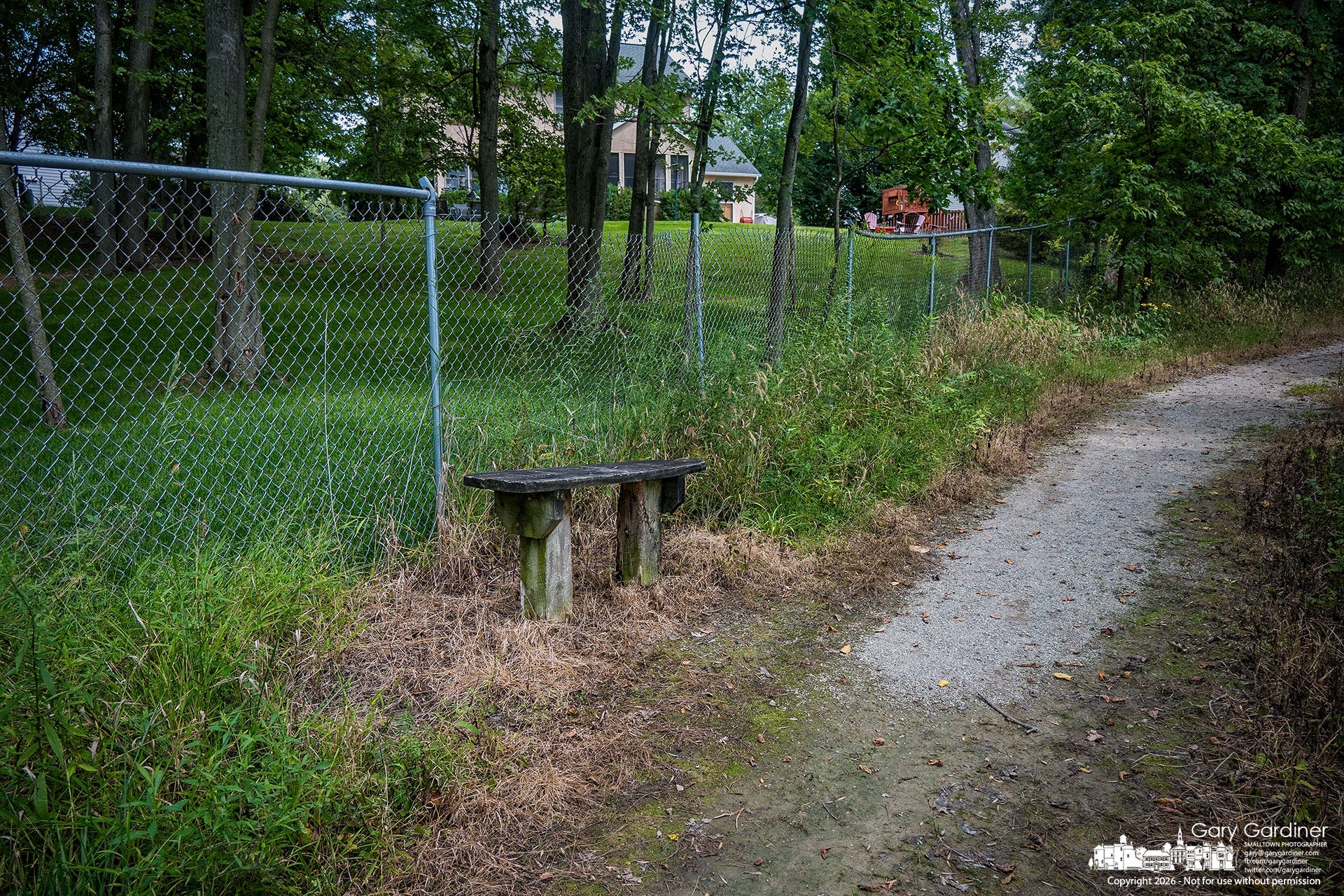
Crews applied herbicide along the full length of the path surrounding the pond, extending more than two feet from the walkway in some places and reaching the shoreline of the wetland pond. They also sprayed grasses and other plants surrounding the three benches along the trail, as well as the narrow path leading to the floating dock.
Westerville Parks and Recreation Director J.R. Fourqurean had not been briefed on the details of the spraying when first contacted about it. Parks staff handle routine maintenance, and Fourqurean said he spoke briefly with the team after receiving questions about what had happened at Boyer.
“I haven’t dug too deep on it,” Fourqurean said during the initial interview. “I talked briefly with the team before I came over here. I was like, what’s going on?”
His initial understanding was that recent rain had contributed to heavy growth along the trail, particularly poison ivy. “From what I’ve heard, the increase in rains caused some overgrowth on the path, and that overgrowth was primarily poison ivy,” Fourqurean said.
He said spraying was one of several methods available to park workers for dealing with vegetation encroaching on trails, particularly poison ivy, which can be difficult to cut or remove without exposing workers to the plant. Fourqurean referred additional questions about the treatment to Matt Ulry, facilities manager for Westerville Parks and Recreation.
Ulry said poison ivy was one reason for the spraying, but crews were also directed to address other overgrowth. “We’ve got concerns about poison ivy, which obviously there’s some poison ivy,” Ulry said. “But we had also had some complaints about the area being a little bit overgrown.”
Workers were told to spray the poison ivy and use their judgment about whether other vegetation should be cleared farther from the path, he said. “The direction was go spray the poison ivy and, you know, if there are some areas where we think we need to spray it back a little bit more, go, you know, do that,” Ulry said.
Ulry identified the herbicides used at Boyer as glyphosate and triclopyr. He confirmed that triclopyr was used to treat the poison ivy.
Glyphosate, widely known as the active ingredient associated with Roundup weed killers, is a broad-spectrum systemic herbicide that can kill grasses, broadleaf plants, and other vegetation. Triclopyr is also systemic but is used primarily to control broadleaf plants, vines, and woody vegetation, including poison ivy.
Ulry visited Boyer after the spraying and walked the area himself. He said the extent of the application varied.
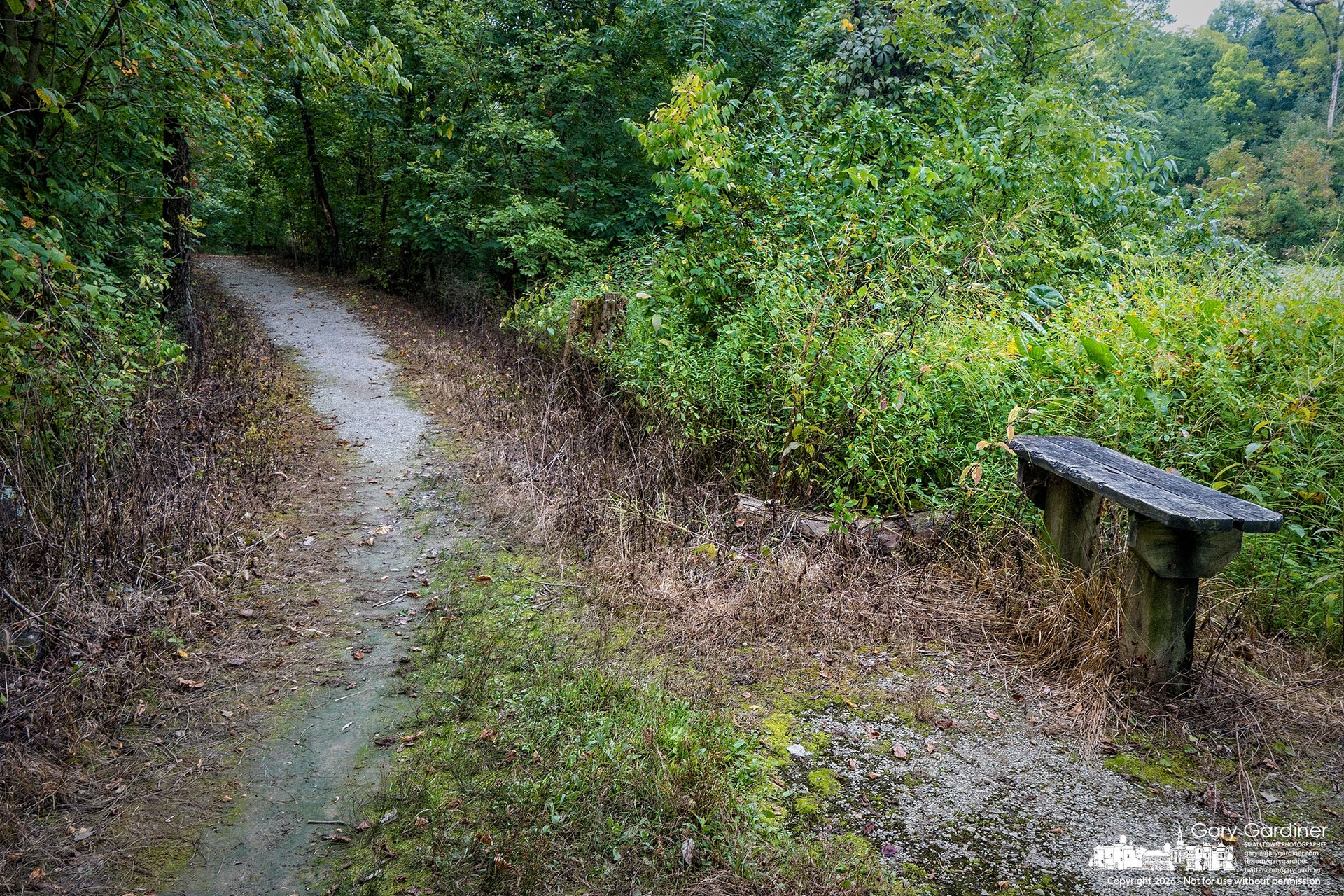
“Some of the spots they went kind of wide and other spots they didn’t spray anything,” Ulry said. He said workers appeared to have used their judgment about which vegetation needed to be controlled.
“I think they were using their best judgment to kind of control some things, but, you know, may have slightly missed the mark a little bit,” he said.
Ulry did not characterize the spraying as a policy violation or say the employee who sprayed the preserve acted improperly. He did, however, say the department can improve how it approaches herbicide use in natural areas.
David Roseman of Friends of Alum Creek and Tributaries, or F.A.C.T., said members of the organization were alarmed by the extent of the spraying. F.A.C.T. members have worked at Boyer on conservation and habitat improvement projects.
“FACT Board members were very shocked and saddened to see the massive misapplication of herbicide broadcast immediately within the sensitive, rare wetland area where we’ve earnestly worked to protect and improve,” Roseman wrote in an email.
Roseman said mowing a narrow shoulder along the stone pathway, after native wildflowers had bloomed and gone to seed, would have been enough to keep vegetation from encroaching on the trail. When told poison ivy had been cited as a reason for spraying, Roseman said that called for a more targeted treatment rather than spraying a broad strip of vegetation.
“Then the approach should’ve been targeted application onto only those plants rather than the broadcast wide nonselective spraying,” Roseman wrote. “FACT doesn’t cut down the entire forest just to remove honeysuckle bushes and invasive Bradford pear trees.”
Roseman also noted that poison ivy, despite the problems it can create for people using a narrow trail, is native to Ohio.
Boyer’s history helps explain why the spraying drew concern. The city acquired the first 7.8 acres of what was then Boyer Park in 1966, when newspaper publisher and Westerville Rotary member A. Monroe Courtright sold the land to Westerville for $1.
The park was named for John Neely Boyer, a former Westerville mayor, Otterbein professor, and nature enthusiast. But schoolchildren are a primary reason the land survives today as a nature preserve.
By the 1970s, local students were using the area as an outdoor laboratory for studying pond and forest ecology. In 1975, a proposed sanitary sewer route threatened the glacial kettle and surrounding natural area.
Students and teachers at nearby Whittier Elementary School, led by principal Tom Dickinson, organized a “Save Boyer Park” campaign. Students held a bike-a-thon, rock concert, and film festival while building community support for protecting the property.
The sewer route was changed, and on May 20, 1975, Westerville City Council formally designated Boyer Park as Boyer Nature Preserve. The students’ campaign received national attention in Ranger Rick magazine in 1976.
In the decades since, volunteers and conservation organizations, including F.A.C.T., have worked with the city to remove invasive plants, plant native species, create and enhance wetland habitat, and protect native habitat at Boyer.
Ulry said the recent spraying showed the department needs to distinguish between routine grounds maintenance and work in a nature preserve.
“Our general operations for spraying at the community center probably need to look different than the way we would spray at Boyer Nature Preserve,” Ulry said.
He said that distinction should also apply to natural areas elsewhere in Westerville, even when they are not formally designated as nature preserves.
“We can be clear about the expectations out at Boyer,” Ulry said. “Even if they’re not nature preserves, we have areas that are similar, the woods at Metzger or Heritage or anywhere else. Those are probably, even though it’s not a quote-unquote nature preserve, you kind of treat those natural spaces like a nature preserve.”
Ulry said much of the vegetation affected by the herbicide should return, mentioning asters and goldenrod among the plants growing in the preserve. Fourqurean had raised a similar question during his earlier interview, saying the city should continue evaluating when and how herbicides are used, particularly in natural areas.
“We need to continue to evaluate these things,” Fourqurean said, questioning whether the department needs “more tools in the tool chest, especially more in areas where we know it’s a nature reserve.”
He also pointed to the city’s newly hired sustainability coordinator as someone who could help the department evaluate alternatives and potentially reduce its reliance on spraying.
Ulry expects much of the browned vegetation to grow back. The maintenance question raised by the spraying will remain.
More than 50 years ago, children from Whittier Elementary persuaded their community to treat the kettle pond and surrounding land as something different from an ordinary park. The city ultimately agreed, giving Boyer protected status as a nature preserve.
Ulry said the recent spraying has prompted Parks and Recreation to consider how that same distinction should guide the way Boyer is maintained today.

Because this post is public, you’re encouraged to share it on social media.
The Westerville News is a reader-supported publication by Gary Gardiner, a lifelong journalist who believes hyper-local reporting is the future of news. This publication focuses exclusively on Westerville—its local news, its influence on Central Ohio, and how surrounding areas shape the community.
Reader funding, including subscribers, protects editorial independence, so coverage is guided by journalists rather than owners or corporate profit goals. It also reduces pressure to chase clicks, letting the newsroom focus on stories worth readers’ time. And it helps keep the site accessible to everyone, including people who can’t pay or live in places where a free press is under threat.
Explore more hyper-local reporting by subscribing to The Hilliard Beacon, Civic Capacity, Marysville Matters, The Ohio Roundtable, Shelby News Reporter, This Week in Toledo, and Into the Morning by Krista Steele.

Great article. Every time I read something here I’m impressed by the amount of work you put into this, Gary. Thank you.