
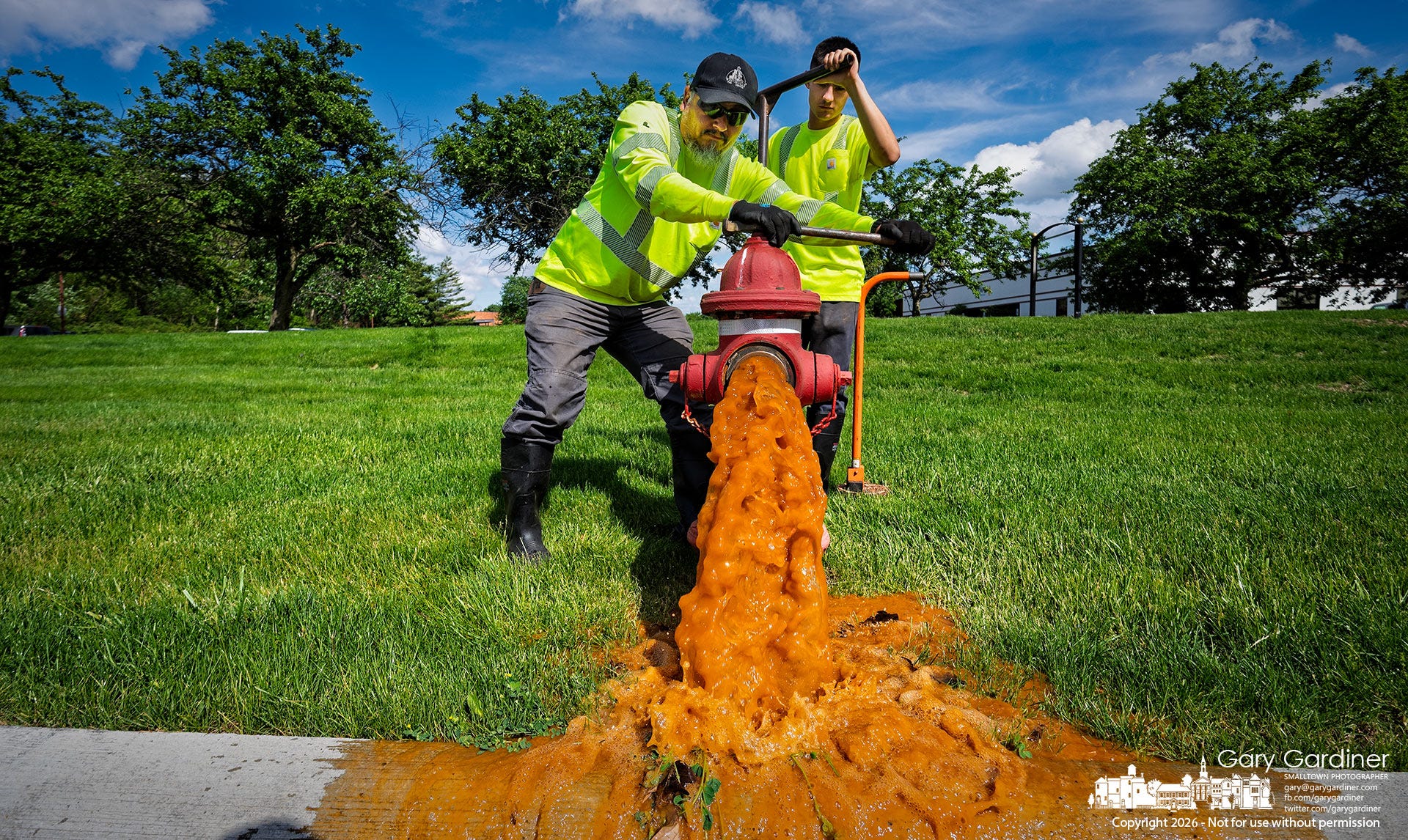
Hydrant Flushing Clears Sediment
A torrent of rust-colored water poured from Westerville fire hydrants this week as Public Service crews began their annual sweep to flush sediment from water lines and test hydrants and adjacent valves to make sure they’re ready for emergency use.
The City’s annual hydrant-flushing program began on Sunday, April 26, and is scheduled to continue through Friday, May 8. The work runs around the clock as crews flush more than 2,500 hydrants in the city’s water system.
Hydrant flushing is performed by systematically opening hydrants in a planned area, allowing a strong flow of water to move through the mains. That high-volume flow helps dislodge sediment, minerals, and other particulates that can build up in water lines over time.
Once loosened, the material is pushed out through the open hydrant, which can briefly send brown or orange-tinted water across nearby streets, curbs, or grassy areas. The City flushes each hydrant once a year to clear water lines and maintain the system.
In addition to clearing the lines, crews inspect hydrants and test nearby valves for operational issues. This work helps confirm that hydrants can open properly and deliver adequate flow for firefighters and other first responders.
Residents may notice a temporary drop in water pressure while flushing is underway in their area. In rare cases, water in nearby homes may appear discolored after nearby flushing. City officials say the water remains safe to drink during the work.
Residents who experience discolored water should run the cold water tap for a few minutes until the water clears, then remove any remaining sediment from the sink. The City advises avoiding hot water until the cold water runs clear, since sediment can clog filters, discolor laundry, or settle in a hot water tank.
Residents may also want to run their washing machine through a single rinse cycle before doing laundry.
Drivers are asked to exercise caution around flushing crews. When a hydrant valve is opened, water can gush out with considerable force, and runoff may create standing water or slick spots on nearby roads. Crews should be treated like any other construction or public works crew operating near traffic.
Because this post is public, you’re encouraged to share it on social media.
The Westerville News is a reader-supported publication by Gary Gardiner, a lifelong journalist who believes hyper-local reporting is the future of news. This publication focuses exclusively on Westerville—its local news, influence on Central Ohio, and how surrounding areas shape the community.
Reader funding, including subscribers, protects editorial independence, so coverage is guided by journalists rather than owners or corporate profit goals. It also reduces pressure to chase clicks, letting the newsroom focus on stories worth readers’ time. And it helps keep the site accessible to everyone, including people who can’t pay or live in places where a free press is under threat.
Explore more hyper-local reporting by subscribing to The Hilliard Beacon, Civic Capacity, Marysville Matters, The Ohio Roundtable, Shelby News Reporter, This Week in Toledo, and Into the Morning by Krista Steele.


