Initial Restoration Work Completed at Westerville’s Historic Sharp House

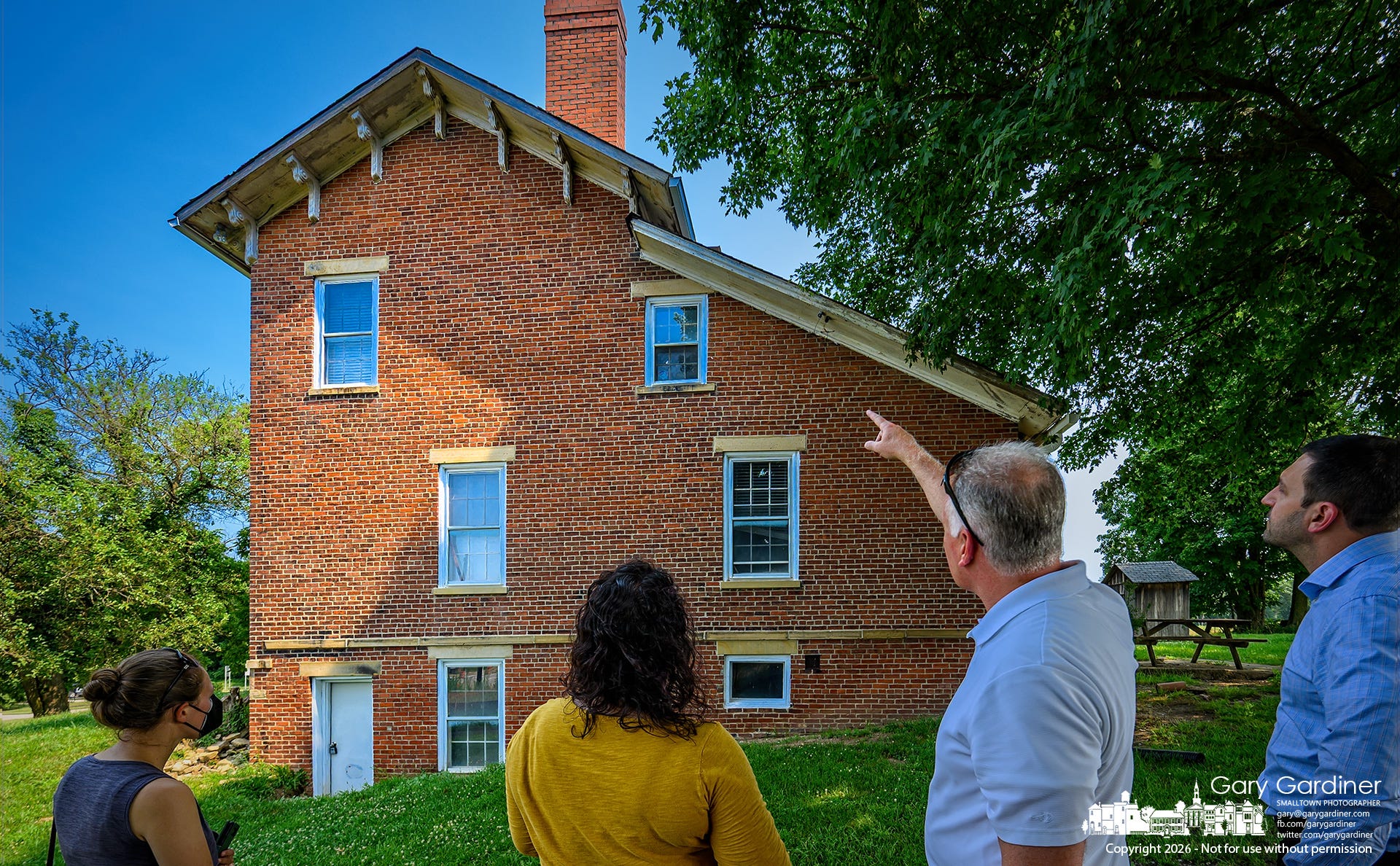
The City of Westerville has completed its planned initial restoration of the historic Sharp House on Africa Road, stabilizing the 19th-century building while officials search for an adaptive use that could incorporate it into the larger East of Africa development project.
The work focused primarily on preserving and repairing the exterior of the house. The brick walls were tuckpointed after restoration specialists considered eight mortar types and colors to determine which would most closely match the building’s original mortar joints.
The project also included replacing deteriorated lintels above windows and doors. The house’s six-over-six windows, with six panes in each sash, did not require repairs, but the windows and front door received a fresh coat of paint.
A more modern porch at the rear of the house was removed during the work. The kitchen, however, was left largely unchanged. Modern appliances, including a microwave, remain inside.
Westerville Director of Planning and Development David Efland recently led a tour of the rarely seen interior of the house. Joining him were Deputy Director Ben Kepple, Westerville Museum Manager Jackie Barton and Museum Specialist Kathryn Kaslow.
The group toured each room, beginning in the basement, where the Sharp family is said to have hidden freedom seekers traveling through the area as part of the Underground Railroad.
The basement and other areas of the house have seldom been seen by the public. The tour gave city and museum officials an opportunity to inspect the building after the exterior work and examine architectural details that may help explain how the house was constructed and changed over time.


As the group moved through the house, Barton closely examined the surviving wainscoting and molding along the walls and around the windows. She also noted the unusual sizes and shapes of several upstairs rooms.
The group inspected exposed interior brick walls that appeared to contain bricks different in size, color or composition from those used on the exterior walls. The differences could provide clues about alterations, additions or separate periods of construction during the house’s history.
The Sharp House was built for Stephen Sharp in the late 1850s. The Sharp family was connected to Westerville’s early settlement and the community’s abolitionist history.
The building was listed on the National Register of Historic Places because of its historic architecture, which was considered typical of southeastern Delaware County. The property’s reported connection to the Underground Railroad was linked to its historical significance later.
Accounts of the Sharp family’s involvement hold that freedom seekers were concealed in the basement while traveling north before the Civil War. Because parts of that history are based on local accounts and later research, museum and city officials continue to distinguish between documented architectural evidence and traditions associated with the property.
The house’s National Register documentation also identified seven outbuildings on the property in 1981. Only two remain.
The barn, chicken coop, shed, corncrib and workshop are no longer standing. Still on the property are a decorative gazebo and a small structure identified in the National Register application as an outhouse.
The disappearance of most of the outbuildings leaves the house as the principal historic structure on the property. Its preservation has become more significant as plans advance for development of the surrounding area.
Efland said the city’s goal is to preserve the building for adaptive reuse and make it an attractive feature that a developer could incorporate into a larger project within the East of Africa development area.
Rather than restoring the interior to represent a single period or immediately converting the house into a museum, the city concentrated on protecting the structure and improving its prospects for future use.
The interior continues to reflect different periods in the building’s history. Original or early architectural elements remain alongside modern additions, including the kitchen appliances. The mixture shows how the house was occupied and adapted over generations.
For now, the completed restoration work protects the exterior and gives the Sharp House a more secure place within the changing landscape east of Africa Road. The next step will be finding a practical use that preserves the building’s character and connects it to the larger development planned around it.
Because this post is public, you’re encouraged to share it on social media.
The Westerville News is a reader-supported publication by Gary Gardiner, a lifelong journalist who believes hyper-local reporting is the future of news. This publication focuses exclusively on Westerville—its local news, its influence on Central Ohio, and how surrounding areas shape the community.
Reader funding, including subscribers, protects editorial independence, so coverage is guided by journalists rather than owners or corporate profit goals. It also reduces pressure to chase clicks, letting the newsroom focus on stories worth readers’ time. And it helps keep the site accessible to everyone, including people who can’t pay or live in places where a free press is under threat.
Explore more hyper-local reporting by subscribing to The Hilliard Beacon, Civic Capacity, Marysville Matters, The Ohio Roundtable, Shelby News Reporter, This Week in Toledo, and Into the Morning by Krista Steele.