
Kroger-Giant Eagle deal could reshape grocery competition in Westerville
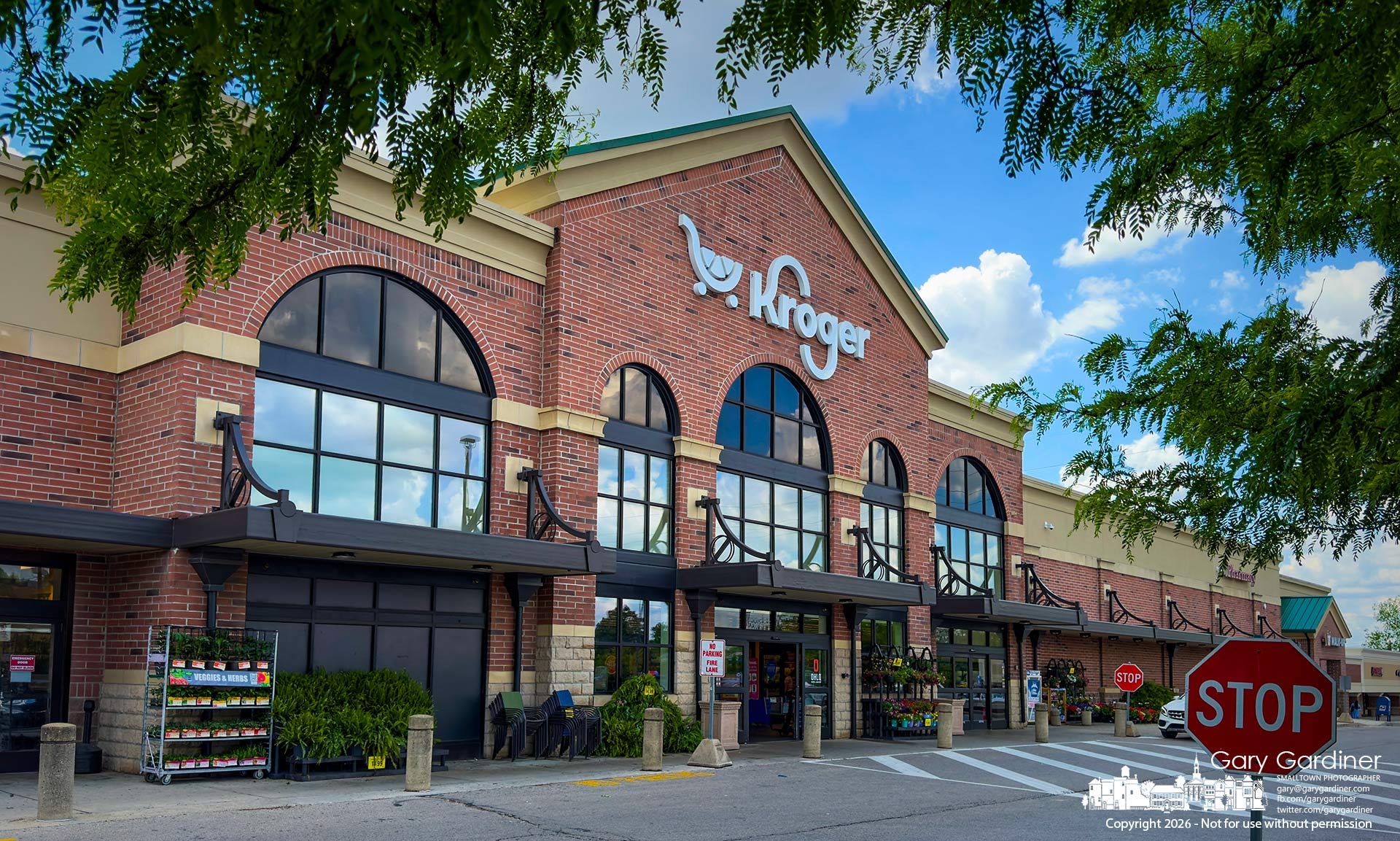
Westerville shoppers could lose one of three major grocery competitors at State and Maxtown if Kroger completes its proposed purchase of Giant Eagle.
Kroger operates on the northeast corner, Giant Eagle’s Market District sits across the intersection on the southeast corner, and Meijer occupies the northwest corner. If Kroger keeps both its stores and Market District, two of the three supermarkets would be owned by the same company.
The effect could extend beyond grocery prices. Competition among the stores also affects pharmacy services, fuel rewards, digital coupons, product selection, prepared foods, staffing, and customer service.
Kroger and Giant Eagle have said they expect to sell a limited number of Giant Eagle stores to win regulatory approval. They have not identified those stores or said whether the Westerville Market District is among them, but its location directly across from Kroger makes it a likely subject of review.
Kroger announced July 1 that it had agreed to buy Pittsburgh-based Giant Eagle for $1.65 billion. The price includes $1.25 billion in cash and about $400 million in assumed liabilities. Kroger operates nearly 2,800 stores in 35 states under about two dozen banners and reports annual sales of more than $132.5 billion. Giant Eagle reports about $9 billion in annual sales and operates 197 supermarkets and 11 stand-alone pharmacies in Ohio, Pennsylvania, West Virginia, Maryland, and Indiana.
The companies expect the deal to close in 2027, pending regulatory approval.
“In connection with obtaining the requisite regulatory clearance necessary to consummate the transaction, Kroger and Giant Eagle expect to make limited Giant Eagle store divestitures,” the companies said.
A divestiture would mean selling a Giant Eagle store to another operator. It would not necessarily mean the store would close. A buyer could continue operating the building as a supermarket under another name, with the sale potentially including equipment, inventory, pharmacy operations and rights tied to the property or lease.
Dr. Kurt Lykins, assistant professor of accounting at Otterbein University, said the local question is whether shoppers would retain meaningful competition after the transaction.
“Westerville is an example of the overlap regulators will examine closely, with Kroger and Giant Eagle stores located directly across the street from one another,” Lykins said.
The Kroger on Maxtown and the Market District across the street serve northern Westerville and nearby communities in southern Delaware County. Shoppers can move from one store to another by crossing the intersection.
If Kroger keeps both stores, Meijer would remain a major competitor at the intersection. Walmart and other Kroger stores also operate several miles away, which could support Kroger’s argument that shoppers would still have several choices.
Regulators, however, are likely to examine whether Kroger and Market District compete for the same customers and whether other stores are practical alternatives for routine shopping. That review could include how far customers drive, where they live, and whether Kroger and Market District compete on prices, promotions, and services.
Lykins said a sale alone would not guarantee that current competition would survive.
“If regulators require one of those stores to be divested, the outcome depends entirely on who acquires it,” he said. “If an experienced grocery operator enters the market, competition may be preserved. However, if no viable buyer emerges or the replacement retailer struggles to compete, Westerville could effectively lose a major competitor even if the building remains open.”
A buyer would need enough financing, grocery experience, management, and access to a reliable distribution system to compete with Kroger and Meijer. A regional supermarket company, an independent operator backed by a major wholesaler, or a chain entering Central Ohio could be considered.
Regulators also could consider whether a buyer would continue operating a full-service grocery store with services comparable to those offered by Market District. A smaller discount or specialty retailer might keep groceries in the building without replacing the competition that Giant Eagle now provides.
That concern was central to the failed Kroger-Albertsons merger. Kroger proposed selling hundreds of stores and other assets to C&S Wholesale Grocers to address government objections, but federal regulators argued the sale would not give C&S what it needed to replace the competition lost in the merger.
A federal judge blocked the $24.6 billion Kroger-Albertsons deal in December 2024. The companies later abandoned it.
The Giant Eagle purchase is smaller and includes fewer stores. Giant Eagle also operates in several areas where Kroger has less overlap. Westerville, however, presents a clear local issue: Kroger and Giant Eagle compete on opposite sides of the same intersection.
“For consumers, grocery competition extends beyond just prices on the shelf,” Lykins said. “Competing supermarkets influence fuel rewards, pharmacy services, digital coupons, product selection, labor markets and customer service.”
Both Westerville stores operate pharmacies and loyalty programs. Each competes for customers filling prescriptions, buying prepared foods, using digital discounts, and earning fuel rewards.
“When two major competitors become one, there is a risk that the incentive to aggressively compete diminishes over time,” Lykins said.
Kroger says the purchase would lower costs and strengthen its ability to compete with Walmart, Costco, Aldi, Amazon, and other large retailers. The company says combining Giant Eagle’s stores, pharmacies, private-label products and loyalty program with Kroger’s operations and online shopping systems could improve service and create savings.
Regulators will decide whether those benefits outweigh the possible loss of competition in communities such as Westerville.
The Market District’s future could also depend on sales, profitability, pharmacy volume, property ownership, lease terms, and customer travel patterns. Kroger could ask to keep both stores. Regulators could require Market District to be sold. Kroger also could propose another arrangement.
No plans for either Westerville store have been announced. For now, Kroger, Market District, and Meijer continue to compete from three corners of the intersection.
“Ultimately, the key question is not whether a store is divested, but whether Westerville shoppers end up with the same level of genuine competition they enjoy today,” Lykins said.

From Uptown storefronts to supercenters: The history of grocery shopping in Westerville
Westerville’s grocery stores reflect the community’s growth.
Early chain stores occupied narrow Uptown storefronts that customers could reach on foot. As automobiles became more common, grocers moved into larger buildings with parking lots. Shopping-center supermarkets, specialty markets, and supercenters followed.
Along the way, familiar names disappeared, new competitors arrived, and former grocery properties took on new uses.
Kroger’s path from an Uptown storefront to three Westerville-area supermarkets offers one of the clearest examples of that change. Big Bear became a Central Ohio institution before closing. Giant Eagle arrived as development pushed north, and Walmart opened after years of disputes over where to build a supercenter.
Together, the stores show how Westerville residents traveled, shopped, and responded to growth.
Kroger begins in Uptown.
Kroger’s history in Westerville began in the center of town.
During the late 1930s and early 1940s, Kroger occupied an Uptown storefront that previously housed Guitner’s Dry Goods. A historical marker placed by Uptown Westerville Inc. identifies the building as the community’s first Kroger.
The store belonged to an era when grocery shopping was part of a trip through the traditional business district. Customers could visit a grocer, pharmacy, hardware store, and other merchants within a few blocks. Stores opened directly onto the sidewalk and had little or no parking.
Kroger later moved east into a freestanding store on East Walnut Street.
The move reflected a broader shift in grocery retailing. The new building offered more space and easier access for customers arriving by car as Westerville expanded beyond Uptown.
The property at 64 E. Walnut St. later came under city ownership and was used for municipal offices and public services.
In 2026, the city considered selling the site for a mixed-use development that would include a hotel, apartments, a restaurant, and a parking garage. Residents raised concerns about the project’s size, traffic and effect on nearby neighborhoods.
Westerville City Council voted unanimously on June 2, 2026, to reject the proposed sale agreement.
The debate gave the former Kroger site another role in the city’s development history. A property that once represented the rise of automobile-oriented shopping had become the focus of a new discussion about density and growth near Uptown.
Kroger follows suburban growth.
As Westerville expanded, Kroger moved toward larger commercial corridors.
Its store at 55 W. Schrock Road serves the older central part of the community. The company later added stores at North State Street and Maxtown Road and on South Sunbury Road.
The locations reflect different stages of suburban development. The Schrock Road store serves established neighborhoods near central Westerville. The Maxtown store followed growth north toward Delaware County. The Sunbury Road store serves the community’s eastern edge and nearby parts of Blendon Township and northeast Columbus.
Kroger’s progression from a small storefront to large suburban stores spans much of the history of modern grocery shopping in Westerville.
Big Bear becomes a regional institution.
Big Bear became one of Central Ohio’s most recognizable grocery chains.
Wayne E. Brown opened the first Big Bear in Columbus in 1934. The store, located in a former roller-skating rink near Ohio State University, used the then-new model of allowing customers to select items from open shelves.
The company grew to 65 supermarkets, discount stores, and pharmacies in Ohio and neighboring states.
Westerville had several Big Bear stores over the years. One operated at 34 Westerville Square near State Street and Schrock Road. Another was at 2551 Schrock Road near Cleveland Avenue. A later store, anchored by Windsor Bay Shopping Center, on County Line Road.
Big Bear stores combined groceries with bakeries, delis, pharmacies, and general merchandise. They became part of weekly routines for many Central Ohio families.
The chain’s parent company filed for bankruptcy in 2003, and the remaining stores closed by 2004.
Former Westerville locations were later divided or adapted for other tenants.
Giant Eagle arrives in northern Westerville.
Giant Eagle expanded into Central Ohio as Big Bear weakened.
The company became the grocery anchor of NorthRidge Crossing at 650 N. State St., near State Street and Maxtown Road. The store sits in the same northern Westerville retail district as Kroger’s Maxtown location.
Giant Eagle later remodeled the store and converted it to its Market District format, which emphasizes prepared foods, specialty products, fresh departments, and other services.
The site had previously been proposed for a much larger development.
Around the turn of the century, developers proposed a roughly 212,000-square-foot Walmart Supercenter near State Street and Maxtown Road.
The plan drew opposition over traffic, the building’s size, and its impact on nearby neighborhoods and businesses. Westerville rejected the project, and the dispute continued through litigation before Walmart abandoned the proposal.
The property instead became NorthRidge Crossing, with Giant Eagle as its grocery anchor and smaller stores, restaurants, and commercial buildings around it.
Meijer adds another supercenter
Meijer also established a presence in the State Street and Maxtown Road retail district, adding a third major grocery option near the intersection.
The store at 100 Polaris Parkway is a supercenter that combines a full grocery operation with clothing, electronics, home goods, a pharmacy, and other departments. It also offers pickup and delivery services.
Like Walmart, Meijer represents the expansion of grocery shopping beyond the traditional supermarket. Its location near Kroger and Giant Eagle made the northern Westerville corridor one of the community’s most concentrated grocery-shopping areas.
The three stores also illustrate the range of formats competing for shoppers in the area: a traditional Kroger supermarket, Giant Eagle’s specialty-oriented Market District and Meijer’s broad supercenter model.
Walmart opens on Schrock Road.
Walmart continued its efforts to open a store in Westerville.
A separate plan called for a smaller Walmart at 50 E. Schrock Road, just east of State Street. That proposal also faced political opposition and legal challenges.
City Council initially rejected the plan. The developer sued, and opponents later tried unsuccessfully to place the issue before voters.
The store opened in August 2013.
Stores reflect a changing city.
Westerville’s grocery history mirrors the community’s physical growth.
The first Kroger was part of an era of walkable storefront shopping. The East Walnut store reflected the growing importance of the automobile. Big Bear represented the rise of regional supermarket chains. Kroger’s Schrock and Maxtown stores followed suburban housing growth, while Giant Eagle brought a shopping-center and specialty-food format.
Walmart marked the arrival of the modern supercenter, renewing questions about the scale and location of retail development.
Former grocery sites also continued to shape the city. Big Bear buildings found new tenants. The site of the rejected Maxtown Walmart became a shopping center anchored by Giant Eagle. The former East Walnut Kroger became municipal offices and later the subject of another development debate.
The stores residents used, and the buildings left behind, help tell the story of how Westerville grew from a compact town into a modern suburb.
Because this post is public, you’re encouraged to share it on social media.
The Westerville News is a reader-supported publication by Gary Gardiner, a lifelong journalist who believes hyper-local reporting is the future of news. This publication focuses exclusively on Westerville—its local news, influence on Central Ohio, and how surrounding areas shape the community.
Reader funding, including subscribers, protects editorial independence, so coverage is guided by journalists rather than owners or corporate profit goals. It also reduces pressure to chase clicks, letting the newsroom focus on stories worth readers’ time. And it helps keep the site accessible to everyone, including people who can’t pay or live in places where a free press is under threat.
Explore more hyper-local reporting by subscribing to The Hilliard Beacon, Civic Capacity, Marysville Matters, The Ohio Roundtable, Shelby News Reporter, This Week in Toledo, and Into the Morning by Krista Steele.


