Mary Lou Prouty, Westerville Leader Who Championed Its Historic Character, Dies

Mary Lou Prouty, Westerville’s First Female Mayor and a Guardian of Its Past, Dies
WESTERVILLE, Ohio — Mary Lou Prouty, Westerville’s first female mayor, a 20-year City Council member and a forceful advocate for preserving the city’s historic character, died May 21.
Her death was announced in obituary materials provided by her family.
Ms. Prouty served on the Westerville City Council for two decades, beginning in 1981, and was chosen by her council colleagues to serve as mayor in 1987. She held that role for four years, becoming the first woman to lead the city as mayor.
At a time when Westerville was growing and changing, Ms. Prouty became known as one of the city’s most persistent voices for historic preservation. She argued that progress did not have to come at the expense of memory, and that the city’s older buildings, brick streets, and traditional public spaces were not obstacles to development but part of what made Westerville worth protecting.
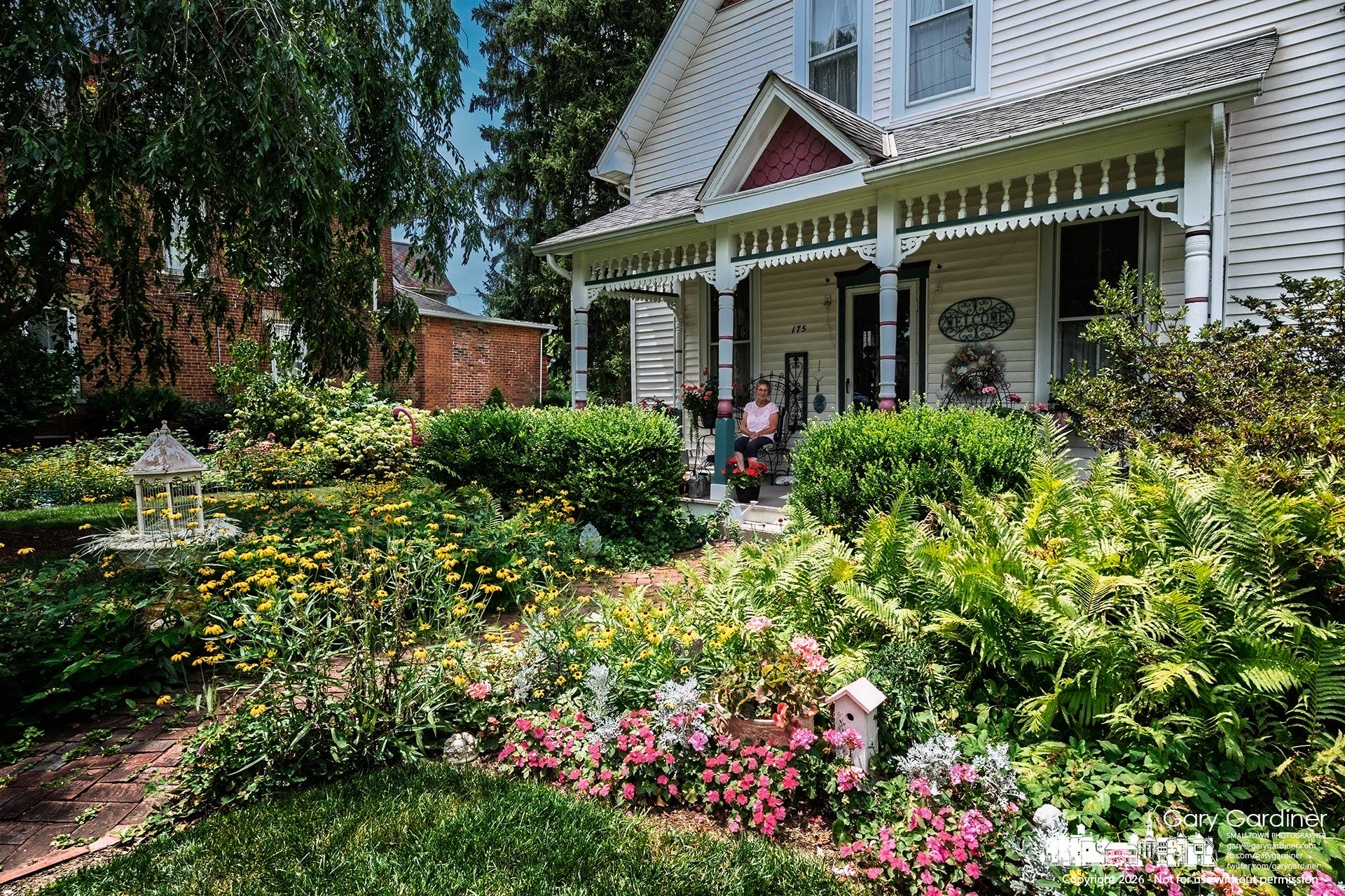
Her imprint remains visible in Uptown Westerville, where she advocated for stronger design standards, better review of development proposals, and the preservation of the city’s architectural heritage. She supported the work of the Uptown Review Advisory Board, pushed for brick streets, and helped champion historic landmarks, including the Hanby House, Stoner House, and the Everal Barn and Homestead at Heritage Park.
Former colleagues said her devotion to Westerville was both practical and personal.
“Mary Lou was passionate about Uptown,” said Michael Heyeck, who worked with her in city government. He cited her role in improving land-use coordination with Otterbein University, strengthening Uptown Review Board standards, supporting State Street redevelopment through historic-area grants, and encouraging higher development and redevelopment standards throughout the city.
He also remembered her fondness for what she called “lush and lavish” touches in Uptown, including hanging baskets, and her early support for Westerflora, the community beautification program that grew out of AmeriFlora in 1992.
“She absolutely loved Westerville and was passionate about protecting our history and our city,” Mr. Heyeck said.
Ms. Prouty was not a soft-spoken public official. She was direct, sometimes blunt, and rarely left colleagues or constituents guessing where she stood. Mr. Heyeck recalled one council meeting in which, while awarding a paving bid, she warned the winning bidder from the dais that they “better do a great job,” or she would get “her ball-bat” out to make it right.
“I truly loved her passion for our Westerville,” he said.
Kathy Cocuzzi, a former Westerville mayor and council member, said that passion continued long after Ms. Prouty left office.
“Mary Lou served on Council for 20 years and as Mayor for four of them,” Ms. Cocuzzi said. “She was very dedicated to Westerville, especially working to preserve Uptown. Mary Lou was unique, and you always knew where she stood on an issue. Even after she was no longer on Council she remained very invested in Uptown and Westerville as a whole.”
Craig P. Treneff, also a former Westerville mayor and council member, said Ms. Prouty’s legacy was rooted in her defense of the city’s built environment.
“Mary Lou, more than any local leader I can think of, stood for a fierce defense of Westerville’s architectural heritage,” he said. “She was a strong advocate of preservation of those places that made Westerville’s heritage visible, that help us define the historic legacy of this special place. As a city, we were fortunate to have had her.”
Beth Weinhardt, former director of the Westerville History Museum, said Ms. Prouty “gave of herself to protect the special character of our town by serving on council and in other areas of civic life.”
She moved to Westerville in 1966 from Cambridge, Ohio, graduated from the Ohio State School of Cosmetology, and worked as a managing cosmetologist for H.C.R. Manor Care in Westerville.
Her interest in preservation predated her election to the council. In the 1970s, she was active with the Old Westerville Society and helped present heritage markers for historic homes, according to local newspaper clippings. By the time she entered city government, she had already become closely identified with efforts to protect the older neighborhoods and public spaces that gave Westerville its sense of place.
Her years on council coincided with debates over growth, infrastructure, and the city’s identity. Newspaper accounts from her time in office described her as outspoken and independent. In a 2001 interview near the end of her council service, Ms. Prouty said she had learned that public office required accepting criticism as part of the job.
“For every six people you please, you are going to displease six,” she said then, adding that her approach was to study the issues and vote for what she believed was best for Westerville.
Her public life was also marked by personal loss. Her son, Jeff, died in a car accident in 1985. In the same 2001 interview, Ms. Prouty said Westerville residents had supported her after his death.
“I don’t have a lot of family,” she said. “I guess the city is my family.”
In 2014, Westerville named Ms. Prouty a Champion of Westerville, an honor given to residents whose service made a lasting contribution to the community. The recognition cited her role in preserving historic Uptown Westerville and her advocacy for the Everal Barn and Homestead, which became a centerpiece of Heritage Park.
She was also included in the Westerville History Museum’s “Trailblazing Women of Westerville” exhibit, which recognized women who shaped the city’s civic life.
Funeral arrangements and survivor information were not immediately available.
Ms. Prouty often said she wanted to make a difference. In Westerville, that difference can still be found in the preserved homes, restored landmarks, flower baskets, brick streets, and civic expectations she helped defend: that a city’s future is stronger when it remembers what came before.
Because this post is public, you’re encouraged to share it on social media.
The Westerville News is a reader-supported publication by Gary Gardiner, a lifelong journalist who believes hyper-local reporting is the future of news. This publication focuses exclusively on Westerville—its local news, influence on Central Ohio, and how surrounding areas shape the community.
Reader funding, including subscribers, protects editorial independence, so coverage is guided by journalists rather than owners or corporate profit goals. It also reduces pressure to chase clicks, letting the newsroom focus on stories worth readers’ time. And it helps keep the site accessible to everyone, including people who can’t pay or live in places where a free press is under threat.
Explore more hyper-local reporting by subscribing to The Hilliard Beacon, Civic Capacity, Marysville Matters, The Ohio Roundtable, Shelby News Reporter, This Week in Toledo, and Into the Morning by Krista Steele.


