
Millstone Park Empty - North West Street Gets New Driveways - Bowling History Began In Westerville
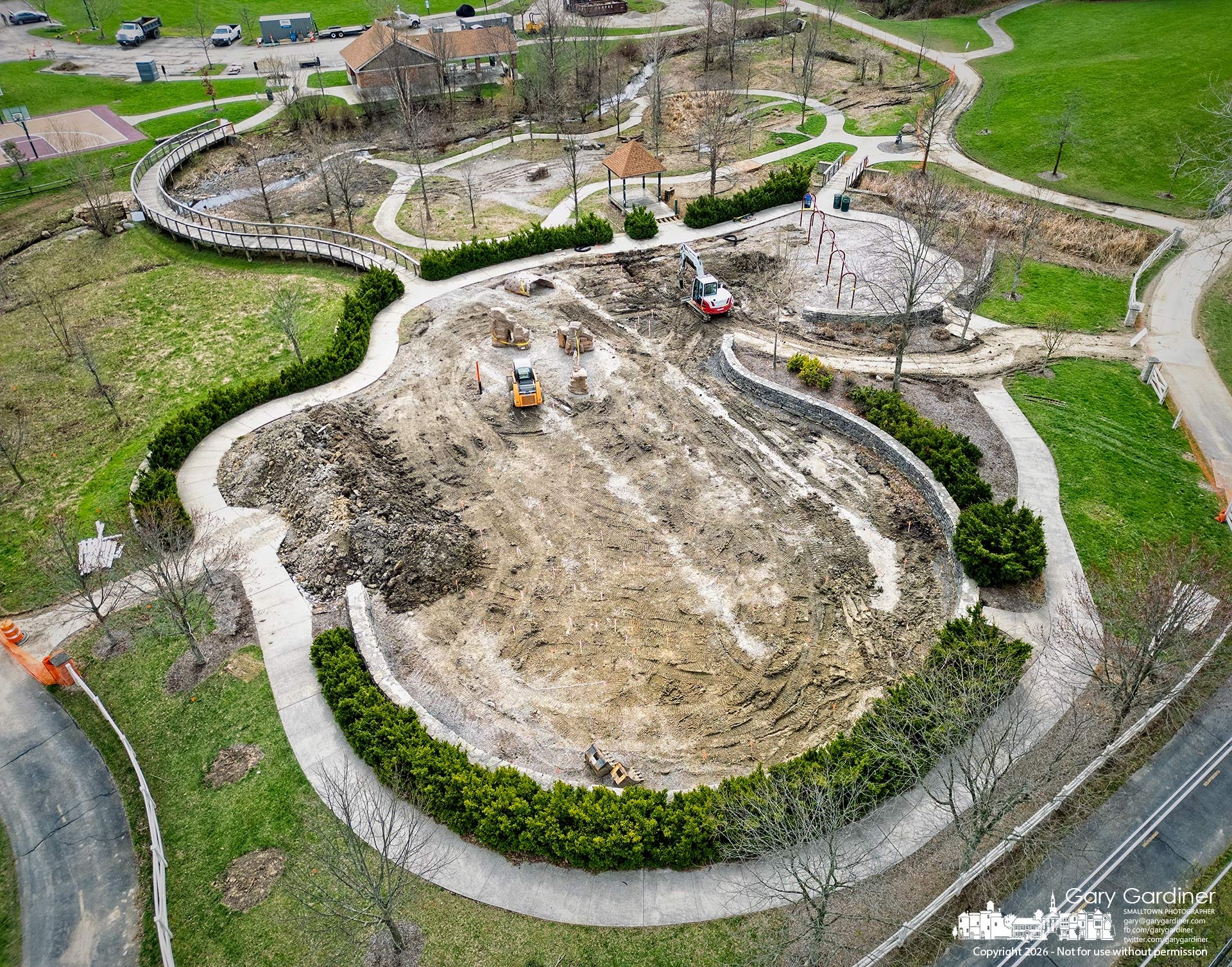
Millstone Creek Park’s playground is now largely barren, with only one of the original swing sets and climbing rocks still standing as crews make way for new equipment intended to create a more inclusive play space.
The work marks the first major renovation of the park since it opened in 2011. What was once considered a progressive playground design is now being replaced by a lower, more open layout intended to better support shared play among children of different abilities.
When Millstone Creek Park opened, its tall central structure and winding ramps reflected the accessibility standards and design philosophy of the time. Children using wheelchairs could reach elevated platforms, a feature that set the playground apart when it was built.
But the design also revealed limitations. The ramps directed children along narrow paths, concentrated much of the play above ground level, and made it difficult for caregivers to see activity across the site from nearby benches and walkways.
The new design shifts away from that model. Instead of a towering central structure, the redesigned playground will spread activity across the site and use the park’s natural slope to create changes in elevation without long switchback ramps. Most play features will be located at ground level, with smoother connections between areas and clearer sightlines for caregivers.
Matt Ulrey, the city’s Parks and Facilities Superintendent, said the redesign reflects a broader change in how playgrounds are planned.
“There’s a difference between being able to get to the equipment and being able to participate in the play,” Ulrey said.
He said that the idea became clearer during early design discussions, when the project’s landscape architect explained that inclusive playgrounds are designed around shared experiences, not simply access by separate routes.
That distinction is central to the Millstone Creek project. The earlier design focused on making sure children could reach the equipment. The new plan is intended to help children of different abilities play together in the same spaces, with fewer physical and social barriers built into the layout.
Millstone Creek’s renovation is also part of a broader reassessment of the city’s parks. At Alum Creek Park North, new sidewalks are being added to connect areas once separated by grass. Future projects at Walnut Ridge Park and Everal Barn are expected to continue that process, reexamining older designs through the lens of accessibility, visibility, and inclusion.
Towns on the Greenway Driveways
Two new driveways have been added along North West Street at Towns on the Greenway, where Pulte is building two single-family homes that will face the street. The homes sit in front of the 84 townhomes planned for the development, which is being built on the last remaining plot of farmland along the street. The townhomes behind the houses are listed at about $500,000 each, depending on the floor plan and location within the complex.
Bowling’s Pin History
Otterbein University archivist Stephen Grinch told a crowd that filled both meeting rooms at the Westerville Library that the history of Sanders Frye, a Westerville businessman who worked at Otterbein University, included inventing the bowling automatic pinsetter and being instrumental in the construction of many buildings that are still in use at the school, including Cowan Hall.
Frye helped improve bowling nationwide through his work on automatic pin-setting machines. Early automatic setters were known for frequent breakdowns in busy bowling alleys, and Frye sought to solve that problem by filing several patents in 1944, 1945, and 1946. One of those patents was later sold to the company that became AMF Bowling Centers, allowing Frye’s innovation to reach bowlers across the country.
The program was presented by the Westerville Historical Society,
The Westerville News is a reader-supported publication by Gary Gardiner, a lifelong journalist who believes hyper-local reporting is the future of news. This publication focuses exclusively on Westerville—its local news, influence on Central Ohio, and how surrounding areas shape the community.
Reader funding, including subscribers, protects editorial independence, so coverage is guided by journalists rather than owners or corporate profit goals. It also reduces pressure to chase clicks, letting the newsroom focus on stories worth readers’ time. And it helps keep the site accessible to everyone, including people who can’t pay or live in places where a free press is under threat.
Explore more hyper-local reporting by subscribing to The Hilliard Beacon, Civic Capacity, Marysville Matters, The Ohio Roundtable, Shelby News Reporter, This Week in Toledo, and Into the Morning by Krista Steele.


