
National Wetlands Day - Hoover Ice Fishing Archive - Frozen Waters Archive - Restaurant Week Continued
Westerville Wetlands for The Common Future
Seen from above, winter wetlands seem calm. The frozen water looks pale and smooth, and the trees stretch out like ink lines on white paper. But beneath this still surface, wetlands continue to do their usual work: storing water, filtering pollution, sheltering wildlife, and protecting the land around them.
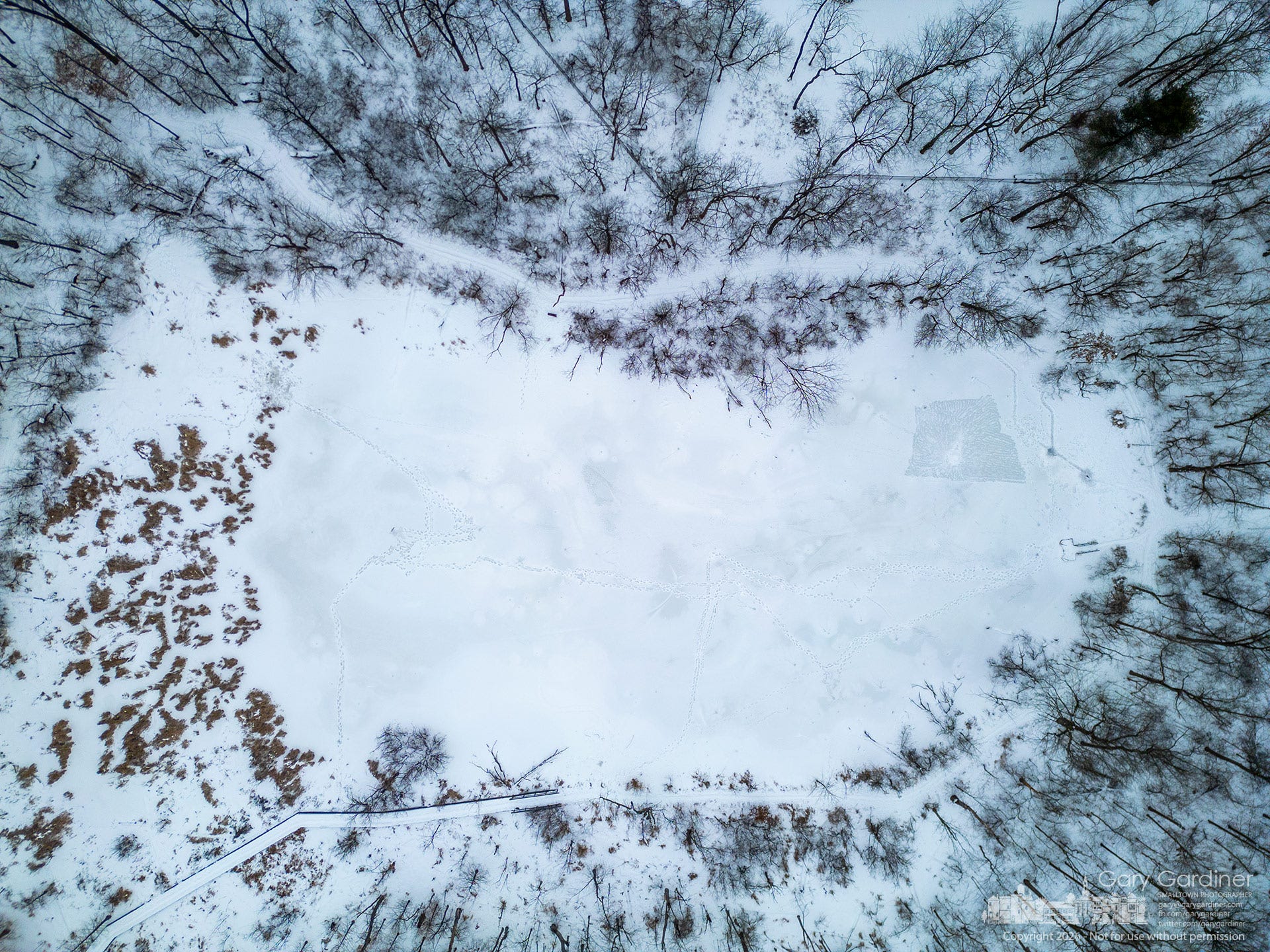
The aerial photos here show two important wetlands in Westerville, Ohio: Boyer Nature Preserve, which is the large oval basin, and Highlands Wetlands. Even in winter, you can see their purpose.
Wetlands are ecosystems shaped by water. They include marshes, swamps, wet grasslands, ponds, floodplains, and coastal areas. Even though they make up just 6 percent of Earth’s land, they support about 40 percent of all plant and animal species. Many animals rely on wetlands to breed, eat, or rest while migrating.
Wetlands also provide important benefits for people. They soak up extra rain, which helps prevent flooding. They filter out pollutants before water flows into rivers and aquifers. Wetlands store carbon, which helps slow climate change. Over one billion people around the world rely on wetlands for food, water, jobs, and their way of life.
At Boyer Nature Preserve, the frozen oval basin shows how wetlands collect and hold water. When it’s warmer, this area slows storm runoff and allows sediment and nutrients to settle. At Highlands Wetlands, the branching trees outline the edges of shallow water channels, showing how wetlands spread and slowly release water across the land.
These places aren’t empty land waiting for development. They are active landscapes, even in winter. Tracks in the snow show animals are moving through. The trees and plants around them help keep the soil in place and provide wildlife with a home year-round.
Even though wetlands are valuable, they are disappearing faster than most other ecosystems. Since 1970, over a third of the world’s wetlands have been lost because of drainage, development, pollution, invasive species, and climate change. When wetlands are gone, communities often experience more frequent flooding, poorer water quality, and fewer wild animals.
One reason for this loss is the way people view wetlands. Too often, they are viewed as useless land instead of as important life-support systems. It’s important to change this way of thinking.
World Wetlands Day is held every year on February 2 to highlight the importance of wetlands for people and the planet. The 2026 theme, Wetlands and traditional knowledge: Celebrating cultural heritage, honors the long connection between wetlands and human communities, from food to cultural traditions.
Local places like Boyer Nature Preserve and Highlands Wetlands are part of this global story. Protecting them helps keep nature diverse, strengthens communities against climate change, and preserves natural spaces for the future.
On World Wetlands Day, these winter scenes remind us that even when wetlands appear quiet, they are active and important, and deserve our protection.
Hoover Fishing in 2021
Hoover Reservoir briefly became an ice-fishing spot on February 12, 2021, when sustained cold temperatures finally froze the water solid enough for anglers. Fishermen spread out across the ice with portable shelters, hand augers, and buckets, settling in for a quiet winter morning.
Ice fishing on Hoover is rare. The reservoir does not freeze over most winters, making days like this more of an exception than a tradition. By the following week, warming temperatures began to break up the ice, and the opportunity was gone as quickly as it arrived.
These photos were taken during that short window when winter fully tightened its grip, turning a familiar central Ohio reservoir into something entirely different.
On February 12, 2021, a group of skaters cleared snow from the ice on a shallow lagoon near the docks on Hoover Reservoir, creating a smooth oval for skating. The lagoon’s protected, shallow water froze solid during the cold snap, offering a rare chance for outdoor skating.
The moment was short-lived. A park ranger soon arrived and informed the skaters that ice skating is not permitted at the reservoir, and the activity ended.
Like the ice fishing happening elsewhere on the lake that day, the skating reflected a brief pause in winter conditions when cold temperatures transformed familiar spaces into something unexpected, if only for a few hours.
Three-on-Three On Hoover
In December 2005, a frozen lagoon near the Walnut Street boat ramp on Hoover Reservoir became an impromptu outdoor hockey rink during a stretch of sustained cold weather. After clearing the snow, a group gathered to skate and play on the smooth ice, setting up a small net and using the shallow, protected water near the shoreline.
The photo captures a familiar winter ritual in an unexpected setting, a moment when the cold briefly reshaped the reservoir into a neighborhood rink before conditions changed, the ice disappeared again, and the ranger stopped the fun.
Still Time For the Special Menus
Restaurant Week was extended until Saturday, February 7, after a week of snow and below-zero temperatures kept chefs, waitstaff, and diners confined to their homes, as roads were cleared and minds were made to venture out for the special menus.
Five of the Westerville restaurants continue the special menu items.
101 Craft Kitchen. 817 Polaris Pkwy. (614) 776-4775.
BRU Burger Bar. 691 N Cleveland Ave. (614) 918-8680.
El Vaquero. 420 Polaris Parkway. (614) 392-2045.
High Bank Distillery. 28 S State St. (614) 380-3130.
Rusty Bucket Restaurant and Tavern. 400 Polaris Pkwy. (614) 890-3663.
The Westerville News is a reader-supported publication by Gary Gardiner, a lifelong journalist who believes hyper-local reporting is the future of news. This publication focuses exclusively on Westerville—its local news, influence on Central Ohio, and how surrounding areas shape the community.
Reader funding, including subscribers, protects editorial independence, so coverage is guided by journalists rather than owners or corporate profit goals. It also reduces pressure to chase clicks, letting the newsroom focus on stories worth readers’ time. And it helps keep the site accessible to everyone, including people who can’t pay or live in places where a free press is under threat.
Explore more hyper-local reporting by subscribing to The Hilliard Beacon, Civic Capacity, Marysville Matters, The Ohio Roundtable, Shelby News Reporter, This Week in Toledo, and Into the Morning by Krista Steele.


Nice article!