

Planning Meeting Roundup - Sandwich Shop and New Bar in Uptown
Westerville asks residents to help shape South State Street’s future
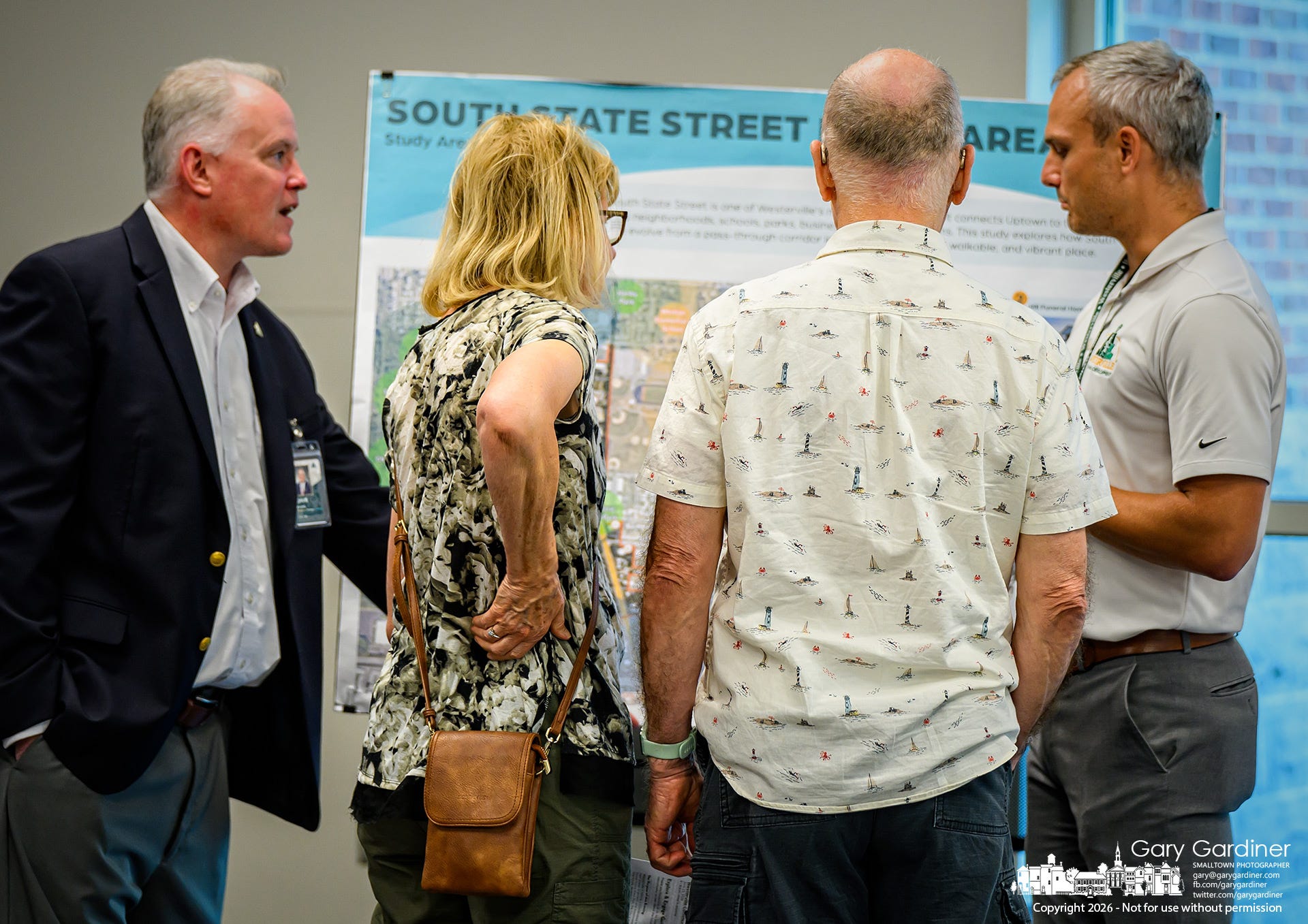
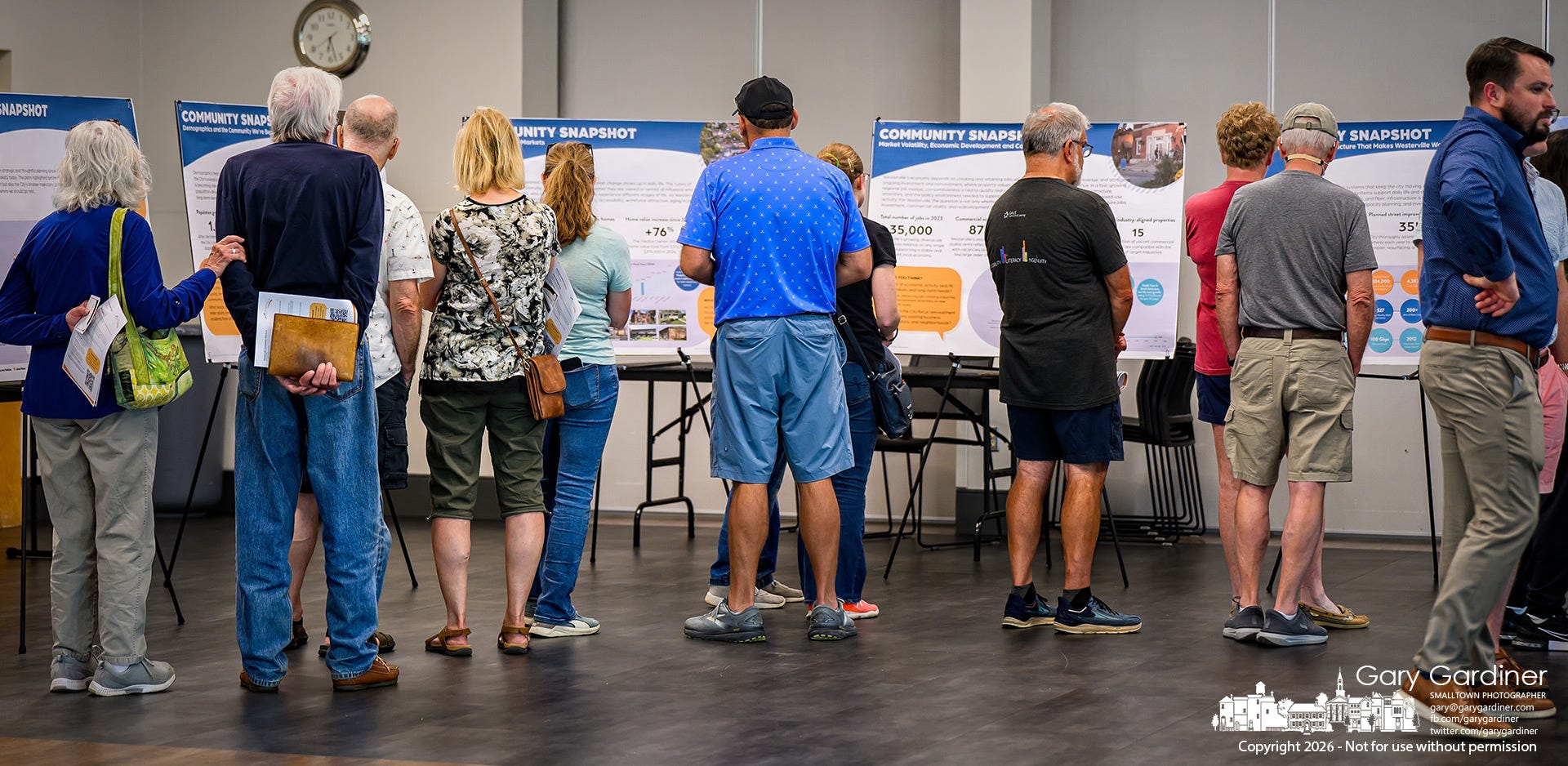
About 60 people gathered Tuesday evening at the Westerville Community Center to review maps, study planning data and share ideas for South State Street and the city’s next 10-year community plan.
The Plan Westerville open house mainly focused on existing conditions and redevelopment possibilities along the South State Street Corridor. Other displays covered Westerville’s planning history, current priorities and future growth.
Instead of a formal presentation, city employees and planning consultants answered questions as residents moved through the displays.
The meeting introduced two related efforts: a citywide review of Westerville’s plans and priorities and a detailed focus-area plan for South State Street. Together, the work is intended to guide land-use decisions, public improvements, and private investment.
Planning and Development Director David Efland said the corridor offers opportunities ranging from streetscape improvements to long-term redevelopment.
“I’m excited about South State Street,” Efland said. “There’s a lot of opportunity.”
Possible public improvements include sidewalks, street trees, and upgraded traffic signals that could give the corridor a more cohesive appearance. Efland said those changes would require significant city investment.
“Can we get to a place where, well, not everybody’s going to agree, but the majority can agree, and council can agree ultimately, on spending a lot of money to do some infrastructure?” he said. “Because infrastructure is extremely expensive.”
The focus area runs along State Street from Walnut Street south to Schrock Road. City Engineer Nate Lang answered questions about the corridor’s size, roadway design and mix of properties.
The 53.29-acre study area includes 94 parcels owned by 54 landowners, according to city displays. Surface parking accounts for 16.68 acres, or 31% of the area.
Much of the corridor consists of single-story commercial and office buildings separated from State Street by parking lots. The roadway is designed primarily to move vehicles efficiently, the city’s analysis said.
That pattern limits walking, mixed-use activity, and long-term economic value.
Although sidewalks line both sides of the street, their width and condition vary. The city also identified a lack of street trees, active ground-floor uses, bicycle amenities, and comfortable connections between destinations.
About seven-tenths of a mile of the Ohio to Erie Trail’s 3.8-mile Westerville segment passes through the district.
The city called the trail one of the corridor’s strongest assets but noted inconsistent lighting, limited east-west connections, few bicycle amenities and sections bordered by chain-link fencing.
Data presented Tuesday showed South State Street is busiest during the day, particularly around lunchtime, with less evening and weekend activity than Uptown. The analysis also found shorter visits, fewer repeat visitors, and declining visitation since 2019.


Efland said the plan must address more than public improvements because nearly all the property is privately owned.
“It’s all in private hands,” he said.
The goal is to build agreement around the type of change residents and city leaders want, then align zoning, infrastructure, and financial tools with that vision.
“Can we agree that some change makes sense, and let’s agree on what that change is?” Efland said. “I think it’ll happen over time.”
Possible steps include updating the corridor’s zoning overlay, improving public infrastructure and considering additional financial incentives.
Efland said the entire focus area is covered by the South State Street tax increment financing district. A TIF uses increases in property-tax revenue within a defined area to help pay for public improvements.
The city may also consider other tools to carry out the eventual plan.
The number of owners and the small size of some parcels could complicate larger redevelopment projects. Efland said the city or a city development organization could eventually take a more active role in assembling property when projects align with the adopted plan and funding is available.
“There are just so many little pieces in here,” he said.
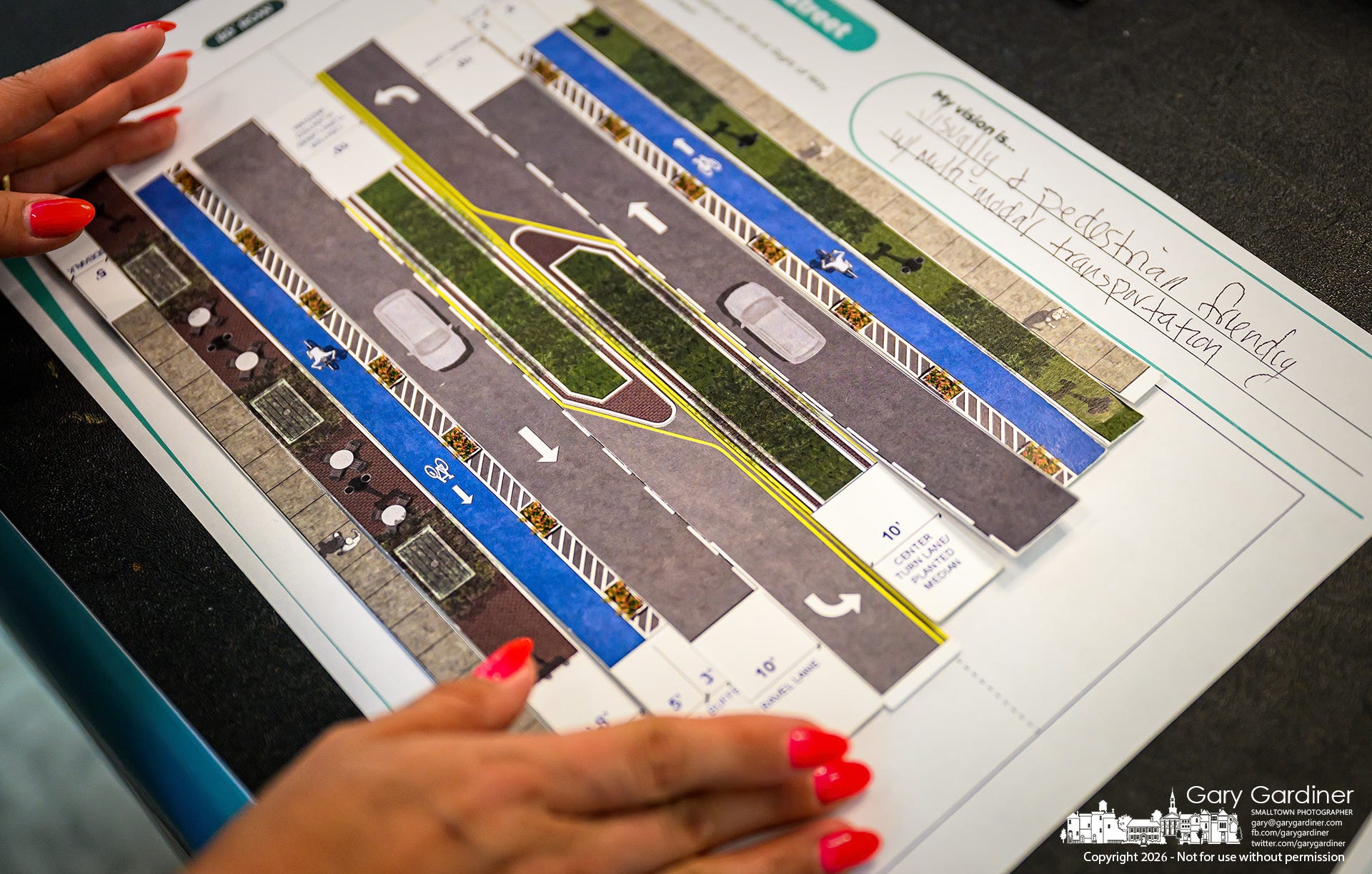
Residents also tested their ideas at a table with movable design strips representing traffic lanes, medians, bicycle lanes, sidewalks, and landscaping. Participants assembled their preferred street designs and wrote brief descriptions. City staff photographed each layout for the public record.
One design featured travel lanes divided by a landscaped median, bicycle lanes on both sides, and wider pedestrian areas. Its creator said the goal was to make the corridor safer and more pedestrian-friendly while expanding transportation options.
Participants also placed numbered dots on photographs of different streets, public spaces, and development patterns. Other boards invited comments on housing, neighborhood character, community involvement, and growth.
One participant called for lower density and mixed-use development, questioned who would benefit from additional traffic, and urged the city to consider residents and workers already in the area.
Another wrote: “Walkability & community destinations.”
Other comments called for more affordable housing, broader community involvement, and stronger communication with property owners before redevelopment decisions are made.
Residents also marked a citywide map showing where they believed Westerville should focus after completing the South State Street plan.
A companion board asked participants to identify traffic and safety problems, possible gathering places, redevelopment opportunities, missing trail connections, and corridors that may need further study.
Tuesday’s meeting marked the beginning of the public process. The comments, maps, and street designs will help staff develop preliminary concepts for South State Street, then return those ideas to residents for another round of review.
The eventual plan will not redevelop the corridor on its own. Its main role is to set the framework for future zoning decisions, infrastructure spending, and private investment.
The next step is to turn the ideas gathered on Tuesday into a defined set of choices and determine how much change Westerville is prepared to support.

Fat Arnie’s bringing restaurant and bar to former DiCarlo’s space in Uptown Westerville
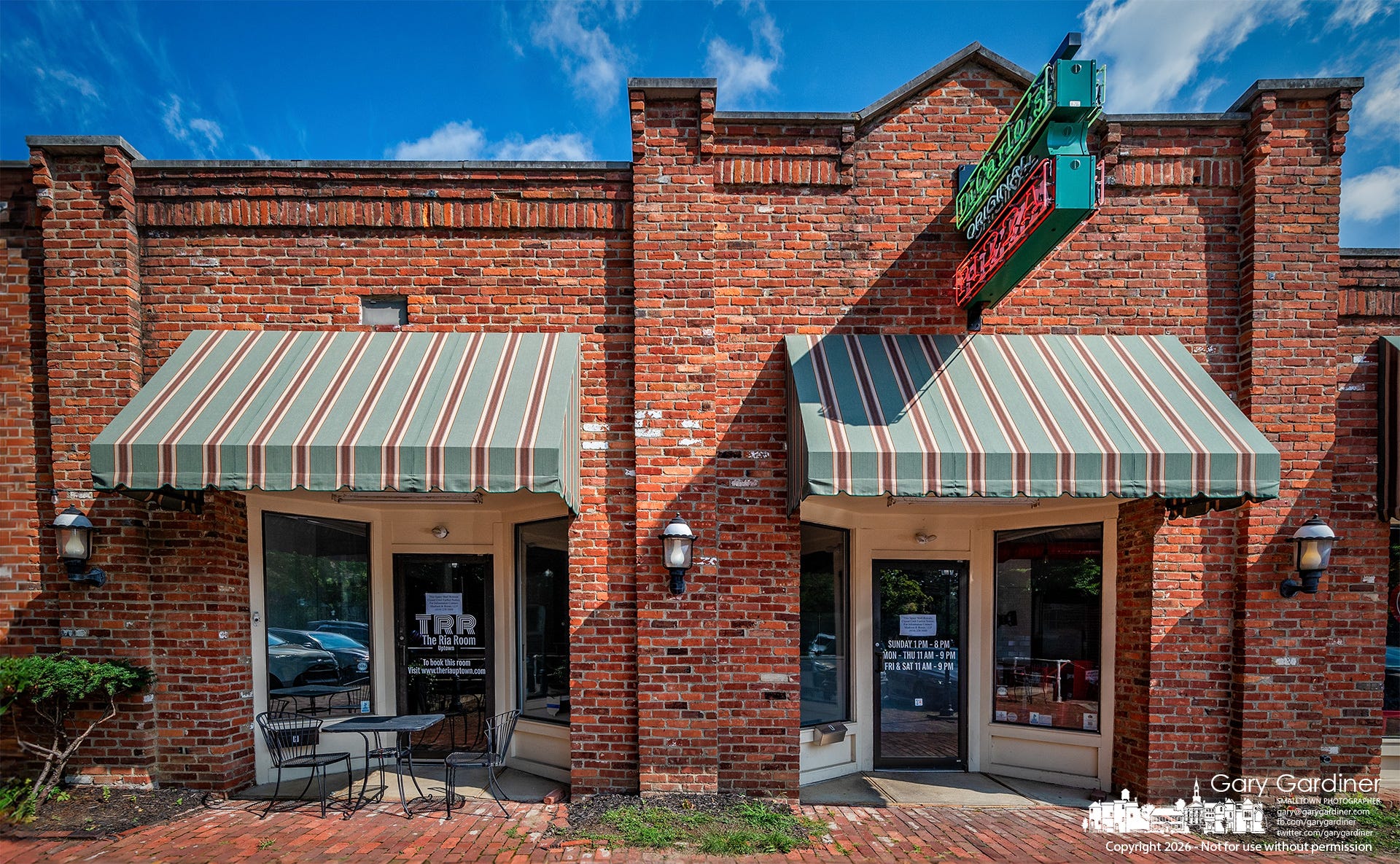
Fat Arnie’s Sandwich Shop is preparing to open its first standalone brick-and-mortar restaurant in Uptown Westerville, taking over the former DiCarlo’s Pizza location at 20 S. State St.
The project will include two connected concepts. Fat Arnie’s Provecho will operate as a takeout- and delivery-focused restaurant with limited seating, while the adjoining Blind Pour will serve as a neighborhood bar. Customers seated in the bar will be able to order food from Provecho.
Owner Chris Beardman said he runs Fat Arnie’s with his sons, Christopher and Andrew. Christopher, who previously worked at Lindey’s and Chapman’s Eat Market, leads the kitchen. Andrew recently left his job at Columbus Brewing Company to work full-time on social media, marketing, preparation, and other operations.
The new restaurant will be related to Fat Arnie’s existing sandwich shop but will have its own menu and identity. The original Fat Arnie’s location on Indianola Avenue will remain open.
“Fat Arnie’s Sandwich Shop isn’t going anywhere,” the business said in its announcement. “We’ll still be serving the sandwiches you know and love, along with the staples and rotating specials that have always been part of what we do.”
Provecho’s menu will include several Fat Arnie’s favorites, including its handmade empanadas, which Beardman said became an unexpected hit at the original location. The empanadas are made in-house, hand-rolled and hand-braided daily.
The Westerville menu will not be an exact copy of the original. The former pizza kitchen has an oven but no griddle or burners, so the team is developing a largely oven-based menu. A few signature sandwiches will carry over, while other dishes will be created specifically for the Uptown location.
Beardman described the food as an elevated take on sandwiches, reflecting Christopher’s fine-dining background. Recent specials have included a vegetarian BLT made with marinated carrots in place of bacon.
The Blind Pour is being developed by Beardman and Columbus radio personality Dino Tripodis. Beardman said the bar will focus on drinks the owners themselves enjoy rather than building a menu around expensive or elaborate cocktails.
The selection is expected to include bourbon, wine, familiar cocktails, and spirits from Ohio producers. Beardman said customers should be able to get a generous glass of wine or a quality pour at a reasonable price.
Tripodis has also been involved with Bottle to Bar, a video project highlighting Ohio distilleries and bars that serve their products. That connection could help shape the Blind Pour’s emphasis on locally made spirits.
The business is making cosmetic changes to the former DiCarlo’s space, including painting and redesigning parts of the bar. The owners may add booths or other seating later, after determining how customers move through the small rooms.
DiCarlo’s is known for Ohio Valley-style pizza, made by baking a thin rectangular crust with sauce before adding cheese after the pizza comes out of the oven. Its Westerville restaurant previously closed in 2022 amid rising costs and later reopened in 2024 under direct management by the DiCarlo family.
According to Fat Arnie’s announcement, DiCarlo’s departure was part of a broader strategy centered on expansion and real estate ownership, creating an opportunity for Fat Arnie’s to move into Uptown.
The team hopes to complete health department approvals and open both concepts before Uptown Westerville’s Fourth Friday event in late July, although the schedule remains subject to inspections and construction progress.
Because this post is public, you’re encouraged to share it on social media.
The Westerville News is a reader-supported publication by Gary Gardiner, a lifelong journalist who believes hyper-local reporting is the future of news. This publication focuses exclusively on Westerville—its local news, influence on Central Ohio, and how surrounding areas shape the community.
Reader funding, including subscribers, protects editorial independence, so coverage is guided by journalists rather than owners or corporate profit goals. It also reduces pressure to chase clicks, letting the newsroom focus on stories worth readers’ time. And it helps keep the site accessible to everyone, including people who can’t pay or live in places where a free press is under threat.
Explore more hyper-local reporting by subscribing to The Hilliard Beacon, Civic Capacity, Marysville Matters, The Ohio Roundtable, Shelby News Reporter, This Week in Toledo, and Into the Morning by Krista Steele.
