

Residents Question Revenue Premise, Offer Ideas For 64 E. Walnut Site
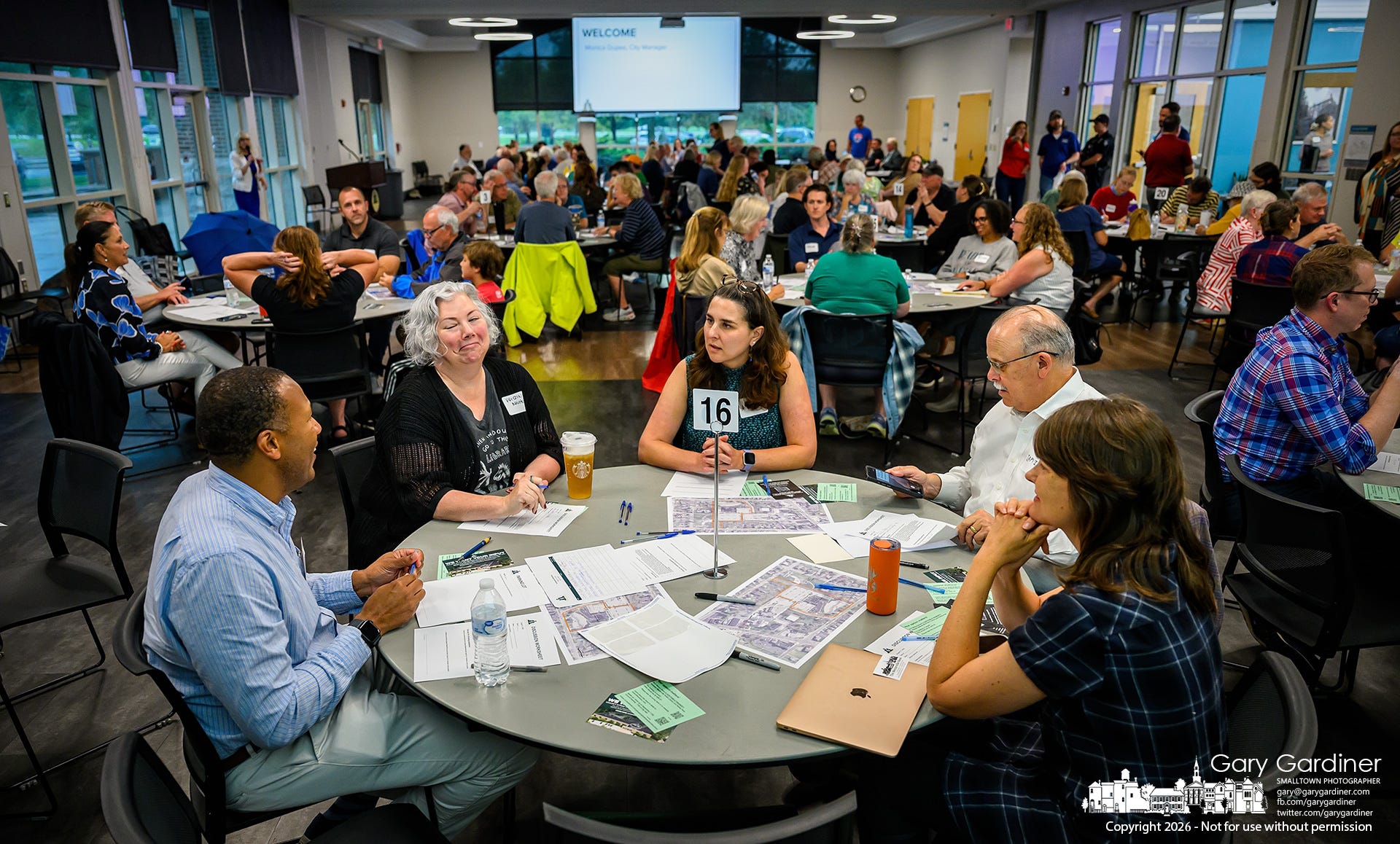
About 100 residents offered ideas Tuesday ranging from housing and public gathering space to a grocery store and arts center, repeatedly questioning the City of Westerville’s premise that 64 E. Walnut St. needs to generate revenue to support city services.
The discussion came during a city community workshop in which residents gathered at 24 tables, each led by a city-assigned captain. Participants worked through six questions about Uptown Westerville and the future of the 64 E. Walnut property before captains reported highlights from their tables to the room.
When residents were asked to consider their vision for the property “considering the 64 E. Walnut site needs to generate revenue to support city service delivery,” several tables challenged the assumption before discussing possible uses. One captain reported that his table asked, “Does the property have to be sold?” The group suggested a public-private partnership could allow the property to generate revenue while the city retained control of the site and protected the surrounding neighborhood.
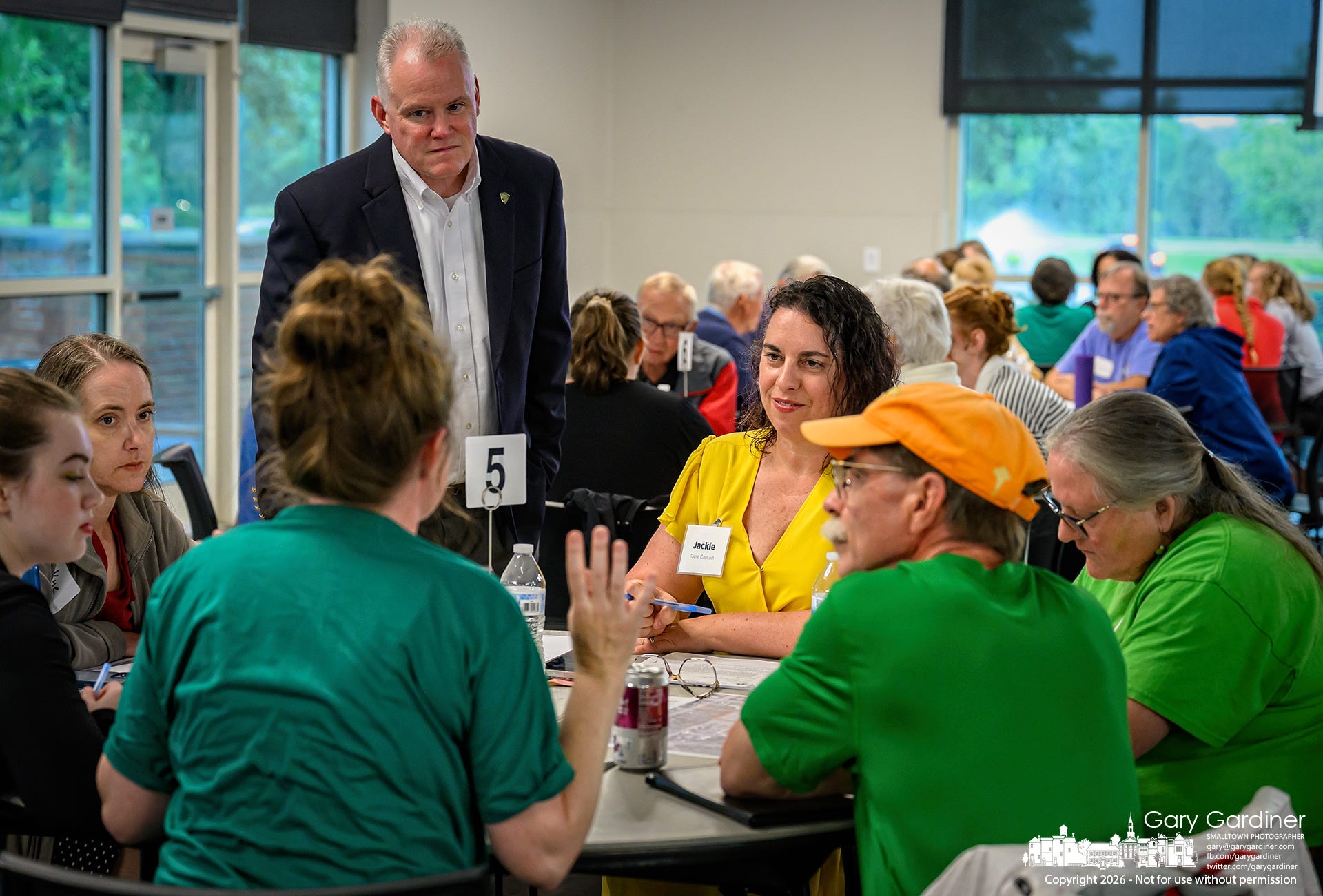
Members also said infrastructure expenditures should be considered when calculating the financial benefits of development. “Let’s not overlook hidden costs while striving for immediate returns,” the captain said.
Another table questioned the premise more directly. “Our group is interested in hearing why it needs to generate the revenue,” its captain said. “Why do we need to sell that property? Why do we need to generate the revenue?” The group also questioned whether emphasizing revenue generation was consistent with earlier city planning guidance.
A third table likewise questioned why the property needed to generate revenue and how much the city expected it to produce. The group then proposed uses including a daycare center, theater, arcade, art center, grocery store and housing at a range of prices, including starter and affordable housing.
Other proposals throughout the workshop included a children’s museum, innovation or entrepreneurial center, year-round market, public theater and arts space, senior housing, condominiums, single-family homes, restaurants and workforce training. Several tables envisioned the property primarily as a community-oriented space serving residents, children and young people, with suggestions including gathering spaces, a central green, teen activities, tutoring and expanded library-related uses.
Housing drew mixed reactions. Some residents supported affordable, senior, single-family and mixed-use housing, while others questioned whether 64 E. Walnut was the right location. “We understand that housing is needed, but we just are a little apprehensive about this location,” one table captain reported.
Residents also repeatedly raised concerns about how development could affect the surrounding neighborhood. Captains cited density, traffic, pedestrian and child safety, parking, construction impacts, environmental issues, noise, lighting, and whether existing infrastructure could handle new development.
One table said development should create value for residents over the next decade while improving quality of life and preserving the neighborhood feel. Members referenced the 2016 Old Westerville Overlay Plan and said plans should be considered in light of its guidance on housing and building height.


Another group questioned what would happen to the bike trail and easement, whether demolition could expose toxic substances, and whether the existing building could remain in use with modifications. Parking was also among the most frequently cited concerns, with residents noting that the property is already used by people visiting Uptown and by parents taking children to the nearby park.
Some participants also raised concerns regarding preserving connections among the neighborhood, library, schools, park and bike trail. Others said any development should fit the historic village character of the area rather than resemble larger suburban commercial projects.
“We don’t need a high rise,” one captain said. “We don’t need a place like Bridge Park.” That table instead discussed uses including a barber shop, barbecue restaurant, tutoring center, workforce training, teen gathering space and services that could complement activities at the library. Members also said they were open to mixed-use development, including restaurants on the ground floor with housing above.
The workshop followed a one-way format, with residents offering their views while city staff listened. City officials in attendance, including City Manager Monica Dupee, did not respond to the table captains’ reports during the session.
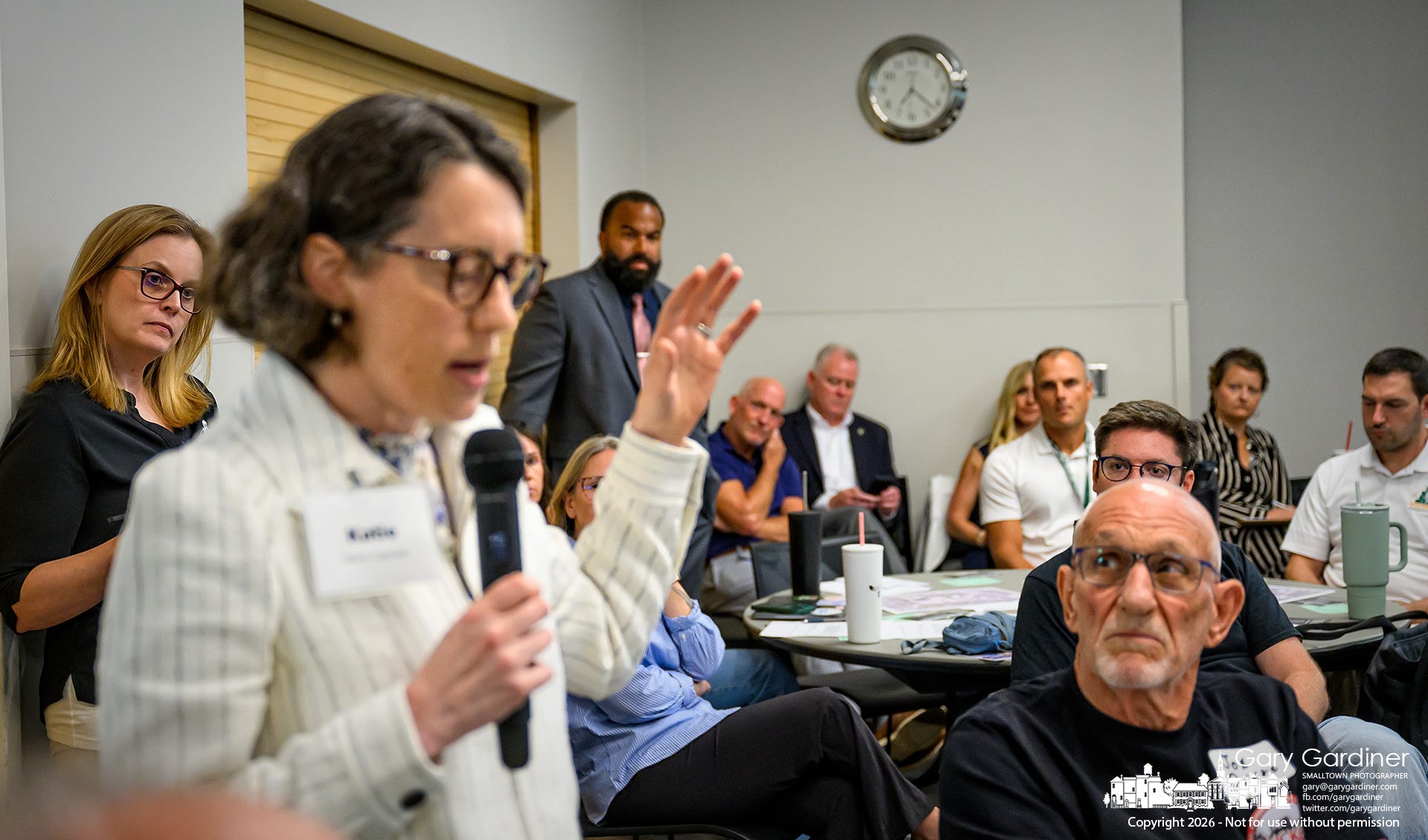
When one captain asked whether another business could occupy the existing building, facilitator Marie Keister said questions raised during the workshop would not be answered that night. “I’m not going to answer them yet because we’re going to take those questions to City Council,” Keister said.
Residents also called for transparency as the process continues. One table asked that individual worksheets be made public with identifying information removed and comments left unedited.
Keister said the completed questionnaires will be scanned and table captains will submit electronic summaries of their discussions. The material will be gathered into a document determining areas of agreement and disagreement and listing questions raised during the workshop. “All of that will be posted online eventually,” she said.
Residents who did not want their names or addresses included in the public record could cross that information off their worksheets before turning them in, Keister said. She said the scanned responses would not be edited.
The city’s online survey remains open until Aug. 25. Workshop findings will be expected to be presented to City Council at its Sept. 8 work session. However, Keister said some questions may require additional research and may not be answered by then. Council will not decide on the property at that work session, she said.
“They will be digesting your feedback,” Keister said, adding that recommendations are also expected on how the city should continue engaging residents as the process moves forward. “I feel very confident in saying this won’t be the last time you’ll have an opportunity to provide input,” she said.

Because this post is public, you’re encouraged to share it on social media.
The Westerville News is a reader-supported publication by Gary Gardiner, a lifelong journalist who believes hyper-local reporting is the future of news. This publication focuses exclusively on Westerville—its local news, its influence on Central Ohio, and how surrounding areas shape the community.
Reader funding, including subscribers, protects editorial independence, so coverage is guided by journalists rather than owners or corporate profit goals. It also reduces pressure to chase clicks, letting the newsroom focus on stories worth readers’ time. And it helps keep the site accessible to everyone, including people who can’t pay or live in places where a free press is under threat.
Explore more hyper-local reporting by subscribing to The Hilliard Beacon, Civic Capacity, Marysville Matters, The Ohio Roundtable, Shelby News Reporter, This Week in Toledo, and Into the Morning by Krista Steele.
