


Seven community organizations were invited Wednesday to share their views on the future of 64 E. Walnut St. with a newly formed City Council committee, created after public opposition to the proposed sale and redevelopment of the city-owned property.
The committee’s meetings will be open to the public, and minutes will be maintained in accordance with Ohio’s Open Meetings Act. Each organization will have approximately 60 minutes with the committee: 20 minutes to present its views, 20 minutes to answer a standard set of committee questions provided in advance and 20 minutes for follow-up questions and confirmation of the organization’s perspectives and priorities.
Council Vice Chair Aaron Glasgow will chair the three-member committee, joined by Councilmembers Jeff Washburn and Kenneth Wright. Council Chair Megan Czako appointed the members in a September 23 memorandum establishing the committee’s responsibilities, meeting procedures and reporting requirements.
The committee’s role is to give the full Council a clearer picture of what community organizations envision for the property, including where their priorities align and where they differ. It has no authority to negotiate redevelopment proposals, commit Council to future action, or recommend a preferred outcome.
Its final report will summarize what the committee heard, with the findings intended to inform future Council discussions, not determine what happens to the property.
The committee will expire upon presentation of its final report or nine months after its September 23 formation, whichever comes first. That deadline is separate from Czako’s previously announced six-month pause on bringing decisions about selling the property before Council.
The invited organizations are Otterbein University, the Westerville Area Chamber of Commerce, Westerville City Schools, Westerville Public Library, Uptown United, Uptown Westerville, Inc., and Visit Westerville.
Westerville Public Library Executive Director Erin Francoeur confirmed the library will send four representatives: Francoeur, Assistant Director Kristin Michel, Board President Brad Eft, and board member Mickey Bumpus.
Westerville City Schools also identified four representatives. Melanie Amato, the district’s executive director of communications and community engagement, said Jennifer Aultman, Tatjana Brown, Angie Hamberg and Nicole Marshall will represent the district.
Westerville Area Chamber of Commerce President and CEO Matt Lofy said the organization plans to discuss the engagement process at an upcoming monthly Executive Committee meeting.
“We understand the importance of this upcoming meeting and look forward to maximizing the limited time we have to advocate on behalf of our member businesses,” Lofy said.
Uptown United is reviewing the meeting format and selecting its representatives. Julie Wildermuth, the group’s scheduling contact, confirmed receiving the invitation Wednesday.
Otterbein University, Uptown Westerville, Inc., and Visit Westerville had not responded to requests for comment at the time of reporting.
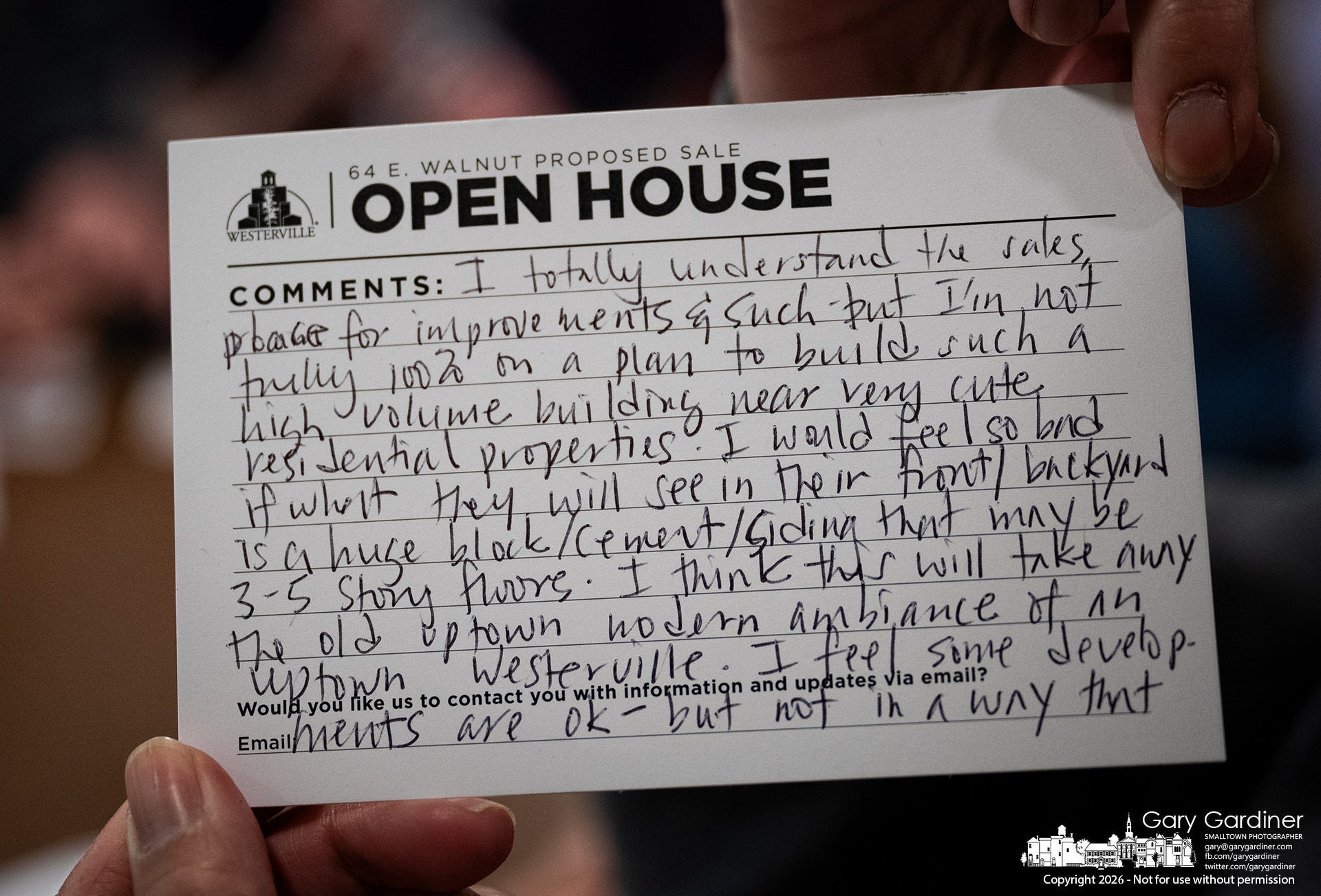
The committee’s formation follows more than four months of public opposition to the city’s proposed $2.5 million sale of the approximately 5.2-acre property.
The proposed redevelopment included 247 apartments, an 81-room boutique hotel, a restaurant, commercial space and a 400-space parking garage, with 100 spaces reserved for public use.
City administrators supported the sale, citing long-standing planning goals, additional housing and parking near Uptown, and the financial benefits of returning publicly owned land to the property-tax rolls.
Opponents questioned the development's size and compatibility with the surrounding neighborhood, citing concerns about traffic, parking, and safety near the adjacent school. Some questioned whether the city should sell the property at all.
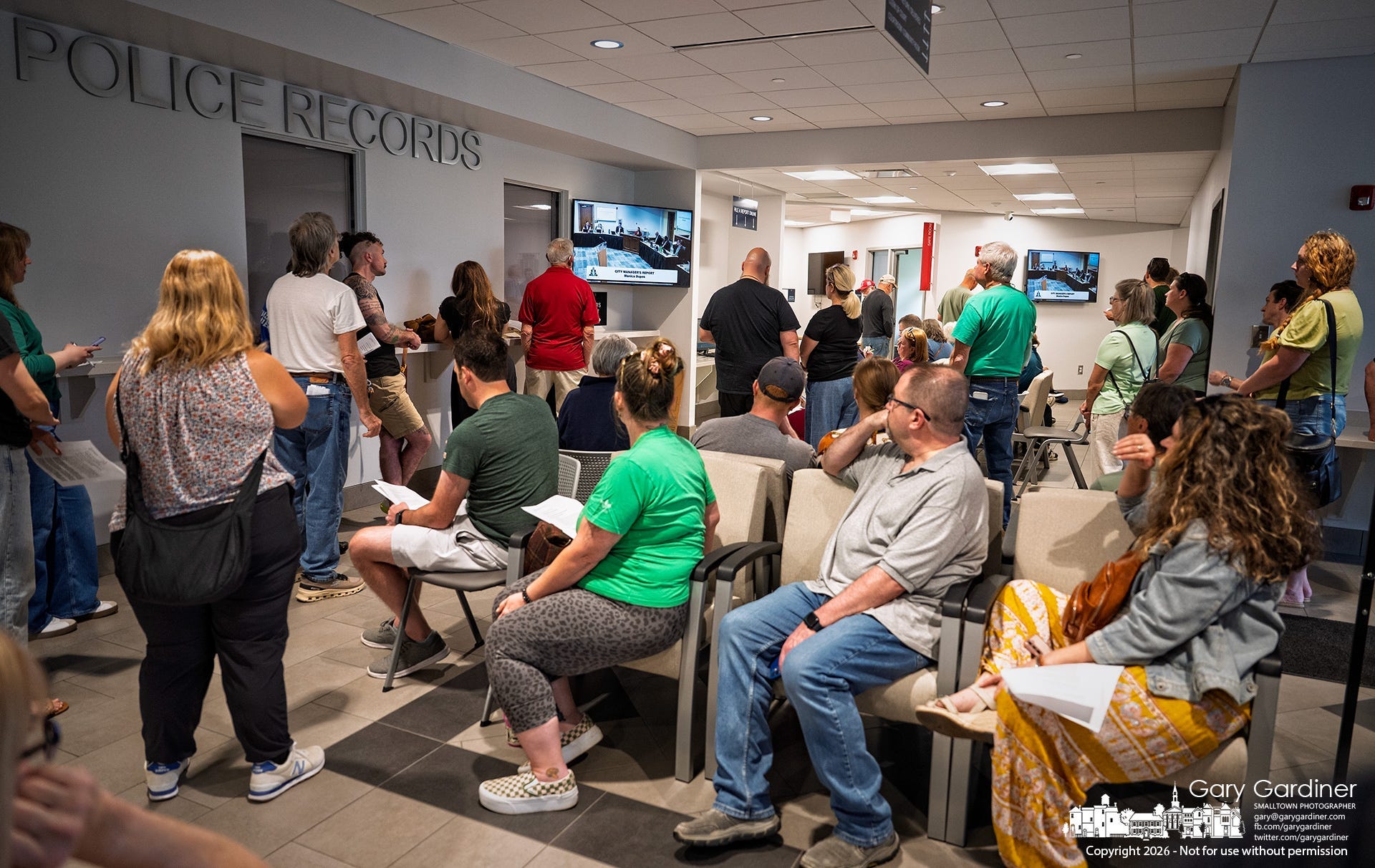
Hundreds of residents packed the May 19 Council meeting, with the crowd extending into the Justice Center lobby. Council unanimously delayed consideration of the sale until September rather than voting on the agreement that night.
Opposition continued, and on June 2, Council unanimously rejected the purchase agreement, ending the Continental redevelopment proposal while leaving the property’s future unresolved.
Council then directed city administrators to gather more information about community priorities, the city's development process and the financial implications of selling the property, including how its value would be determined.
An August 11 community workshop drew approximately 100 residents, who suggested alternatives ranging from an arts center and public gathering space to a grocery store and housing. Some challenged the premise that the property must be sold or generate revenue to support city services.
At a September 8 work session, city administrators continued presenting their planning and financial arguments for selling the property. All seven council members directed staff to return with possible sale methods, including a direct sale, auction, or request for proposals.
A week later, Czako announced she would keep decisions about selling 64 E. Walnut off Council’s agenda for six months while a three-member committee gathered perspectives from community organizations.
“Based on what I’m seeing in the public discourse and public comment, I don’t think that we as a council are ready to make any decisions on that property,” Czako said at the September 15 meeting. “The amount of public discourse and the questions and the comments is something I want this body to be responsive to.”
No meeting dates have been announced.

Because this post is public, you’re encouraged to share it on social media.
The Westerville News is a reader-supported publication by Gary Gardiner, a lifelong journalist who believes hyper-local reporting is the future of news. This publication focuses exclusively on Westerville—its local news, its influence on Central Ohio, and how surrounding areas shape the community.
Reader funding, including subscribers, protects editorial independence, so coverage is guided by journalists rather than owners or corporate profit goals. It also reduces pressure to chase clicks, letting the newsroom focus on stories worth readers’ time. And it helps keep the site accessible to everyone, including people who can’t pay or live in places where a free press is under threat.
Explore more hyper-local reporting by subscribing to The Hilliard Beacon, Civic Capacity, Marysville Matters, The Ohio Roundtable, Shelby News Reporter, This Week in Toledo, and Into the Morning by Krista Steele.
