
Sharp House and East of Africa Update
Sharp House Restoration Brings History Revealed
The historic Stephen Sharp House is beginning to look less like a building under repair and more like a house being uncovered.
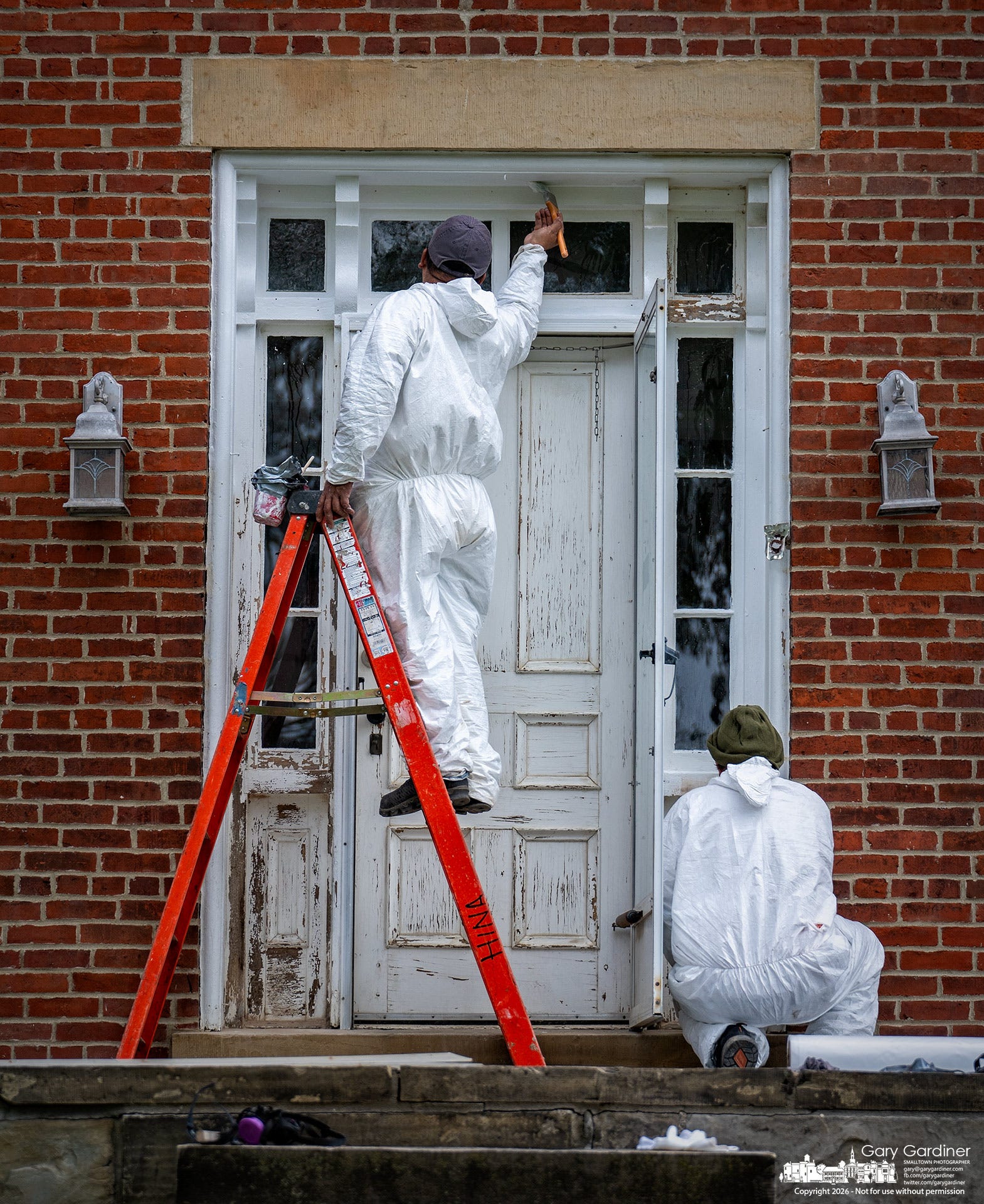
At the East of Africa project, restoration work has moved from the freshly painted front entrance to the continuing masonry work around the house, with the east side recently tuck-pointed and the north side now the final section awaiting that repair.
The front doorway has been painted, bringing new definition to the entrance and its original-style trim, sidelights, and transom. Along the front façade, tuck-pointed brickwork has sharpened the masonry and replaced deteriorated mortar, giving the house a cleaner face while helping protect it from further damage.
The masonry repairs also include replacing lintels over some of the basement windows — a detail that carries more than just structural importance. According to historians, the basement is where freedom seekers were hidden as they traveled north on the Underground Railroad. Repairing those openings helps preserve not only the building’s exterior but also one of the places most closely tied to its history.


Behind the house, the work is less polished and more revealing. A porch added long after the Sharp House was built has been removed, opening the original rear elevation and revealing how newer construction had obscured part of the historic brickwork. Where the porch shielded the wall, the brick remains brighter and cleaner. Nearby, the north-facing masonry, still awaiting tuck-pointing, is darker, stained, and weathered from years of exposure.
For people who watched the Sharp House sit behind layers of age and alteration, the fear was never just that an old building might decay. It was that the house could be abandoned, demolished, and erased from the landscape altogether, taking with it a historic structure that has become a wayfaring site for travelers following the Underground Railroad Sycamore Trail.
That is why the restoration feels like more than cosmetic repair. The freshly painted entrance gives the house back some dignity, but the exposed rear wall gives it back some truth. With the newer porch removed, the brick now shows what was covered, what was exposed, and what endured.

The work is making the Sharp House readable again, as a place shaped by time, weather, alteration, and survival. With the east side just completed and the north side left as the final stretch of tuck-pointing, each repaired section brings the building closer to view — not remade as something new, but restored as something that was nearly lost.
Because this post is public, you’re encouraged to share it on social media.
The Westerville News is a reader-supported publication by Gary Gardiner, a lifelong journalist who believes hyper-local reporting is the future of news. This publication focuses exclusively on Westerville—its local news, influence on Central Ohio, and how surrounding areas shape the community.
Reader funding, including subscribers, protects editorial independence, so coverage is guided by journalists rather than owners or corporate profit goals. It also reduces pressure to chase clicks, letting the newsroom focus on stories worth readers’ time. And it helps keep the site accessible to everyone, including people who can’t pay or live in places where a free press is under threat.
Explore more hyper-local reporting by subscribing to The Hilliard Beacon, Civic Capacity, Marysville Matters, The Ohio Roundtable, Shelby News Reporter, This Week in Toledo, and Into the Morning by Krista Steele.


