Strategic Plan Update Sparks Questions Over Affordable Housing
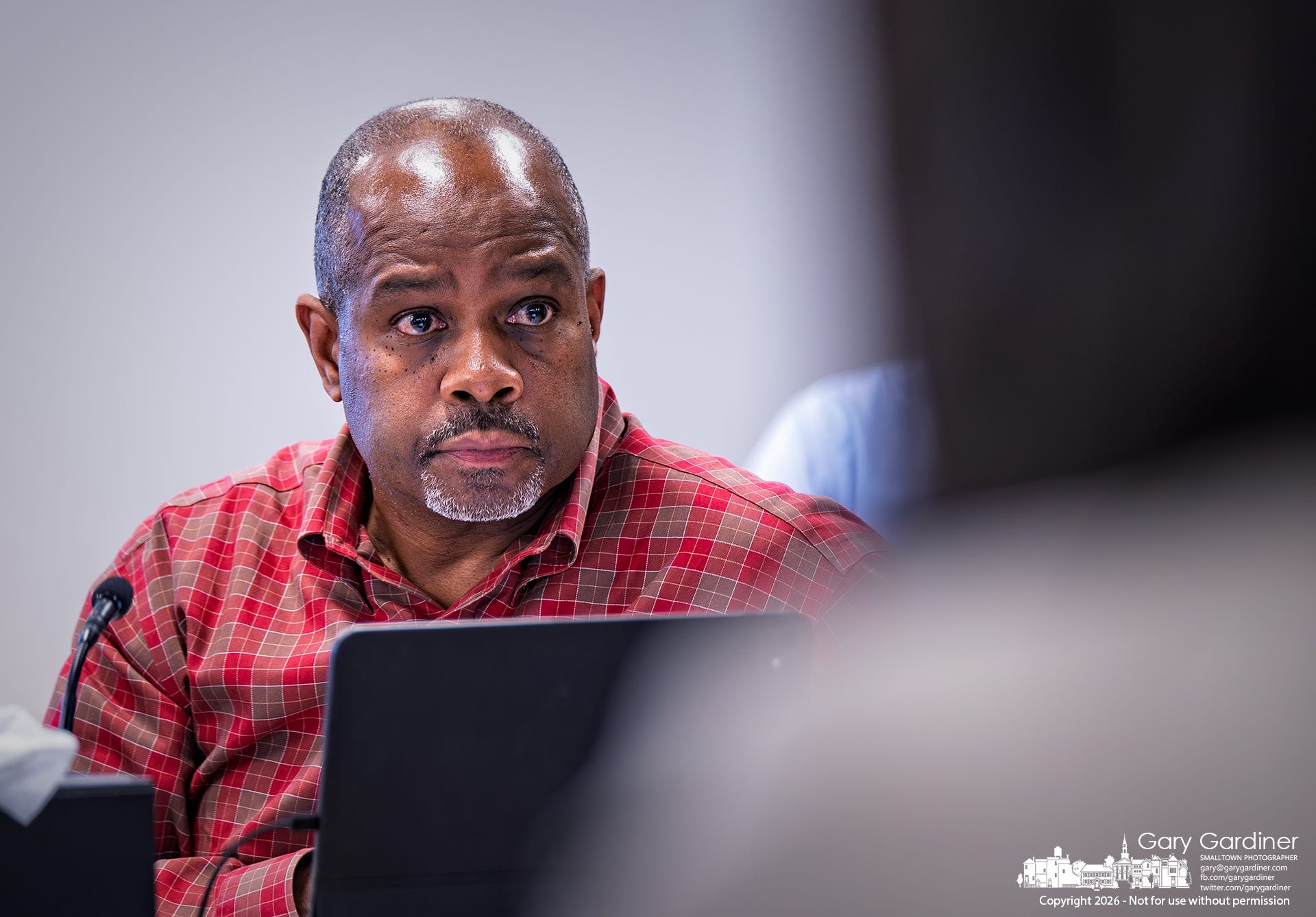
Wright questions housing language in Westerville strategic plan update

Westerville City Council’s review of proposed strategic plan updates on Tuesday turned into a broader debate over how directly the city should address affordable housing in its long-term goals.
City Manager Monica Dupee said the 2026 updates build on the city’s 2022 strategic framework and feedback from Council’s February retreat. The outcomes are intended to guide budgeting, long-range fiscal planning, annual work plans, and future city planning.
The most detailed discussion centered on housing. Council member Kenneth Wright challenged whether the proposed language was too vague and said it appeared to step back from previous Council discussions about Westerville’s affordable-housing needs.
Wright zeroed in on language calling for the city to support “naturally occurring affordable housing” and additional housing options in strategic locations. He asked what those terms would mean in practice.
Dupee said the wording was intentionally broad because the strategic outcomes are meant to remain at the policy level. Specific programs, she said, belong in staff work plans and the budget process. She said adding too much detail could lock the city into programs that are still being evaluated, including the current housing assistance pilot.
In Westerville’s plan, Dupee said, “naturally occurring affordable housing” refers largely to preserving older homes by helping residents pay for major repairs such as roofs, siding, HVAC systems, windows, and accessibility improvements. She said the city’s housing stock is aging, and those large expenses can affect whether residents can stay in their homes.
Wright pressed further, asking how many households had been served by the housing program and how many homes in Westerville needed assistance. Dupee said 22 homes received help last year, but she did not have a figure for the total number of homes needing assistance.
Wright said his concern was that the need is larger than what the current pilot program can address. Dupee responded that broader housing policy decisions are for the Council to debate, while the staff’s role is to put the Council’s approved strategy into language.
Council member Aaron Glasgow argued that broader wording could give the city flexibility to pursue multiple approaches rather than committing the strategic document to a single program or type of housing solution.
The housing discussion came as part of the proposed “safe and vibrant community” outcome. Staff proposed defining a safe and vibrant community as one where residents, businesses, and visitors feel physically secure, socially connected, and economically supported.
The draft language emphasizes trusted public safety, thoughtful public and private investment, properly maintained existing housing, naturally occurring affordable housing, additional housing options in strategic locations, and well-planned city infrastructure.
Dupee said staff spent the past two months refining the proposed strategic outcome language after hearing Council’s priorities during two full-day retreats and five strategic meetings. The goal, she said, was to meet Council’s priorities while keeping the outcomes realistic for staff to carry out.
The proposed updates focus on four major outcomes: a thriving business climate, an authentic and alive Uptown, a connected and engaged community, and a safe and vibrant community.
For the business climate outcome, Dupee said staff is recommending a shift from general business growth to a more targeted strategy focused on community stability, updated economic development plans, target industries, business retention and expansion, and attracting new investment.
The city also wants to cultivate “economic development champions” among businesses, residents, and community partners. When asked what that meant, Dupee pointed to business leader breakfasts, the Chamber, schools, the library, Otterbein University, and other residents or stakeholders who can help support and promote economic development in Westerville.
Council members also weighed proposed language for Uptown, which Dupee described as moving away from specific tactical goals and toward a broader view of Uptown as the cultural heart of Westerville.
The proposed language calls for continued public and private investment in Uptown’s infrastructure and aesthetics, support for special events, improved access through technology and modern amenities, and strategic infill and adaptive reuse.
Council President Megan Czako said she initially wondered whether removing some specific references could make it appear the city was no longer pursuing those efforts. But she said the broader language around continued investment appeared to capture that work without tying the city to a narrow list of projects.
The connected and engaged community outcome would broaden the city’s focus beyond the website to include apps, social media, residential internet connectivity, volunteer opportunities, citizen academies, boards and commissions, surveys, special events, and centralized customer service.
Czako asked that community events be called out more clearly as their own point, saying they are a key way residents connect with one another and with the city. Other council members appeared to agree, noting that the city plays a role in many major community events even when it is not the lead organizer.
Staff also reviewed proposed updates to the city’s diversity, equity, inclusion, and belonging language. Dupee said some wording was changed to reflect current law, including removing specific references to procurement and human resources. She said that does not mean the city no longer considers those issues, but the city cannot frame them in terms of quotas.
Dupee said the final strategic outcomes will guide the city’s five-year fiscal plan, budget process, annual work plans, and future benchmark reporting.
Staff also plans to track progress through measures such as income tax revenue, commercial vacancy rates, Uptown investment, special event permits, digital engagement, residential survey results, public safety call volumes, home repair grant impacts, and crime intervention data.
The work session ended with a brief discussion about the phrase “economic development champions.” Czako said she liked the idea but wanted the city to consider how it reaches people who may not already be champions, including residents and business owners who may not yet understand the city’s economic development goals.
Staff said that the idea is part of “cultivating” champions through efforts such as Citizens Academy, Leadership Westerville, and other opportunities to explain what the city is doing and why it matters.
Because this post is public, you’re encouraged to share it on social media.
The Westerville News is a reader-supported publication by Gary Gardiner, a lifelong journalist who believes hyper-local reporting is the future of news. This publication focuses exclusively on Westerville—its local news, influence on Central Ohio, and how surrounding areas shape the community.
Reader funding, including subscribers, protects editorial independence, so coverage is guided by journalists rather than owners or corporate profit goals. It also reduces pressure to chase clicks, letting the newsroom focus on stories worth readers’ time. And it helps keep the site accessible to everyone, including people who can’t pay or live in places where a free press is under threat.
Explore more hyper-local reporting by subscribing to The Hilliard Beacon, Civic Capacity, Marysville Matters, The Ohio Roundtable, Shelby News Reporter, This Week in Toledo, and Into the Morning by Krista Steele.


