

For weeks, Aldi has been the place to buy the least expensive green grapes in Westerville, with prices as low as $1.29 a pound drawing shoppers who sometimes drive extra miles for the bargains. Even premium Autumn Crisp grapes have been substantially less expensive than those sold by competing grocery stores.
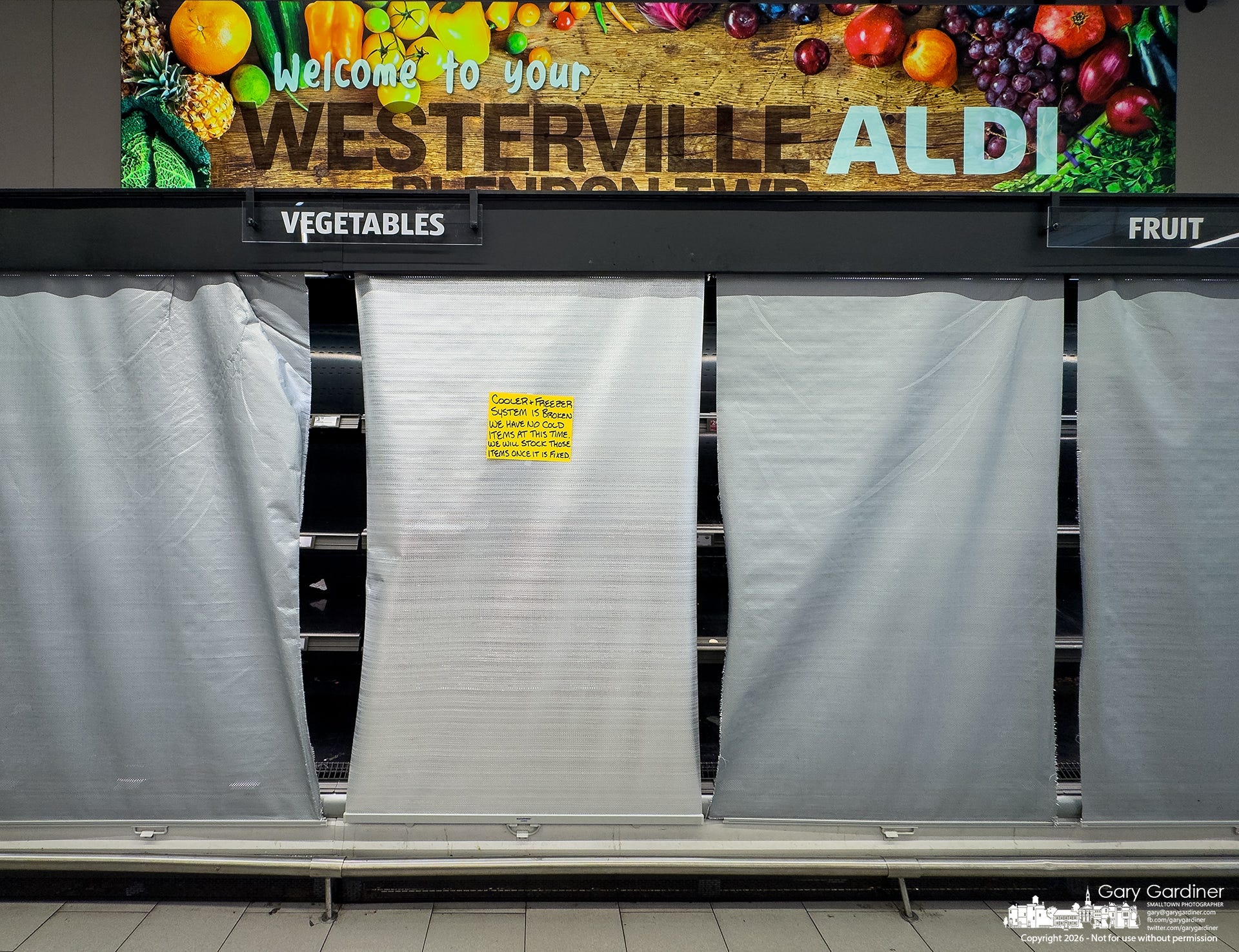
But there are no grapes at Aldi this week. There are no refrigerated vegetables, dairy products, meats or frozen foods, either. A refrigeration system failure Wednesday forced the removal of everything requiring cooling or freezing, leaving entire sections of the store empty and covered with white curtains.
By Sunday, the system was still out of service. A handwritten yellow sign explained that the cooler and freezer system was broken, no cold items were available and the store would restock when repairs were completed. Above the empty produce cases, a colorful sign welcoming customers to the Westerville Aldi stood in sharp contrast to the white curtains covering the shelves below.
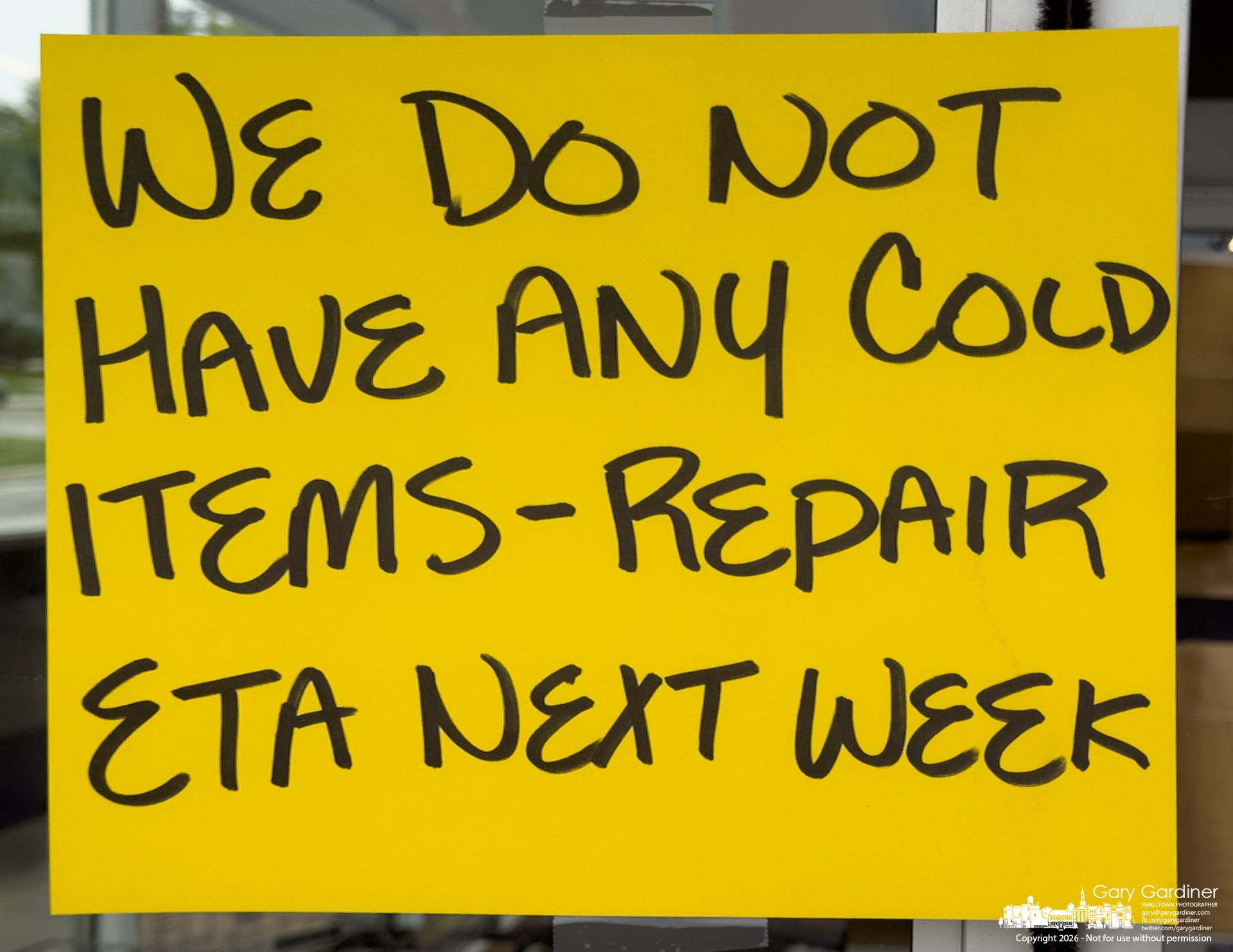
For Green Grape Report readers who have changed their grocery shopping habits to take advantage of Aldi’s prices, the breakdown presents an unusual inconvenience. It also raises a question few shoppers have reason to consider. How can one equipment failure shut down nearly every refrigerated and frozen food display in a grocery store?
Think about the refrigerator in your kitchen. A cooling system maintains the temperatures in the freezer and refrigerator compartments. When that system fails, neither compartment can keep food cold, and everything inside is in danger of spoiling.
Now imagine a refrigerator the size of a grocery store.
Commercial refrigeration is considerably more complicated, but the principle is similar. The same equipment in your refrigerator, only larger, removes heat from refrigerated display cases and freezers. When critical components fail, the consequences can extend well beyond a single refrigerated case.
Not every grocery store uses the same arrangement. The next time you’re shopping at Kroger, look up at the refrigeration lines running from the ceiling to the cases and islands holding cold foods. They are visible reminders of the machinery operating behind the scenes to keep everything from milk to ice cream at the proper temperatures.
Some supermarkets divide refrigeration systems into smaller groups of cases, allowing unaffected equipment to keep running when one system fails. Others rely on equipment shared by larger sections of the store. The exact arrangement determines how widespread a failure can become.
It’s much like the difference between having one refrigerator in the kitchen and a freezer in the basement. If the kitchen refrigerator breaks, the basement freezer can help keep everything from spoiling.
At Aldi, whatever the equipment arrangement, the consequences of failure are impossible to miss.
An Aldi employee who asked not to be identified said Sunday that several cooling system components had failed and repairs were underway. The employee said the store was expected to resume selling refrigerated and frozen foods by midweek.
Getting the equipment running again is only part of the process. Once repairs are completed, the display cases must return to their proper operating temperatures before they can be restocked.
Meanwhile, shoppers can still buy cereal, crackers, canned goods, and other shelf-stable groceries, although a quick scan of the shelves shows some items, such as bread, are in short supply. But much of the store’s fresh-food business has disappeared, including the green grapes that have drawn customers from miles away.
With Aldi temporarily out of the grape business, Walmart sells green grapes for $1.97 a pound. Kroger advertises regular green grapes at $1.99 a pound with a digital coupon, or $2.99 without it. Kroger’s premium Autumn Crisp grapes cost $5.99 for a two-pound clamshell, about $3 a pound.
Those prices explain why Aldi’s recent bargains have attracted attention. Green Grape Report readers have told me they’ve changed their grocery shopping habits, sometimes traveling farther than usual to buy grapes that were both exceptionally sweet and unusually inexpensive.
The Walmart green grapes met all the requirements for a favorable Green Grape Report. Sweet, firm, crisp, juicy, and inexpensive.
For now, the biggest development in the Westerville green grape business isn’t what’s on the shelves. It’s what’s missing from them.


The new set of traffic signals are active on Polaris Parkway at the intersection with Atlas Avenue, connecting Polaris to Westar Park’s new road system.
Because this post is public, you’re encouraged to share it on social media.
The Westerville News is a reader-supported publication by Gary Gardiner, a lifelong journalist who believes hyper-local reporting is the future of news. This publication focuses exclusively on Westerville—its local news, its influence on Central Ohio, and how surrounding areas shape the community.
Reader funding, including subscribers, protects editorial independence, so coverage is guided by journalists rather than owners or corporate profit goals. It also reduces pressure to chase clicks, letting the newsroom focus on stories worth readers’ time. And it helps keep the site accessible to everyone, including people who can’t pay or live in places where a free press is under threat.
Explore more hyper-local reporting by subscribing to The Hilliard Beacon, Civic Capacity, Marysville Matters, The Ohio Roundtable, Shelby News Reporter, This Week in Toledo, and Into the Morning by Krista Steele.
