
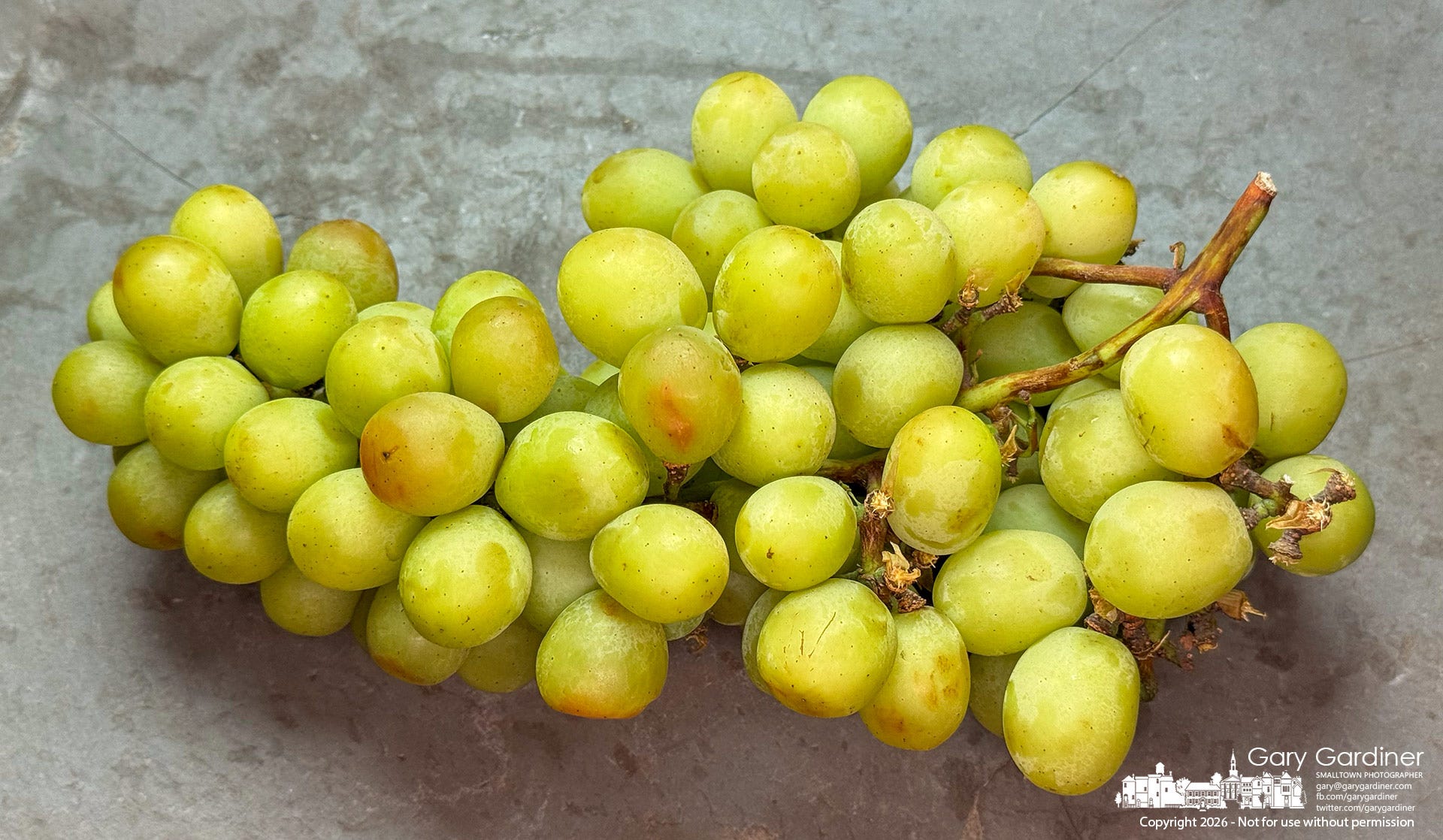
The Green Grape Report Returns
For several months, The Green Grape Report had nothing worth reporting.
The South American Autumn Crisp season ended, taking with it the large, crisp, remarkably sweet green grapes that had spoiled me through the winter and early spring. What followed from the early Mexican fields looked promising enough, but too often failed the central test: They just weren’t very good.
The early grapes were smaller, softer, and noticeably less sweet. Some weren’t bad. They simply weren’t worth writing about, especially when prices sometimes climbed above $3 a pound. At that price, mediocrity becomes considerably harder to forgive.
So The Green Grape Report went quiet. There seemed little point in producing a weekly column whose principal finding was that I had once again purchased a bag of disappointing grapes.
During the past few weeks, however, something changed. The green grapes began getting better. Much better.
At first I wondered whether the Mexican crop had simply been given more time to mature on the vines. Perhaps later harvests were coming from better fields. Maybe the weather had improved. Maybe somebody had finally told the grapes what was expected of them.
Then Aldi complicated the theory.
There, for $1.29 a pound, were green grapes that were large, extremely crisp, and remarkably sweet. They had the snap I had been missing and enough sugar to make eating one lead almost automatically to eating another. This was the payoff I had been waiting for.
The bag provided the clue: The grapes were grown in Southern California.
Apparently the solution to mediocre grapes was not patience. It was geography. The grapes I had been waiting to improve were not necessarily the grapes I was eating anymore, and that was the payoff.
That is one of the peculiarities of buying fresh fruit in an American supermarket. The display may appear unchanged from week to week. Green grapes remain green grapes. They occupy roughly the same place in the produce department, usually in similar plastic bags, under signs that emphasize price rather than origin. But the fruit itself is moving through the year.
The South American grapes that carried us through winter and spring eventually disappeared. Mexico supplied much of the early North American crop. Now California grapes are entering the supply, and the bag at Aldi showed that the fruit in my refrigerator had made that geographical turn.
From the shopper’s side of the produce case, the transition can be nearly invisible. From the eating side, it wasn’t.
These Southern California grapes had the qualities that had been missing. They were large enough to have some substance, the skin snapped when bitten, the flesh was firm, and the sweetness, missing for so long, arrived immediately instead of requiring imagination.
There was also the price. A grape that tastes good at $3.29 a pound still has to defend itself. A grape this good at $1.29 has already won the argument.
That does not mean every bag of Southern California green grapes will taste identical. Growing conditions, harvest timing, variety, and handling can all affect what finally reaches the produce department. It does mean I am paying closer attention to the small print on the bag.
For years, I thought of the grape season mostly in terms of varieties. Autumn Crisp was something to anticipate. Cotton Candy grapes arrived with their own peculiar expectations, and not one that is worth buying unless you’re prepubescent. Other named green grapes appeared and disappeared. But origin may deserve nearly as much attention.
The label tells you where the season has gone. And this week, it went to Southern California, where the payoff is clear.
The Green Grape Report is back.
The Green Grape Report
Food Review by Gary Gardiner
Brand: No specific brand. Southern California.
Price: $1.29 a pound at Aldi.
Appearance: Bright color with few flaws. Grapes tight on the stems. Few loose grapes at the bottom of the bag.
Size: Slightly smaller than a cherry tomato. Uniformly shaped.
Crispiness: Solid with firm skin. Onomatopoeic crunch when bitten.
Taste: Sweetest since May 2026.
PLU Code: 4498
Weight: 8.79 grams per grape - average from 10 grapes
Size: 30x24mm
Sugar: 23.1%
Because this post is public, you’re encouraged to share it on social media.
The Westerville News is a reader-supported publication by Gary Gardiner, a lifelong journalist who believes hyper-local reporting is the future of news. This publication focuses exclusively on Westerville—its local news, its influence on Central Ohio, and how surrounding areas shape the community.
Reader funding, including subscribers, protects editorial independence, so coverage is guided by journalists rather than owners or corporate profit goals. It also reduces pressure to chase clicks, letting the newsroom focus on stories worth readers’ time. And it helps keep the site accessible to everyone, including people who can’t pay or live in places where a free press is under threat.
Explore more hyper-local reporting by subscribing to The Hilliard Beacon, Civic Capacity, Marysville Matters, The Ohio Roundtable, Shelby News Reporter, This Week in Toledo, and Into the Morning by Krista Steele.


