

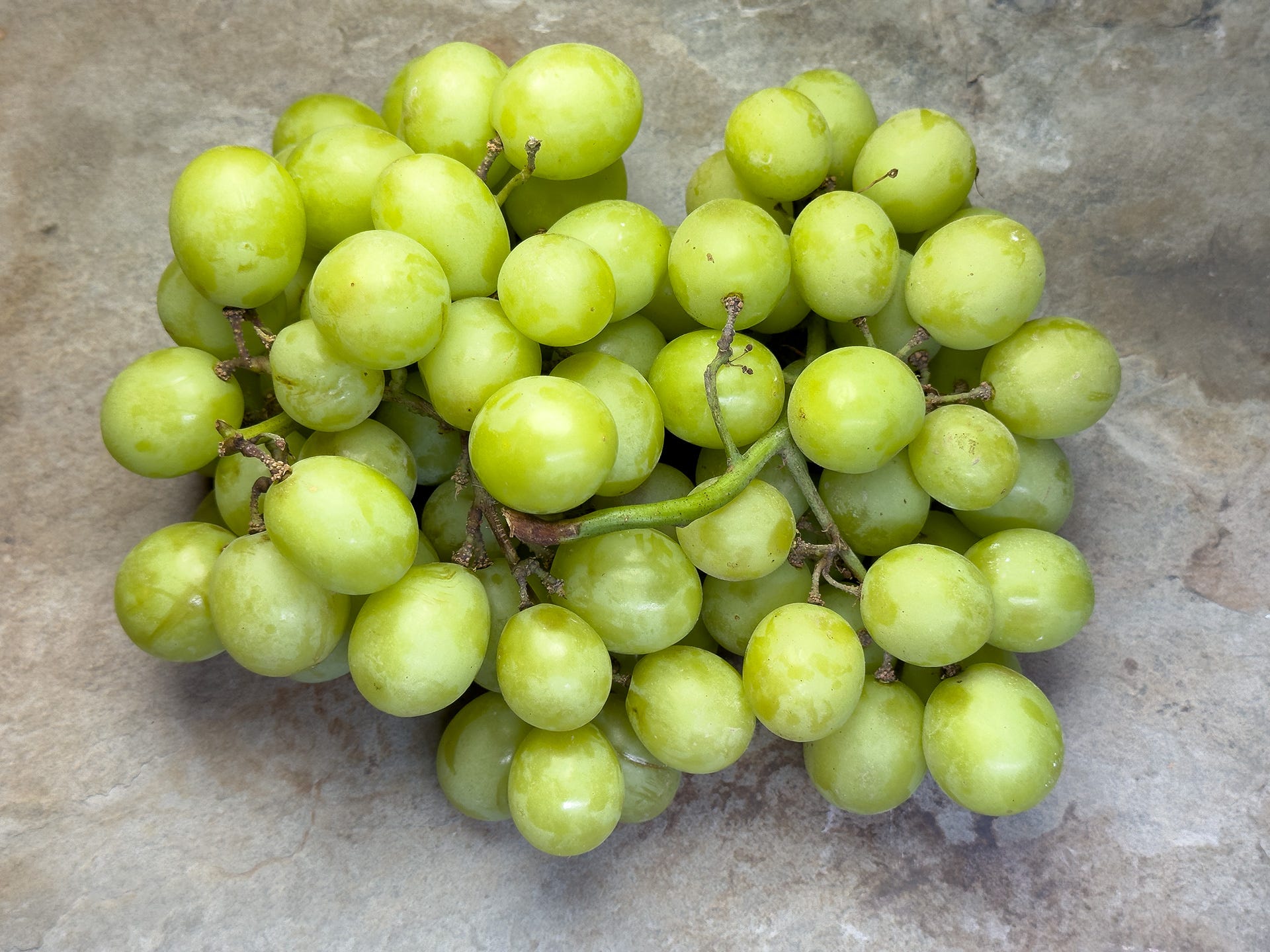
Two-pound clamshells of Autumn Crisp green grapes were available this weekend all along the grocery-store corridor, from Meijer and Kroger on the north end to Aldi on the south. Most were about $6 for two pounds, depending on what electronic coupon you might have. It is that time of the season when Autumn Crisp becomes the dominant luxury.
Only this weekend, it wasn’t. The sweetest green grapes came from Aldi, sold in ordinary plastic bags for $1.59 a pound, about a dollar a pound less than the clamshelled Autumn Crisp.
This was not the expected result. Autumn Crisp has become the green grape of fall, arriving with enormous berries, a formidable crunch and enough sweetness to justify buying another clamshell before the first one is gone. Retailers increasingly sell it by name, and shoppers increasingly know what that name means.
The Aldi grapes had no such ambitions. They came in a Famous Vineyards bag bearing PLU 4498, rather than the familiar 4022 commonly found on green seedless grapes. This appeared to be an important clue until further investigation revealed that 4498 essentially means green seedless grapes of varieties not otherwise listed. So much for the clue.
The calendar and the grapes Famous Vineyards grew offer suspects. Great Green and Autumn King are possibilities. Great Green is a large, crisp grape with plenty of sugar. Autumn King is another large, late-season California green grape. Either could have been in the bag. So could something else.
We could probably keep digging until we found out. But identifying the grape would remove the mystery. Besides, knowing its name would not make the grape any sweeter.
The Autumn Crisp presented a different mystery. The two clamshells I bought both said two pounds, although one appeared to contain about 20% fewer grapes than the other. Unfortunately, it is too late to conduct an official weighing. Both containers now weigh less than they did when I bought them, and one lost a significant amount of evidence during the ride home.
That is one advantage of Autumn Crisp. You know what you are eating, even when you are eating the evidence.
None of this should be interpreted as an indictment of Autumn Crisp. A good Autumn Crisp remains one of the modern produce department’s great achievements. The berries can approach absurd dimensions. The crunch is substantial enough that nobody will mistake one for an elderly Thompson seedless, and the sweetness can be exceptional.
It also has something most grapes still lack: a name shoppers recognize. For generations, buying green grapes mostly meant buying green grapes. Today, Autumn Crisp joins Cotton Candy, Sweet Globe and a growing collection of varieties that have turned a commodity into something closer to choosing apples. A Honeycrisp shopper knows a Honeycrisp is not a Gala. More and more, grape shoppers are learning the same lesson.
That lesson is useful because color alone tells you surprisingly little. Two bags of green seedless grapes sitting next to each other can contain different varieties, grown for different characteristics and harvested from vines growiing on opposite sides of the hill. One may be sweet and crisp. The other may be technically a grape.
Price doesn’t settle the matter, either. That was the useful discovery from this weekend’s highly controlled research program, which consisted primarily of buying grapes from grocery stores and eating them. Autumn Crisp had the recognizable name, premium packaging, imposing berries and premium price. Aldi had a plastic bag of sweeter grapes for $1.59 a pound.
Sometimes a good mystery requires surrender. In this case, surrender is easy. Open the bag and eat another grape. Knowing whether it is Great Green, Autumn King or something else won’t make it taste any better.
Autumn Crisp had the name, the clamshell and the fall reputation. This weekend, Aldi had the better grape. That isn’t much of a mystery. It’s a statement in taste and price.

Because this post is public, you’re encouraged to share it on social media.
The Westerville News is a reader-supported publication by Gary Gardiner, a lifelong journalist who believes hyper-local reporting is the future of news. This publication focuses exclusively on Westerville—its local news, its influence on Central Ohio, and how surrounding areas shape the community.
Reader funding, including subscribers, protects editorial independence, so coverage is guided by journalists rather than owners or corporate profit goals. It also reduces pressure to chase clicks, letting the newsroom focus on stories worth readers’ time. And it helps keep the site accessible to everyone, including people who can’t pay or live in places where a free press is under threat.
Explore more hyper-local reporting by subscribing to The Hilliard Beacon, Civic Capacity, Marysville Matters, The Ohio Roundtable, Shelby News Reporter, This Week in Toledo, and Into the Morning by Krista Steele.
