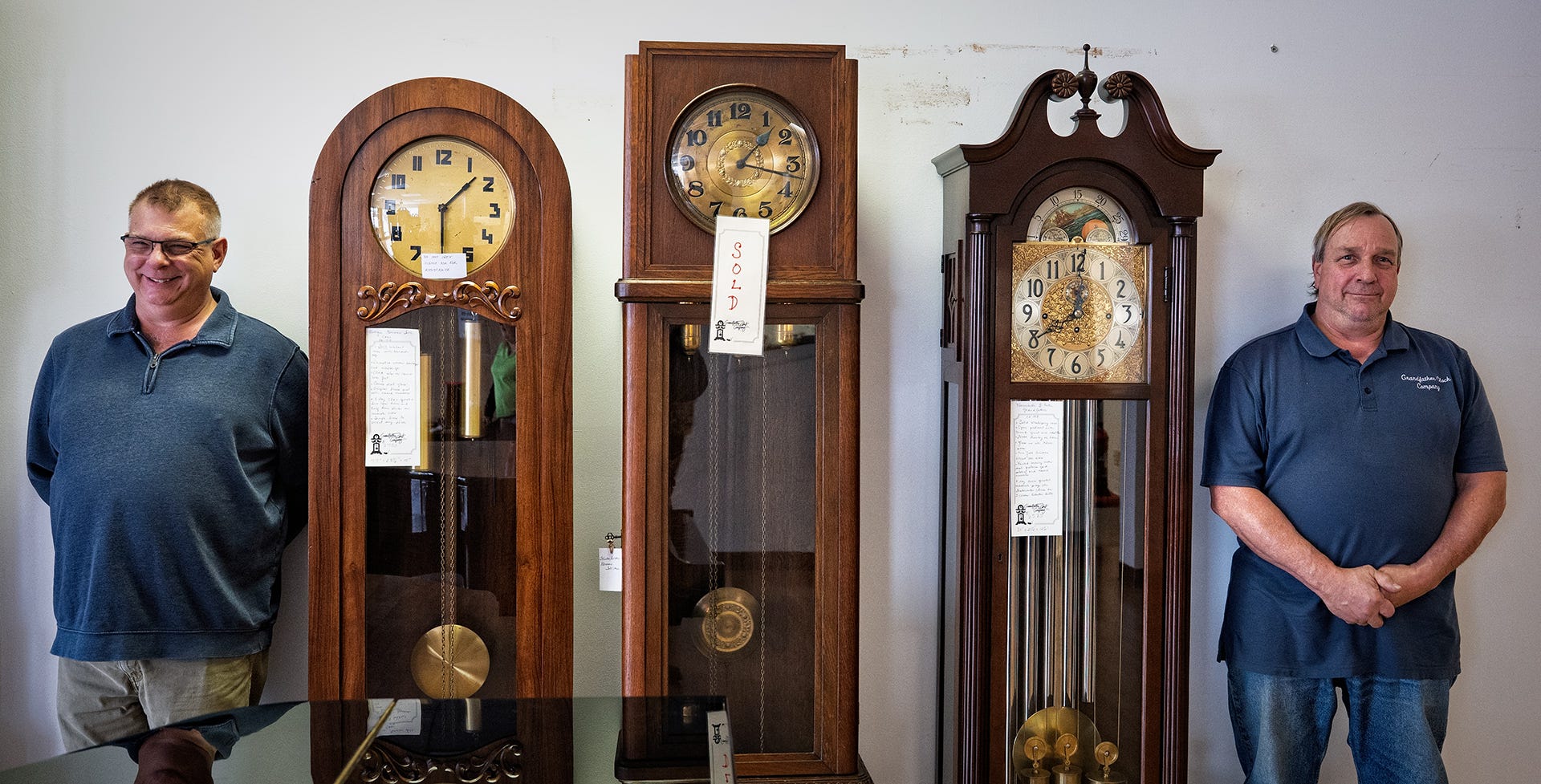
Their Time Is Up: Grandfather Clock Company Shop Shuts Its Doors After Five Decades

Shop That Knew the Value of Time Closes for Good
On its final day, the Grandfather Clock Company on South State Street sat nearly silent. Only a handful of clocks remained, fewer than 10, from the nearly 100 that once ticked in chorus throughout the shop. The space, like the business, was winding down.
But the phone still rang. Customers had heard a rumor. Were they really closing? Could they stop by for a repair or to browse the remaining clocks? Each time, the answer was the same: Yes, they were closing. Today was their last day.
The calls came in over a landline, answered on cordless phones at the front desk and in the workroom. It felt as if time itself had remembered the shop a moment too late.
After 52 years in business, owners Bernie Hocke and John Collins weren’t closing because of a downturn. The shop remained profitable to the end, with most inventory sold and a steady stream of service calls continuing through the final week.
“We’re not closing because of a lack of business,” Collins said. “We’re still profitable.”
“It’s about time to figure out something else to do,” Hocke added, half joking, half weary.
Over the course of the afternoon, the word “time” surfaced nearly 60 times, usually without anyone noticing. It appeared in jokes, explanations, and offhand remarks. For people who had spent decades measuring it, repairing it, and teaching others how it works, it was simply the language they spoke.
There were no speeches or ceremonies marking the end. Instead, there was lunch.
Breadsticks and pasta from Olive Garden were spread across a worktable as family members and longtime staff ate, joked, and continued answering the phone. Clocks ticked in the background. A repair bench remained active. It felt less like an ending and more like a day that understood itself.
The closing carried mixed emotions. The owners understood the necessity of stepping away after a long run, but that did not make the day weightless. They had tried for years to train younger tradespeople through informal apprenticeships, hoping to find someone willing not just to learn the craft, but to buy the business and carry it forward. None stayed.
Health concerns also played a role. Years of house calls, bench work, and long days had taken a toll. The decision, they said, was about knowing when to stop while they still could.
Beyond that, the cumulative strain of running a specialized retail business had begun to show. The work required patience, explanation, and trust. After decades of close, often personal customer interactions, it had become more demanding. The challenge was not due to a lack of interest, but because of the energy required to meet expectations day after day.
Even so, the final day remained light with conversation. Stories were exchanged. Old jokes resurfaced. Photographs were made. The mood was reflective, but not heavy.
The final repair happened just after lunch. Hocke tightened a mainspring that had loosened enough to stop a clock. It was a small fix, the kind he had made thousands of times before. The clock resumed its steady rhythm.
The last customer to leave the store was Drake, a 17-year-old clock collector who had been fascinated by clocks since he was 12. He is autistic and speaks easily and precisely about movements, chimes, and cases. He runs a YouTube channel, Clock 1010, followed by more than 14,000 people who learn about clocks through his growing collection.
He had been coming to the shop for years. On this day, he lingered, talking with the owners before finally heading out.


By the end of the afternoon, the showroom was quiet again. The phones rang less often. The remaining clocks stood in place.
The Grandfather Clock Company did not close because it ran out of business. It closed because the people who built it decided they had given enough of their time.
And on its final day, time was still being kept.
The Westerville News is a reader-supported publication by Gary Gardiner, a lifelong journalist who believes hyper-local reporting is the future of news. This publication focuses exclusively on Westerville—its local news, influence on Central Ohio, and how surrounding areas shape the community.
Explore more hyper-local reporting by subscribing to The Hilliard Beacon, Civic Capacity, Marysville Matters, The Ohio Roundtable, Shelby News Reporter, This Week in Toledo, and Into the Morning by Krista Steele.


