

This Meatloaf Needed a Knife, and That Was the First Problem
The Green Grape Report
When Comfort Food Forgets The Comfort
The Blue Plate Special Special Kitchen Restaurant Review by Gary Gardiner
One in a series from The Taste of Westerville Restaurants

At the Saturday Market, I bit into a freshly picked green bean. It was sweet, crisp and full of flavor. I bought a pound and should have bought two, already thinking about the meal I would make and how little the beans would need beyond careful cooking.
Later, when I saw the menu at Rusty Bucket, one of 21 restaurants featured at Taste of Westerville, the meatloaf with mashed potatoes, gravy and green beans reminded me how much I like meatloaf — and how long it had been since I had made one.
I had eaten Rusty Bucket’s burger and salmon, but never its meatloaf. Ordering it at a restaurant would deprive me of one of the pleasures of making it at home: leftovers for sandwiches. Still, I wanted one of the staples of home cooking.
The meal arrived far more quickly than I expected.
That should have been a warning.
It came too quickly to suggest that anyone had lingered over its preparation, considered how the parts should work together or given much thought to comfort food as anything more than an outline on a plate. Speed was the only impressive aspect of the experience.
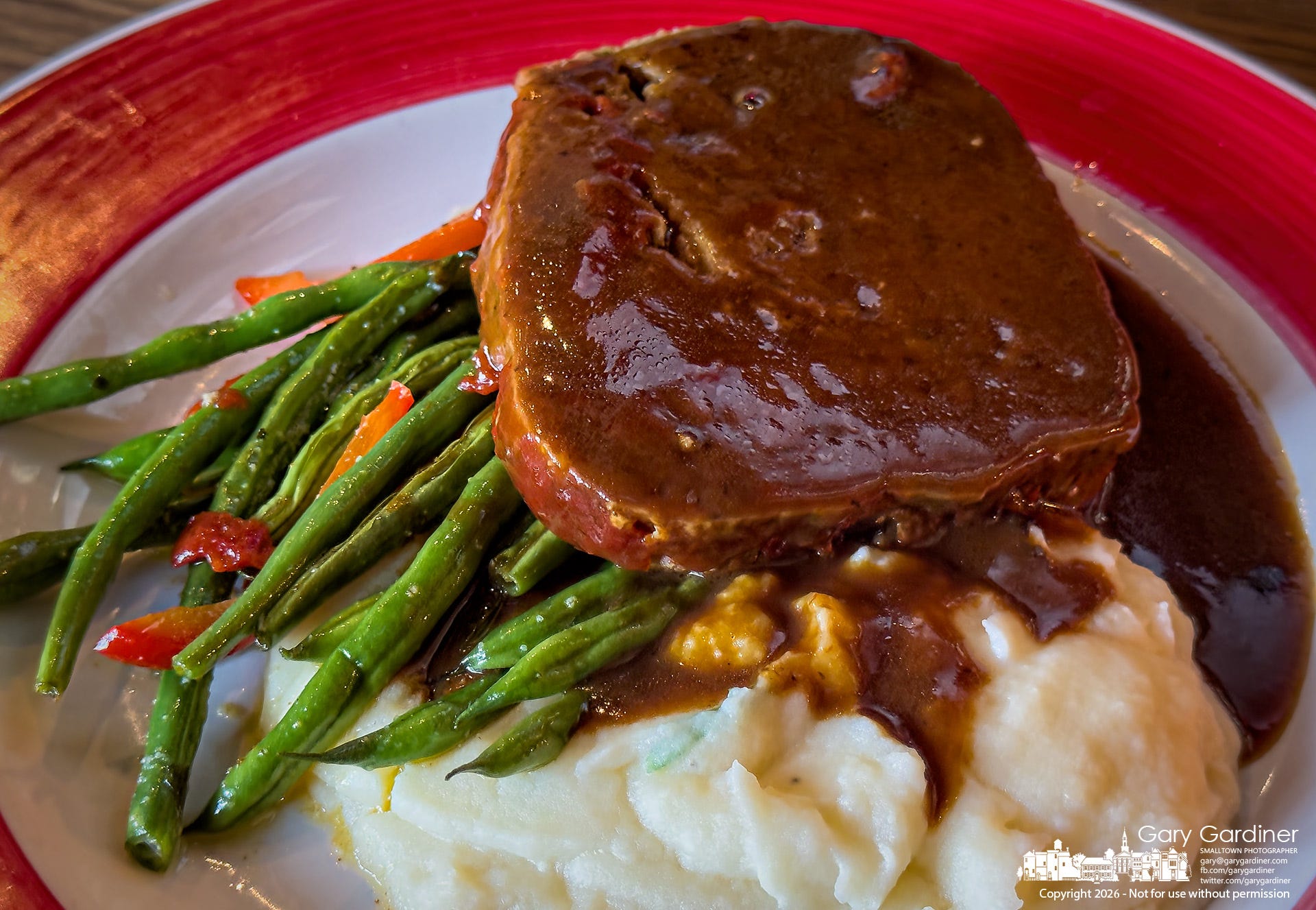
The plate was visually unappealing from the start. The gravy was thin and glossy, without the body of something hand-stirred and watched over. The mashed potatoes looked as though they had been poured onto the plate, with the consistency of runny dough rather than potatoes. They could not even hold the small well for gravy that mashed potatoes seem made for.
The shriveled green beans had none of the color or snap I had tasted at the market. They looked as though they had been left in the sun too long before being tossed into a pan.
It tasted no better than it looked.
The beans were especially disappointing. They appeared to have been cooked with oil and red peppers until their texture turned thick and chewy. They were the opposite of the beans I had bought earlier that day, the kind that snap cleanly and taste sweet enough to make you start planning dinner before you get home.
These tasted like frozen beans cooked until the crispness and flavor were gone and only the fibers remained.
My favorite meatloaf is the one made at home, and it is close to perfect. A good meatloaf requires imperfections. Those imperfections are what make it work.
A skilled cook knows when to stop folding the ingredients together, before further handling compresses the mixture and ruins its texture. Once the meat is packed too tightly, the natural juices have nowhere to go but out. What remains is a greasy pan and a dense loaf.
A great meatloaf holds its shape but falls apart with a fork. It should be tender without collapsing, seasoned without being fussy, and held together by the small irregularities that show it was mixed by hand rather than manufactured into uniformity.
This meatloaf had little resemblance to that, other than its shape. It was dense and unnaturally compact, robbed of the imperfections required to make meatloaf enjoyable.
I knew I was in trouble when the waiter noticed I did not have a knife and brought me one. I have never needed a knife to eat meatloaf.
This time, it was required.
I did not see the loaf from which my slice had been cut, and I am not sure I wanted to. Judging by its texture, it seemed more likely to have been extruded in an industrial kitchen than formed in-house from ground meat, eggs, seasonings, salt and pepper folded together with care.
There was no looseness, tenderness or evidence of careful preparation. It held its shape because it had been packed too tightly, not because the ingredients had been handled with skill. It was simply a compact block of meat beneath a coating of gravy.
The gravy was no better. It was too smooth, too runny and too uniform to suggest it had been made from drippings. A good gravy has body. It clings to the food rather than pooling around it. It carries small imperfections, the traces of stirring, scraping, reducing and tasting that separate care from process.
This gravy offered color and little else.
I am not sure I want to know how the mashed potatoes were made, either. They had the anonymous consistency of a food-service preparation, as though they had been squeezed from a tube and then thinned past the point of recognition.
There were no lumps, variations or signs that an actual potato had recently been involved. They were smooth in the way processed food is smooth, engineered for consistency rather than made for flavor. Their texture was closer to watery dough than mashed potatoes, filling space on the plate without adding anything worth remembering.
The meal seemed like something from a school cafeteria, only in portions large enough for an adult. It had calories, but none of the care, texture or flavor that make a meal worth remembering.
The whole meal felt assembled rather than cooked. It arrived quickly, occupied the plate and met the most basic visual requirements of a home-style dinner.
But comfort food depends on more than shape and color. It needs care, texture, seasoning and some trace of the ingredients from which it was made.
This meal had almost none of that.
Unfortunately, the speed of service may have explained everything else.

The Green Grape Report
Food Review by Gary Gardiner
Walmart - Schrock Road
Brand – Unnamed
Price – $2.06 a pound.
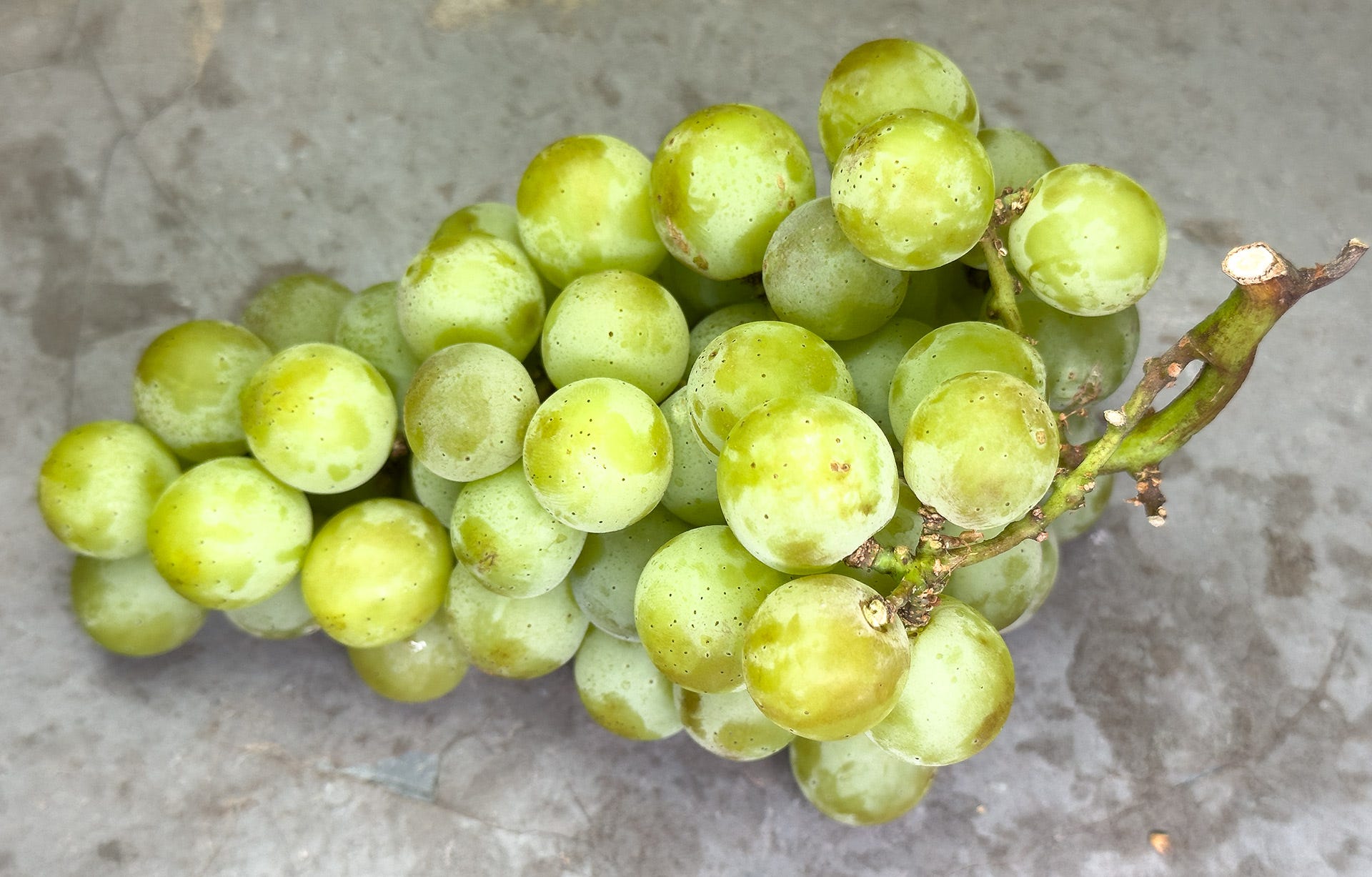
Appearance - Bright color with several flaws. Grapes ffirmly attached to the stem.
Size - Smaller than a cherry tomato. Uniformly shaped. You can pop several into your mouth at once.
Crispiness - Very. Solid with firm skin.
Taste - Sweet than most with no bitterness.
PLU Code - 4022
Businesses are often told that, when costs rise, they may have to eat the increase to keep customers happy.
In the grape aisle, shoppers have been the ones eating most of the cost.
For the last several weeks, grape prices have been high as stores worked through fruit coming from Chile and Peru. Those grapes travel by boat to U.S. ports, then by refrigerated tractor-trailer to warehouses and stores. One contributor to the increased cost is fuel oil and trucking costs are both up, the price at the shelf climbed quickly. Grapes that shoppers are used to seeing around $1.99 a pound were closer to $3.99 in some stores.
This week, though, there is a little relief.
The grapes for this week’s report came from Walmart on Schrock Road, where they were selling for $2.09 a pound. Kroger had grapes marked at $1.99 a pound, down from $2.79 a pound, but only if you use the store’s phone app to download the digital coupon.
The Walmart and Kroger grapes are among the first this season to come from Mexico. That matters. Mexico’s crop is now starting to move into the U.S. delivery network, which shortens the trip and should help bring prices down as more fruit becomes available.
But it is still early and fuel prices are still up.
These are among the first pickings of the season, and regular readers know what I think about the first pickings of almost any fruit or vegetable. Be aware. Early fruit can be uneven. It may look good and still fall short on flavor, size or texture.
Having said that, these grapes were good.
They are PLU 4022, small in size, very crisp and sweet. They are not as good as Autumn Crisp, but then again, it is not autumn anywhere in the world. For an early Mexican grape, these are a good buy, especially compared with where prices have been recently.
Because this post is public, you’re encouraged to share it on social media.
The Westerville News is a reader-supported publication by Gary Gardiner, a lifelong journalist who believes hyper-local reporting is the future of news. This publication focuses exclusively on Westerville—its local news, influence on Central Ohio, and how surrounding areas shape the community.
Reader funding, including subscribers, protects editorial independence, so coverage is guided by journalists rather than owners or corporate profit goals. It also reduces pressure to chase clicks, letting the newsroom focus on stories worth readers’ time. And it helps keep the site accessible to everyone, including people who can’t pay or live in places where a free press is under threat.
Explore more hyper-local reporting by subscribing to The Hilliard Beacon, Civic Capacity, Marysville Matters, The Ohio Roundtable, Shelby News Reporter, This Week in Toledo, and Into the Morning by Krista Steele.
