

Trail Towns Update And The Ohio to Erie Trail Rebuild

Westerville’s trail network makes it an early model for the regional Trail Towns program
Westerville’s extensive trail network and existing services for cyclists made it a natural choice for a regional program designed to connect trails with businesses, public spaces and community destinations.
Melinda Vonstein of the Mid-Ohio Regional Planning Commission told the Westerville Parks and Recreation Advisory Board that the city was one of five communities selected for the first Trail Towns of Central Ohio group.
The 12-month pilot launched in January 2026 with Westerville, Mount Vernon, Centerburg, Worthington, and London and is scheduled to continue through December 2026.
Participating communities had to be within two miles of a regional trail identified in the Central Ohio Greenways plan and agree to improve connections between trails and nearby destinations.
“You guys know Westerville is clearly already a trail town,” Vonstein said.
She said MORPC’s work in Westerville would focus less on creating a trail culture than on promoting the one already in place, connecting businesses with trail users and linking the city with other participating communities.
Westerville entered the program with about 50 miles of trails within its 12 square miles, roughly 80 bicycle racks, and direct connections to the Ohio to Erie Trail, U.S. Bike Route 50, and the Great American Rail-Trail.
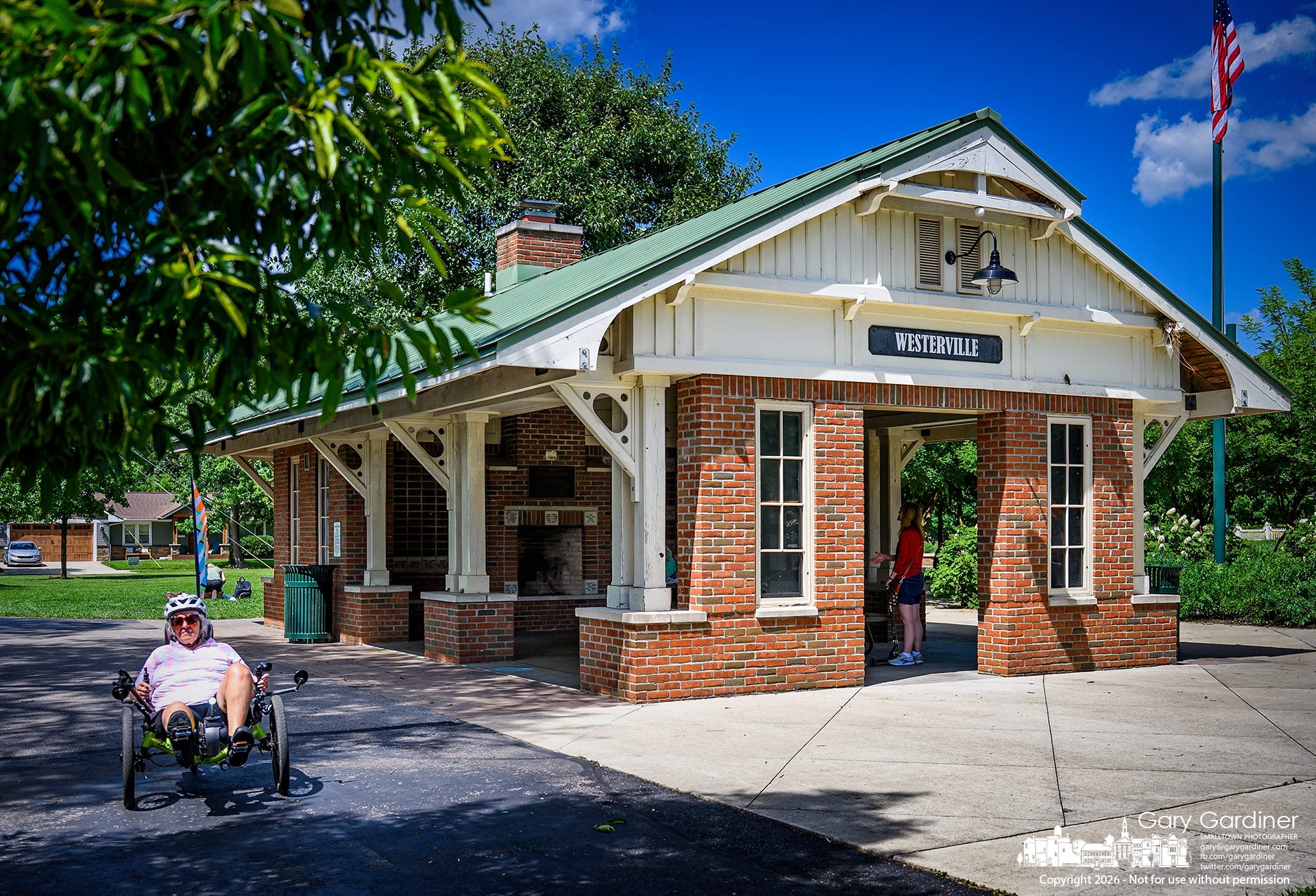
The city also has the Bike Depot at Hanby Park, near Uptown, where trail users can find lockers, a bicycle pump, racks, and visitor information.
Vonstein described the park as the kind of trail gateway MORPC hopes other Central Ohio communities will develop. Such locations can serve as a community’s “front porch,” she said, giving visitors a recognizable place to park, gather, find services and reach nearby destinations.
Parks board members who separately reviewed Hanby Park gave it an overall B-minus through the board’s park scorecard program. They praised the grounds, shelter, and restrooms but noted that maps near the bicycle lockers were faded or outdated.
MORPC has been developing the Trail Town concept for about four years. Its original 2022 framework was created with Amy Camp, who helped design the Great Allegheny Passage Trail Town Program in Pennsylvania.
A 2023 report examined how the concept could work in suburban and urban communities and described Westerville as one of the region’s most prepared. It cited the city’s trails, bicycle facilities, maintenance plans, Uptown business district and services for visiting cyclists.
The report identified Uptown as Westerville’s most visitor-ready district and highlighted the Maxtown and Schrock Road areas as places where bicycle and pedestrian connections could be improved.
Vonstein said the pilot was intended to put that earlier planning into operation.
Westerville participants include the Westerville Public Library, Visit Westerville, Uptown Inc., several Uptown businesses and representatives from the city’s economic development and planning divisions, according to an earlier parks board discussion.
MORPC is developing an online story map showing visitors where to enter Westerville’s trails, what services are available, and what to expect during a stop. The material is also expected to include local trail history.
The program’s second phase, scheduled to begin in July 2026, includes a Trail-Friendly Business Program and merchandise and marketing materials.
Restaurants, retailers, hotels, and other participating businesses could offer bicycle parking, repair supplies, water, restroom access, trail directions, or secure storage. Employees also could receive training to assist trail users and collect information about visitor activity.
Merchandise would be sold only at businesses in participating communities, encouraging visitors to enter local shops rather than buy products online.
Vonstein said merchandise sales were not primarily intended to generate revenue. If the program eventually produces a profit, MORPC could create an endowment or small-grant program benefiting participating communities.
The agency must also identify long-term funding to sustain Trail Towns after the pilot.
“We kind of just created this program from existing resources,” Vonstein said.
MORPC initially envisioned a larger program that included business certification, hospitality training, technical assistance, infrastructure improvements, wayfinding, public art, and systems for measuring trail and visitor activity.
A later report recommended starting with a lower-cost pilot while the agency determined the staffing and funding needed for a permanent program.
Vonstein said MORPC did not want to distribute signs or stickers and then leave communities to operate the program on their own.
“We wanted to be able to stick with the communities and develop real programming and support for communities,” she said.
The Trail Town program is part of a broader expansion of Central Ohio’s bicycle and pedestrian network.
Vonstein said the region has more than 10 times as many bikeway miles as it did in 1994. The Central Ohio Greenways plan includes more than 1,000 miles of existing, proposed or committed trails, and approximately 25% of Franklin County’s proposed trail network is expected to be built within five years.
Much of that work is expected to be supported by the LinkUS transit-supportive infrastructure program, which Vonstein said would provide about $60 million annually for sidewalks, bikeways and trails through 2050.
One planned project is the Linden Green Line, a roughly seven-mile former railroad corridor that Vonstein said would connect near Westerville’s trail system and provide another route toward downtown Columbus.
For Westerville, the first phase of Trail Town work will focus largely on promotion, business participation, and regional cooperation rather than major construction.
The program’s first visible elements are expected to include the business initiative, merchandise, an online story map, printed guides, and promotional materials that carry Westerville’s Trail Town identity.

Westerville begins Ohio to Erie Trail reconstruction
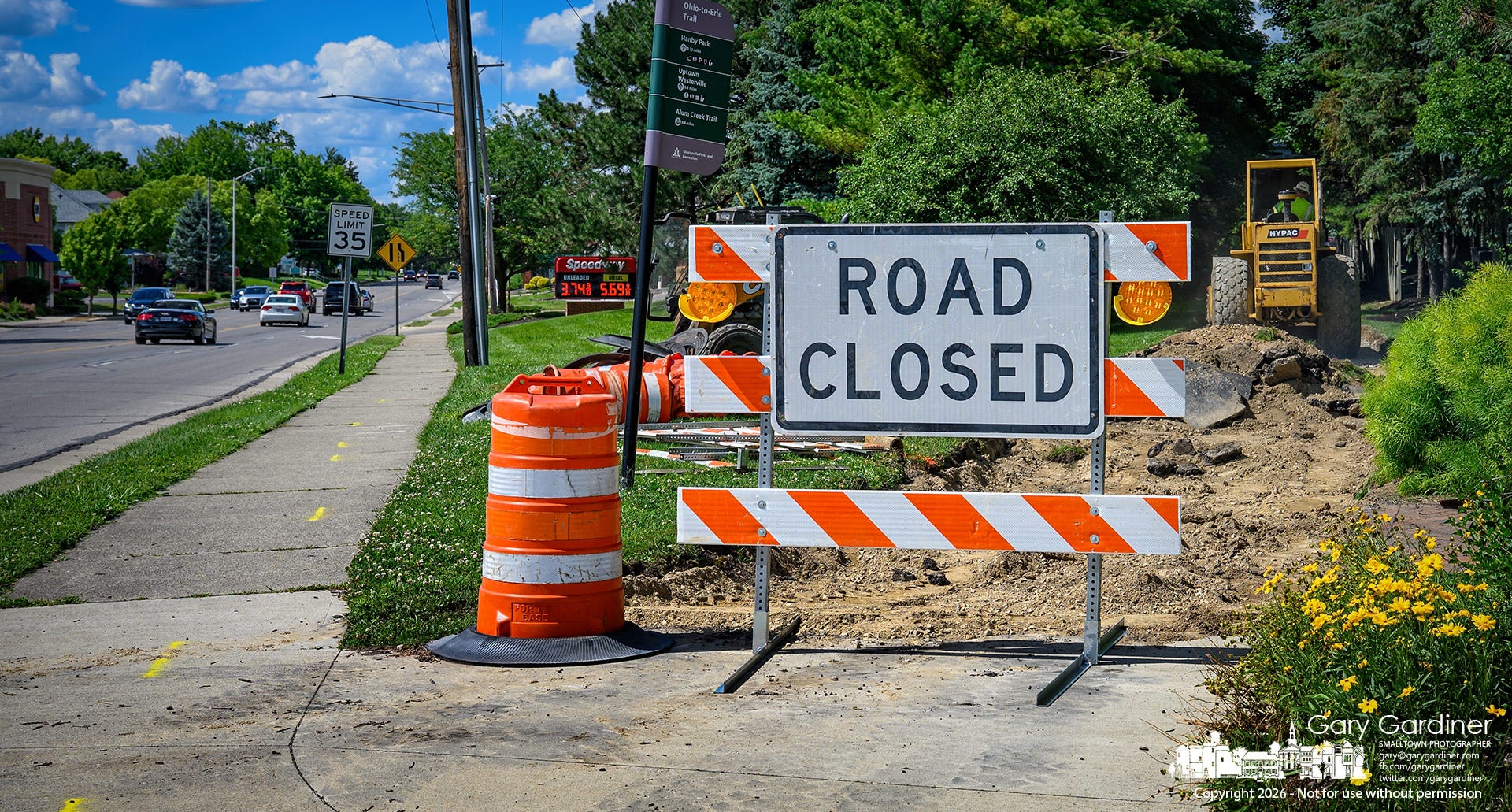
Construction began Friday, June 19, on two sections of the Ohio to Erie Trail in Westerville, bringing temporary closures and a signed detour expected to remain in place through late August.
The work comes as Westerville promotes its broader trail network through the regional Trail Towns of Central Ohio program. A separate story in today’s edition examines the city’s selection for the program and its efforts to connect trails with businesses, parks and community destinations.
The reconstruction project covers separate stretches of trail from Electric Avenue to Old County Line Road and from Maplebrook Drive to Maxtown Road.
The section between Old County Line Road and Towers Trail was recently repaved and is not part of the project.
Crews will remove 11 inches of the existing trail material and rebuild the path to the same depth. The new trail will include a gravel base topped with 4.5 inches of asphalt, all within the existing trail footprint. No work is planned outside the current path.
The project also includes new flashing beacons at trail crossings on Park Street, College Avenue, Broadway Avenue, Old County Line Road and Hoff Road.
City officials said the work is intended to provide cyclists and pedestrians with a smoother, more durable surface and improve safety at several road crossings.
Sections of the trail will remain closed during construction. Westerville and the Ohio Department of Transportation have established a signed detour using the Alum Creek and Polaris Parkway trails to maintain connections with the broader trail network.
Access from the trail to the western side of Hanby Park, including its picnic shelters and restrooms, will be unavailable for about a month. The park will remain accessible from sidewalks near Park and Summit streets and Summit and Plum streets.
The federally funded project is expected to be completed in late August, weather permitting.
Because this post is public, you’re encouraged to share it on social media.
The Westerville News is a reader-supported publication by Gary Gardiner, a lifelong journalist who believes hyper-local reporting is the future of news. This publication focuses exclusively on Westerville—its local news, influence on Central Ohio, and how surrounding areas shape the community.
Reader funding, including subscribers, protects editorial independence, so coverage is guided by journalists rather than owners or corporate profit goals. It also reduces pressure to chase clicks, letting the newsroom focus on stories worth readers’ time. And it helps keep the site accessible to everyone, including people who can’t pay or live in places where a free press is under threat.
Explore more hyper-local reporting by subscribing to The Hilliard Beacon, Civic Capacity, Marysville Matters, The Ohio Roundtable, Shelby News Reporter, This Week in Toledo, and Into the Morning by Krista Steele.
