
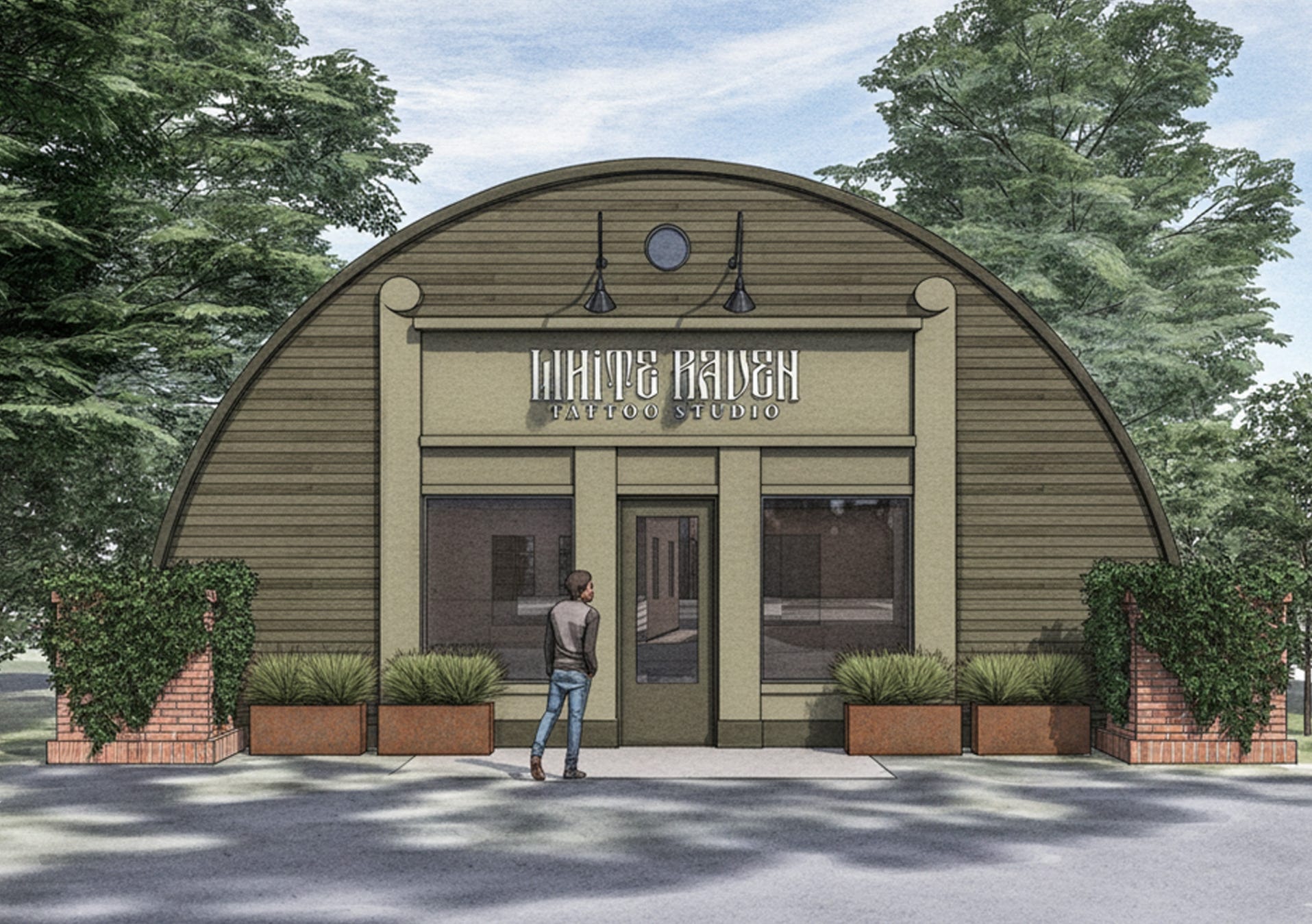
Uptown's Quonset Hut Idea
A proposed tattoo shop in a metal building that looks like a Quonset hut might have been a simple no in Uptown Westerville before. However, during a nonbinding conceptual review last week, several Uptown Review Board members responded positively to a design that city staff described as mostly unfamiliar to the historic district.
The proposal came from Stephen Janusz, owner of White Raven Tattoo Studio, who wants to move his shop from a second-floor Uptown space two blocks away to a new, smaller building designed specifically for tattoo artists on a small lot tucked behind Joe’s Garage and Birdie Books.
At first glance, the building’s rounded metal roof and limited use of brick, a material usually expected in new Uptown construction, seemed likely to attract criticism for deviating from the district’s iconic look. Instead, URB members appeared more concerned with how the business would operate in a smaller space than with its unusual design.
City Planner Jeff Buehler said staff had worked with Janusz on the concept and, in the written staff report, called the proposal thoughtful and creative, even though staff questioned whether the building fits Uptown’s historic character.
The proposal was presented as a concept only, meaning the board was not being asked to vote on the project. Instead, members were asked to provide feedback before the applicant returns for formal review.
Janusz told the board that White Raven Tattoo has been operating in Uptown for about ten years, but its current upstairs location has made it hard for customers to find. He said guiding clients to the shop has often been frustrating, and that the move would place the business in a space designed to meet the needs of tattoo artists.
The proposed structure would sit at the rear of the lot near the alley, reducing its visibility from State Street. The design uses a prefabricated metal shell softened by storefront-style wood ends, muted colors, landscaping, and some brick elements, though staff said the overall form and roof shape remain unlike anything else in Uptown.
Even so, several board members said the design strikes a balance between fitting in and standing out. Roxanne Anderson said the proposal “is compatible with Westerville, yet still distinguishable,” adding that it remains “creative and tasteful” despite the unusual roofline.
Anderson said the design maintained interest and creativity without sacrificing Uptown’s character. She also praised the treatment of the front façade, noting it echoes traditional storefronts enough to help the building blend into its surroundings.
Jessica Calaway offered even more enthusiastic praise, telling the applicant, “I’m in love with this,” and calling the proposal a good job.
Other members seemed less concerned with the building’s unusual look than with practical issues, like its size and how the business would run in a smaller space hidden behind two other buildings.
The main concern raised during the discussion was how the building’s height would appear next to nearby structures. Board members requested more accurate visualizations showing the relationship between the proposed shop and surrounding buildings, especially from neighboring properties.
The discussion indicated that, while staff remains cautious about introducing a form so different from Uptown’s late-19th- and early-20th-century buildings, some board members are at least open to a more modern interpretation if it is thoughtfully placed and designed.
Because the review was only conceptual, the board did not take a vote or make a decision. Instead, they used the discussion to provide Janusz with feedback before he submits a formal Certificate of Appropriateness application. City documents outline the next steps as additional Uptown review, Planning Commission review, and permit approvals, although the City Council could also become involved later if the project requires changes to city code.
The Westerville News is a reader-supported publication by Gary Gardiner, a lifelong journalist who believes hyper-local reporting is the future of news. This publication focuses exclusively on Westerville—its local news, influence on Central Ohio, and how surrounding areas shape the community.
Reader funding, including subscribers, protects editorial independence, so coverage is guided by journalists rather than owners or corporate profit goals. It also reduces pressure to chase clicks, letting the newsroom focus on stories worth readers’ time. And it helps keep the site accessible to everyone, including people who can’t pay or live in places where a free press is under threat.
Explore more hyper-local reporting by subscribing to The Hilliard Beacon, Civic Capacity, Marysville Matters, The Ohio Roundtable, Shelby News Reporter, This Week in Toledo, and Into the Morning by Krista Steele.


