

Westerville 250 Mural Project Brings Lesser-Known Local Stories Into View - Hanby House

Editor’s Note: The Westerville News will publish a closer look at each mural when the works are shown during Fourth Friday in Uptown Westerville. Each feature will explore the mural’s subject, its connection to the 250th celebration, and the artist who created it. The series will include 12 individual emails, one for each artist.

Westerville 250th Mural Project
Westerville’s history can be found in familiar places: along State Street, on the Otterbein University campus, near parks and wetlands, beside community organizations, and on buildings residents pass every day. The Westerville 250 Mural Project brings those stories into public view through a series of murals placed throughout the city.
The original idea behind the project was to tell some of Westerville’s lesser-known and often overlooked stories. A committee selected the subjects, choosing people, places, industries, and events that reveal parts of the community’s history that may not be widely known.
Created in recognition of America’s 250th anniversary, the project explores many sides of Westerville’s past, including agriculture, transportation, recreation, military service, education, Native American history, the arts, environmental change, manufacturing, and civic service.
Some murals honor individuals, including athlete, coach, and attorney Albert A. Exendine; arts educators Harriet Thompson and Ruth “Petie” Dodrill; and Black veterans Walter Thomas, Norman Tarpley, and Jack Dempsey Foster. Others examine broader themes, such as Westerville’s farming roots, early toy manufacturing, wetlands, amusement parks, historic transportation routes, and a long tradition of community service.
The project also highlights the work of artists from Westerville, central Ohio, and beyond. Each brings a distinct style and perspective to the subject, using approaches that include watercolor, gouache, soft pastel, oil painting, digital illustration, and mixed-media design. Their murals do more than reproduce historic scenes. They interpret the past through color, symbolism, portraiture, pattern, and storytelling.
Many of the works draw on archival photographs, local research, historical maps, personal stories, and records preserved by local institutions. Together, they show that Westerville’s history is not limited to a single neighborhood or period. It includes farmers, educators, business owners, artists, veterans, Indigenous students, industrial workers, civic leaders, and everyday residents.
The murals are installed in public-facing locations across the city, including municipal buildings, parks, businesses, Otterbein University, the Westerville Public Library, the Veterans Memorial, and the Westerville Community Center. Their placement allows residents to encounter local history as part of daily life.
The Westerville News will publish a closer look at each mural when the works are shown during Fourth Friday in Uptown Westerville. Each feature will explore the mural’s subject, its connection to the 250th celebration, and the artist who created it.
The series will also include 12 individual emails, one for each artist.
Taken together, the murals form a public record of stories that might otherwise remain out of sight. They invite viewers to look more closely at Westerville and to consider how overlooked people, places, and events helped shape the city it is today.
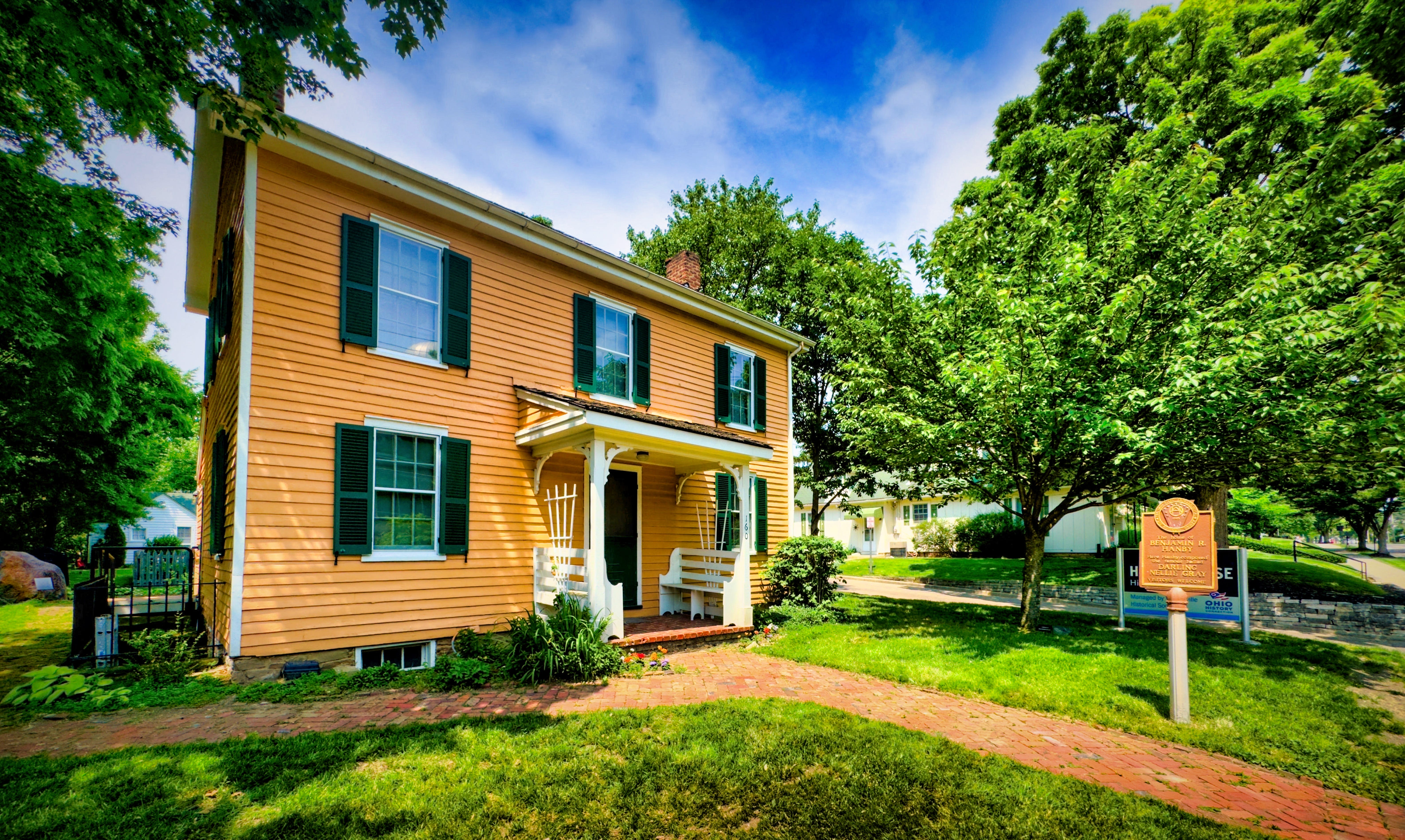
Hanby House marks summer programs, historical society anniversary
The Westerville Historical Society is continuing its 2026 Hanby House Summer Program Series at the historic home, 160 W. Main St.
Upcoming programs include “Westerville 250th Mural Program” on June 27, “Westerville Pioneers History” on July 11, “Historic Tools at the Hanby House” on Sept. 12, and “Underground Railroad in Westerville” on Sept. 19.
The Hanby House is also open for tours from 1 to 4 p.m. Saturdays during the summer, except July 4. Visitors should allow at least an hour.
The National Register-listed home was occupied by the Hanby family from 1853 to 1870. Its collection includes family furniture and personal items, a walnut desk made by Benjamin Hanby, original plates from the first edition of “Darling Nelly Gray,” and a large collection of sheet music and books.
Benjamin Hanby, a minister, abolitionist, teacher, and composer, wrote more than 80 songs, including “Up on the Housetop,” “Darling Nelly Gray,” and “Who Is He in Yonder Stall.” He died of tuberculosis in 1867 at age 33 and is buried in Westerville’s Otterbein Cemetery.
The Westerville Historical Society is celebrating its 85th anniversary this year. More information is available at WestervilleHistory.org.
Because this post is public, you’re encouraged to share it on social media.
The Westerville News is a reader-supported publication by Gary Gardiner, a lifelong journalist who believes hyper-local reporting is the future of news. This publication focuses exclusively on Westerville—its local news, influence on Central Ohio, and how surrounding areas shape the community.
Reader funding, including subscribers, protects editorial independence, so coverage is guided by journalists rather than owners or corporate profit goals. It also reduces pressure to chase clicks, letting the newsroom focus on stories worth readers’ time. And it helps keep the site accessible to everyone, including people who can’t pay or live in places where a free press is under threat.
Explore more hyper-local reporting by subscribing to The Hilliard Beacon, Civic Capacity, Marysville Matters, The Ohio Roundtable, Shelby News Reporter, This Week in Toledo, and Into the Morning by Krista Steele.
