
Westerville 250th Murals - Quiet Renewal of Nature - Artist Jill Chronister
Westerville’s Wetlands: The Quiet Renewal of Nature
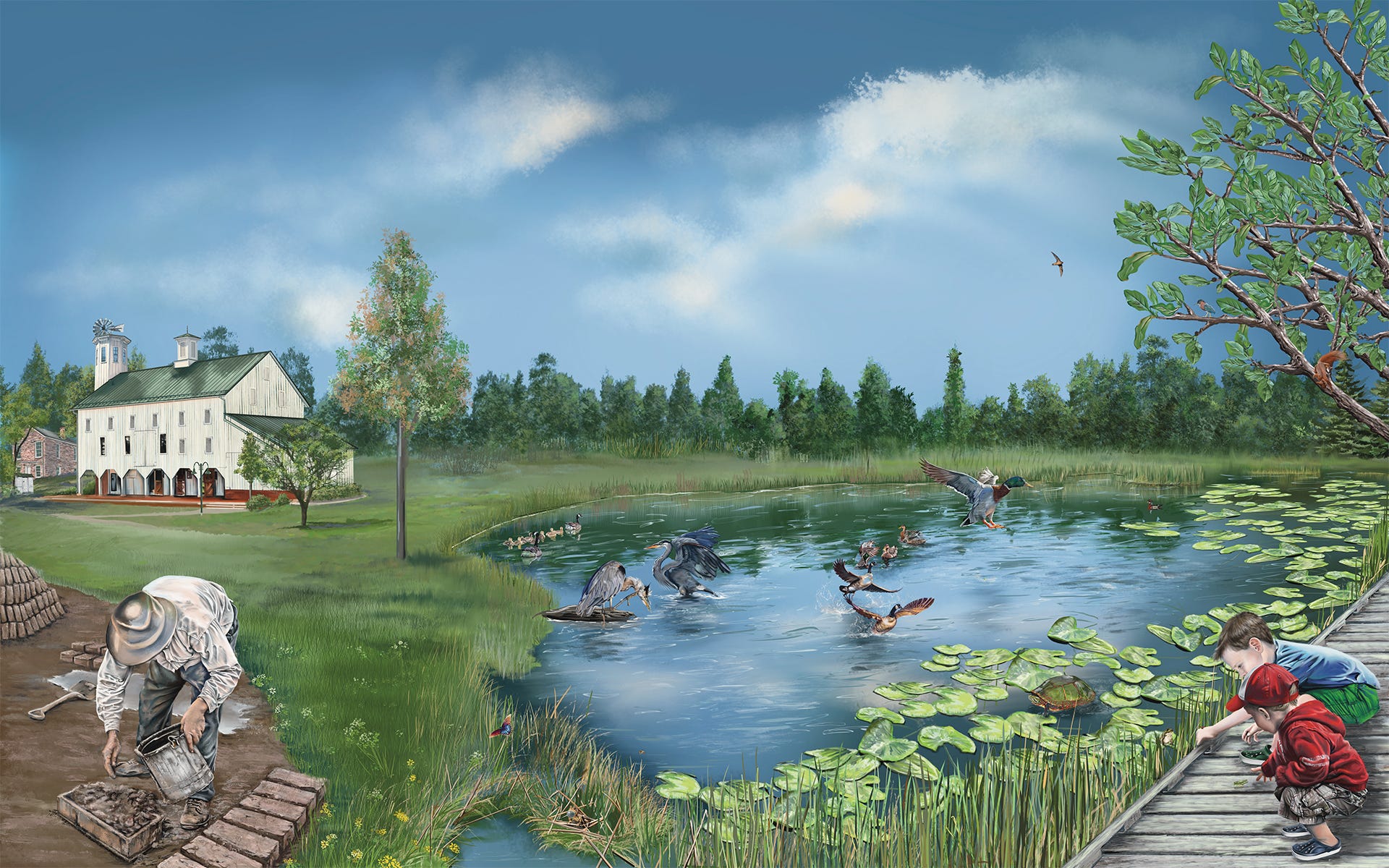
The Quiet Renewal of Nature reflects the long relationship between land use, industry, and environmental change in Westerville. Located at Highlands Park, 245 S. Spring Rd., the mural is on a standalone billboard-like structure in the parking lot behind the wetlands boardwalk.
Created by artist Jill Chronister, the mural centers on a brickmaker, representing the labor that once helped build the surrounding community. Behind him stands a farm that has endured through the years, linking the area’s agricultural past with its industrial history. Chronister’s larger theme is renewal: the same clay once removed from the land for brickmaking helped reshape the landscape in ways that eventually supported the wetlands found there today.
That idea connects closely to the history of Westerville’s wetlands. Long before settlement, glaciers moved across the area, scraping and depositing soil, water, and minerals. The resulting sediment was resistant to absorption and helped create wetlands. Over time, settlers, farmers, and developers drained and altered much of that landscape, leaving only three wetlands in Westerville: Boyer Nature Preserve, Heritage Park, and Highlands Park.
Highlands Park itself reflects that cycle of change. Once drained for farming, it later returned to wetland conditions. Today, its open water areas trap stormwater and sediment, creating a cattail marsh habitat that supports amphibians, birds, dragonflies, insects, and plant life. In this way, the site has shifted from a working landscape shaped by people to a living habitat shaped by both history and ecology.
Chronister, an Ashland-based multidisciplinary artist, is known for murals that blend realism with warmth and storytelling. In The Quiet Renewal of Nature, she shows how a landscape can evolve across generations while still carrying traces of its earlier uses.
As part of the Westerville 250 Mural Project, the mural reminds viewers that Westerville’s history is not only found in buildings and streets, but also in the land itself and in the ways it continues to adapt, recover, and sustain life.
Because this post is public, you’re encouraged to share it on social media.
The Westerville News is a reader-supported publication by Gary Gardiner, a lifelong journalist who believes hyper-local reporting is the future of news. This publication focuses exclusively on Westerville—its local news, influence on Central Ohio, and how surrounding areas shape the community.


