
Westerville Approves Aldi After Road Dispute Resolved, Environmental Concerns Raised
Aldi Approved On Polaris Parkway
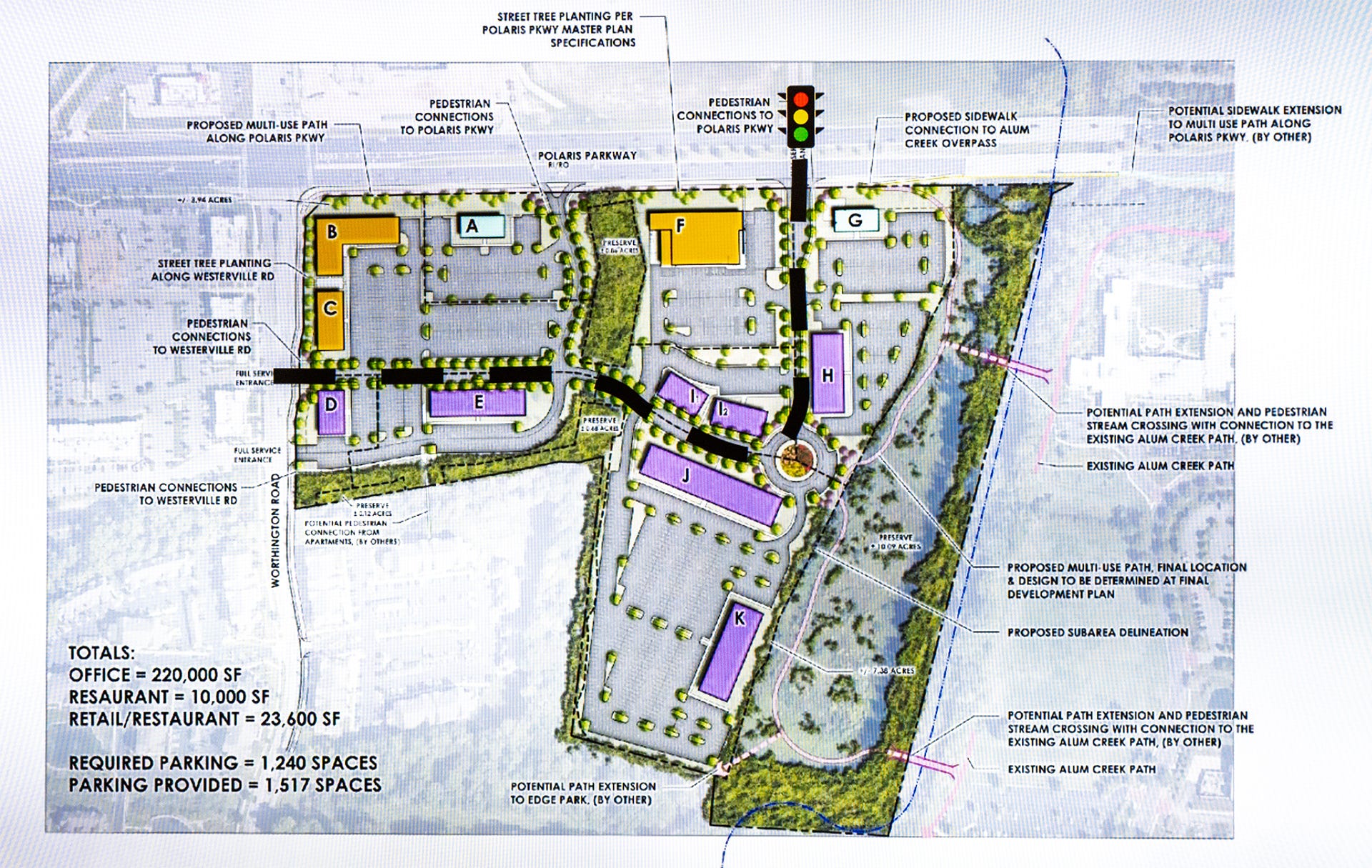
Westerville City Council approved plans Tuesday night for an Aldi grocery store and the first phase of the long-planned Zumstein South mixed-use development, bringing a quick end to a project that had been delayed for months due to disagreements over road construction and traffic impacts.
The vote took place with little debate and lasted just a few minutes, despite a previous postponement related to a controversial internal connector road linking Polaris Parkway to Worthington Road. Environmental advocates, however, used public comment to warn that the development could threaten Alum Creek, the city’s main drinking water source.
Road Dispute Quietly Settled Before Vote
For much of 2025, the project was on hold over whether the developer would be required to build the full internal connector road during the first phase of construction. City staff argued that the continuous road was essential from day one for traffic flow, emergency access, and to prevent Polaris Parkway from serving as a single driveway to Aldi.
Developer Franz Geiger, representing NP Limited Partnership, previously argued that building the entire road upfront would cost more than $4 million and was unnecessary since Aldi was the only confirmed tenant.
After the vote, Geiger said the issue was resolved before the council convened, explaining why traffi’t discussed during the hearing.
“The traffic study was done and submitted,” Geiger said. “The reason there wasn’t discussion is because we’re willing to do more than what the traffic study requires up front.”
Geiger confirmed that the full connector road will be built as part of the development plan, including the continuous connection across the site. While the traffic impact study indicated that only a section of the road was essential for the first phase, he mentioned the city preferred a complete buildout, and the developer agreed, pending resolution of financing and logistics through a development agreement.
“I don’t have a problem with it as long as we can figure out the way to get it done,” he said. “That’s what we’re working on.”
He said his earlier resistance was driven not only by cost but also by concerns that building the road too early could limit flexibility for future office tenants who might prefer different alignments. Environmental constraints already restrict where crossings can occur, he said, but the development team is now comfortable moving forward.
City Engineer: Study Showed No New Concerns
City engineer Nate Lang said the completed traffic impact study did not reveal any significant changes from earlier analyses and raised no new red flags.
“The impact study didn’t show anything dramatically changing between the uses,” Lang said. “Nothing would have really changed, essentially.”
Lang said the real issue was never the study itself, but whether the internal road connection would be built. Once the developer agreed to construct the continuous connector, the traffic concern largely disappeared.
“Because the connection’s happening now, it was less of a concern,” Lang said.
With that agreement in place, the council approved the project without revisiting traffic issues on the record.
Environmental Groups Warn of Risks to Alum Creek
While traffic concerns faded from the meeting, environmental opposition did not.
Several residents and environmental advocates testified that the development could harm Alum Creek and Allen Creek through increased runoff and sediment, as well as long-term mismanagement of protected wetlands.
Luanne Hendricks, president of Friends of Alum Creek and Tributaries (F.A.C.T.), said runoff from roads, parking lots, and construction sites already strains the city’s water treatment system.
“Although development has economic benefits, the city has an obligation to ensure the environmental cost is mitigated wherever possible,” she said.
Hendricks pointed out that the Zumstein South Preserve, an about 11-acre natural area next to Alum Creek, is controlled by environmental covenants related to mitigation for stream damage from the earlier Zumstein North development. She mentioned that those documents were not included in the council’s agenda materials and should have been.
More than half of the preserve lies within a 100-year floodplain, she said, and the covenant restricts earthmoving and drainage changes except as explicitly allowed.
Her central question was accountability: who ensures that the mitigation plan and environmental covenants are followed over time.
David Roseman, a board member of F.A.C.T. and a member of the city’s Active Transportation Committee, questioned why the plan includes 277 more parking spaces than necessary. He proposed replacing some pavement with green space, rain gardens, and cooling areas.
Roseman also warned that proposed bridges and cut-throughs shown on development plans could violate covenant restrictions by intruding into wetlands and forested areas. He urged the council to enforce the city’s mobility, bikeway, and complete streets plans.
Science teacher and Westerville resident Anne McCabe described wetlands as essential infrastructure that offers flood control, water purification, and temperature moderation “for free.” She pointed out that Ohio has lost about 90 percent of its wetlands since European settlement and cautioned against treating the remaining wetlands as disposable.
Environmental activist Jenny Morgan echoed concerns about enforcement, warning against reliance on corporate self-regulation and citing limited staffing at the Ohio EPA. She urged the council to transfer control of the preserve to a public entity or conservation organization.
Council Questions Enforcement of Environmental Covenant
Following public comment, council member Kelley Stocker inquired how the city would respond if the environmental requirements governing the preserve were not met.
“What recourse do we have on a local level if we see that’s not being respected?” Stocker asked.
Staff stated that the environmental covenant is enforced by external regulatory agencies rather than the city itself. City officials said the Ohio Environmental Protection Agency and the U.S. Army Corps of Engineers oversee what activities are permitted within the preserve.
City inspectors would monitor the site during construction, staff said, and if unpermitted impacts were observed, the city would notify the EPA, which would then start an investigation.
Approval Moves Project Forward
Despite environmental concerns raised, the council approved the development without changes or extended discussion.
With zoning and site approvals secured, the Aldi store and the first phase of the Zumstein South development are now ready to proceed with construction, pending final permits and execution of the development agreement.
While the road dispute that delayed the project for months has been resolved, environmental advocates say questions remain about long-term stewardship of the Alum Creek buffer and the city’s limited role in enforcing the preserve’s legal protections.
Students Protest At City Hall
Students at Otterbein University gathered Tuesday at the campus student center before marching together to Westerville City Hall for a rally tied to a national day of action.
The demonstration was part of the nationwide “Free America Walkout,” timed to mark one year since Donald Trump’s second inauguration. Students assembled in the afternoon, bundled against the cold and carrying handmade signs, then walked to Uptown Westerville.
During the march and at the rally, students repeated chants and drummed on five-gallon buckets to keep rhythm. One group began chanting “the whole world is watching,” a phrase associated with anti–Vietnam War protests in 1968.
Participants said the goal was to show solidarity while drawing attention to national and local concerns.
The Westerville News is a reader-supported publication by Gary Gardiner, a lifelong journalist who believes hyper-local reporting is the future of news. This publication focuses exclusively on Westerville—its local news, influence on Central Ohio, and how surrounding areas shape the community.
Reader funding, including subscribers, protects editorial independence, so coverage is guided by journalists rather than owners or corporate profit goals. It also reduces pressure to chase clicks, letting the newsroom focus on stories worth readers’ time. And it helps keep the site accessible to everyone, including people who can’t pay or live in places where a free press is under threat.
Explore more hyper-local reporting by subscribing to The Hilliard Beacon, Civic Capacity, Marysville Matters, The Ohio Roundtable, Shelby News Reporter, This Week in Toledo, and Into the Morning by Krista Steele.


