Westerville Council To Consider Walnut Street Sale As Residents Push Back On Redevelopment Plan
City chose targeted developer process instead of RFP
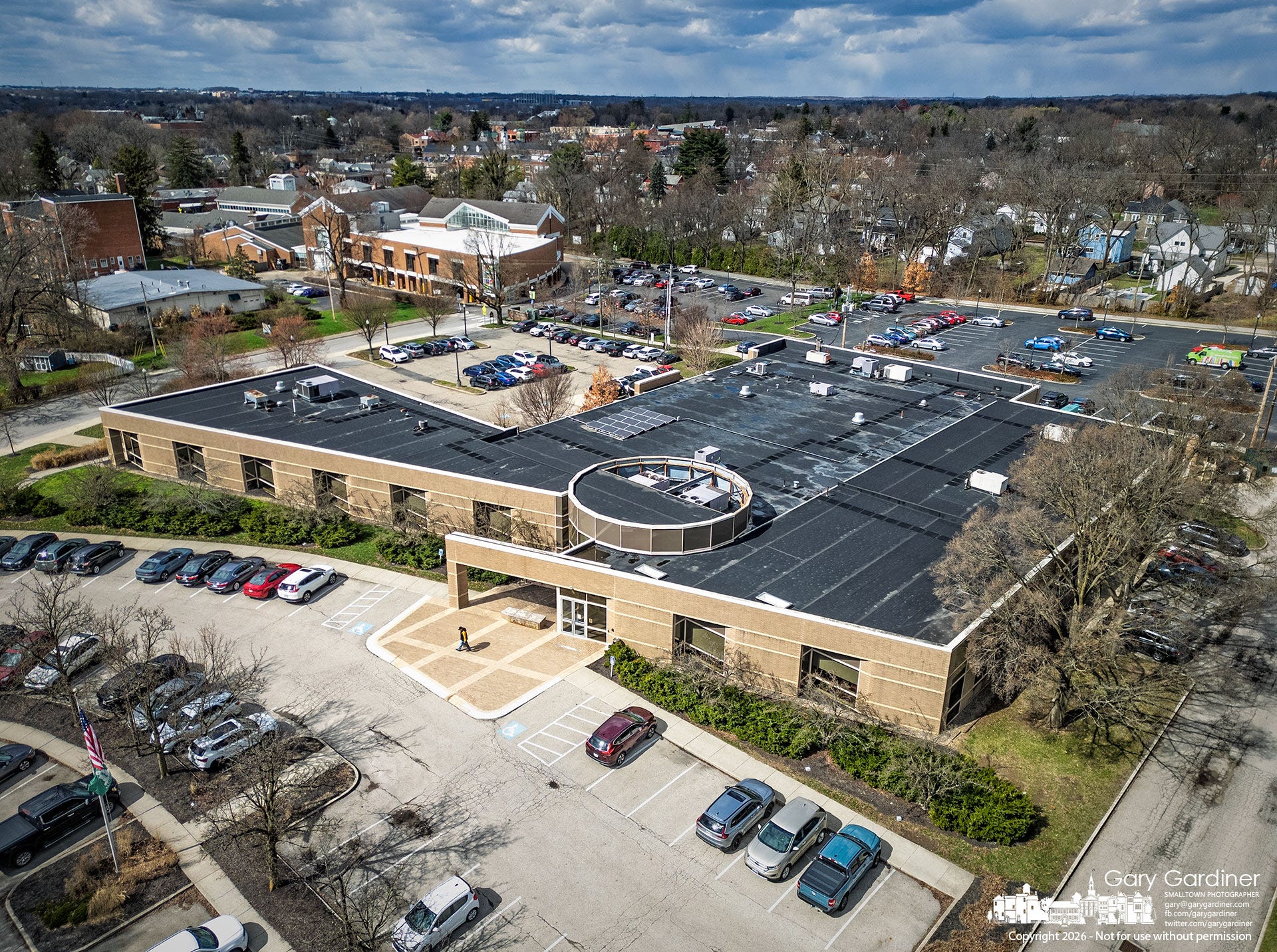
Westerville City Council is expected to take its first look at legislation that would authorize the sale of city property near Uptown for a proposed mixed-use development with apartments, a hotel, a restaurant, and a parking garage on Tuesday.
Opposition builds before the first reading
The proposal for 64 E. Walnut St. has already drawn opposition from residents concerned about its size, density, and effect on the edge of Uptown’s historic district.
A new Facebook group, Uptown United, has emerged as the most visible center of opposition. The group has more than 300 members, and opponents have begun circulating a Change.org petition seeking to stop the sale. Members are also urging residents to attend Tuesday’s City Council meeting wearing green as a sign of unity against the proposed development.
The ordinance would allow the city manager to enter into a real estate purchase agreement with Continental Development Ventures for the approximately 5.2-acre property. The proposed sale price is $2.5 million.
According to a staff report prepared for Council, the redevelopment could include about 247 Class A multifamily units, an 81-room boutique hotel, a 3,500-square-foot restaurant, and a parking garage with about 400 spaces, including at least 100 spaces for public use.
City officials say the agreement would begin a longer public review process, not give final approval to the project. Opponents are expected to argue that entering into a purchase agreement would give the proposal too much momentum, as they believe it is too large for the site.
First reading begins Council review
The ordinance is the first of three required readings before the Council can take a final vote. Council does not have to advance the legislation on Tuesday and could table it before final approval.
The first reading will occur after Council’s regular public comment period, which is included at every meeting and comes before legislation and motions are considered. Speakers may address any subject, whether or not it is on the agenda, with each speaker limited to three minutes.
If the ordinance advances to a second reading, Council may also authorize a separate public comment period focused specifically on the proposed sale and redevelopment, again with the same three-minute limit.
City defends moving forward with one developer
In an email response to questions from The Westerville News, the city said it did not issue a request for proposals before advancing the project with Continental Development Ventures. Hillary Bates, the city’s community affairs director, said staff regularly meets with development firms to gauge market interest in city-owned parcels, including 64 E. Walnut St., but that the administration chose a targeted developer selection process for this project.
Bates said the city advanced the project with Continental because the developer is known to Westerville, has experience with complex mixed-use projects, and developed the Renaissance Westerville-Polaris hotel. She said the targeted approach was viewed as a way to achieve specific outcomes aligned with city planning documents, including a hotel with a restaurant, a parking garage, and new residential units.
“No RFP does not mean no process,” Bates said in the email. “Part of that process, or any process involving the sale of public real estate, is to rigorously hold any developer partner accountable to community benefit, and that accountability happens in public.”
In its staff report to Council, the city describes the purchase agreement as the beginning of a longer public review, not the final approval of the proposed project. The report says the city would retain control of the property and would have no obligation to close on the sale unless later approvals are obtained, including zoning approvals and a negotiated development agreement.
The report also says Continental expects the boutique hotel to be co-managed by Concord Hospitality, which manages the Renaissance Polaris-Westerville hotel and conference center. The staff report says the arrangement would allow the two hotels to share resources and overflow capacity while offering different visitor experiences in Westerville.
Public parking sits at center of redevelopment debate
The parking garage could become a central issue in the public debate.
Bates said parking is important to the city and that many possible projects for the parcel might have eliminated some or all of the existing public parking. She said that was one reason mixed-use development received strong consideration as staff advanced the project.
“Structured parking is expensive for a developer to include, and getting guaranteed public spaces in a private development can be difficult,” Bates said.
Two proposals have been associated with the 64 E. Walnut St. site, one from Champion Companies and one from Continental Development Ventures. While they differed in apartment density and hotel rooms, both included a roughly 400-space parking garage.
Additional Uptown parking is also one of the objectives cited in the staff report, which says the 2014 Uptown Plan called for a boutique hotel, infill housing, and additional parking in and around Uptown.
The same factors that make the garage attractive to the city also make it difficult to site. Uptown has limited open land, an established historic character, and development constraints that leave few obvious locations for a large parking structure.
As a result, the debate over 64 E. Walnut St. is not only about apartments, hotel rooms or the sale of public land. It is also about whether the city is using the redevelopment proposal to solve a long-standing Uptown parking problem on one of the few large sites available near the district.
The location of the garage and apartment buildings could also raise design-review concerns. Although the site sits near the Uptown historic district, the parking garage and apartment buildings would be outside the Uptown Review Board’s purview. Outside that boundary, the project would still require public review, but not under the same historic-district-focused standards that apply inside Uptown.
Library says it is not seeking Walnut Street property
The site’s closest institutional neighbor, the Westerville Public Library, said it has been in communication with the city about the property, but not as a potential buyer.
In a statement provided by Tamara Murray, the library’s marketing manager, Executive Director Erin Francoeur said the city and library have discussed shared staff parking and the possible effects development could have on nearby traffic flow.
“We look forward to seeing how the project evolves as it moves through the public input process and City approvals,” Francoeur said.
The library said it is not interested in purchasing the property at 64 E. Walnut St. Francoeur said the library’s 2023-2028 strategic plan is focused on expanding access in the northern and southern portions of its service district, rather than acquiring the Walnut Street site. She said the library would look for potential partnership opportunities with whoever eventually occupies the property.
The library’s position appears to remove one possible alternative use from the debate, but it also underscores how directly the project could affect nearby public institutions. The library sits next to the site, and any redevelopment with apartments, a hotel, a restaurant, and a parking garage would bring new traffic and parking patterns to an area already serving library patrons, nearby schools, Hanby Park, and the edge of Uptown.
Arts Council questions site, calls for more input
The Arts Council of Westerville has also been closely watching the proposal.
Curt Smith, vice president of the Arts Council, said he knew the city eventually planned to sell the 64 E. Walnut St. property, but did not know the timing of the sale or the specific proposal for the site. Smith said he supports mixed-use development generally and recognizes the need for housing, but questioned whether this is the right location and criticized how the proposal was introduced to the public.
Smith said a hotel near or adjacent to Uptown could be valuable if visitors could walk to shops, restaurants, and the bike trail. But he said the city should seek more community input before advancing a project of this scale near Uptown.
Smith also said the proposal highlights Westerville’s lack of a dedicated cultural arts space, a long-standing goal for local arts organizations. He said the Arts Council is not seeking the Walnut Street property as a simple handoff, but believes the city should consider how a future cultural arts center fits into its long-term planning.
Sale proceeds would go to the general fund
The staff report frames the sale as part of a broader city strategy. It says selling the property would honor a commitment to reduce the number of government buildings in and around Uptown and fulfill a pledge connected to voter approval of the Justice Center in 2018.
The report also cites the earlier sale of 28 S. State St., now High Bank Distillery, and 240 S. State St., now COhatch and North High Brewing, as examples of former city properties that have been converted into amenities in or near Uptown.
The city’s email response added a new detail about the proceeds. In response to questions about whether the $2.5 million would be used to retire part of the Justice Center debt early or deposited into a bond retirement fund, Bates said the ordinance states that the sale proceeds will be deposited into General Fund 101. She said the city would receive the proceeds at closing.
The answer may raise questions about how directly the sale proceeds are tied to the Justice Center pledge. The staff report says the sale fulfills a specific pledge made when voters approved the Justice Center in 2018, while the city said the proceeds would go into the general fund rather than directly into a bond retirement fund.
The city also says returning the parcel to private mixed-use development would put the property back on the tax rolls, generate ongoing revenue to support city services, and address critical infrastructure needs such as parking.
Bates said several city plans, including the Westerville Community Plan, the Uptown Plan, and the 2023 Advance Westerville Economic Development Strategy, outline development goals in and around Uptown.
“As part of that, the Economic Development plan has long called for a hotel near Uptown to support its long-term vitality,” Bates said.
The staff report makes a similar argument, saying boutique hotel guests and new residents would bring more “feet on the street” within walking distance of Uptown’s locally owned shops, restaurants, and amenities. It also says the proposed parking structure would support the project’s own parking needs while accommodating additional spaces for public use.
Alternative locations may become part of opposition
Opponents may also point to other large development sites in the city, including East of Africa, the McGill property on East Broadway, and the Braun Farm area along Cleveland Avenue. Those sites have their own planning, ownership, and environmental constraints, but residents may argue they deserve consideration before the city moves forward with a large project near Uptown.
For residents opposed to the Walnut Street redevelopment, the objection is not necessarily to every element of the proposal, but to whether this scale of development belongs on this particular site.
The staff report says the purchase agreement includes several conditions that must be met before the sale can close. The buyer would have to obtain required zoning, land-use, and design approvals through public processes before the Planning Commission and City Council. Council also would have to approve a detailed development agreement governing project scope, financing, parking, infrastructure, and public benefits.
If those approvals are not obtained, or if acceptable terms are not reached, the city could terminate the agreement and retain ownership of the property. The earliest expected groundbreaking would be mid- to late 2027, according to the staff report.
That structure gives the city several procedural off-ramps. It also gives multiple public bodies, including the Council and the Planning Commission, the ability to stop or reshape the project before any sale is completed.
But for many residents, the concern is less about whether future review steps technically exist and more about whether the process is already moving around a preferred developer and a defined redevelopment concept.
City says review is beginning; opponents fear momentum
The city’s email response acknowledged public concern. Bates said staff are listening to feedback and believe community engagement will improve the project.
“The staff here love this community,” Bates said. “We are listening to the feedback and believe that quality community engagement is going to evolve this project into something better than where we started. While development in a beloved area naturally involves balancing diverse viewpoints, our goal is a collaborative outcome that respects Westerville’s character and serves the entire community.”
Public opposition has centered on the scale of the proposed redevelopment and its location near Uptown’s historic district. Residents have raised concerns that the apartment count, hotel use, parking structure, building height, and overall density could alter the character of the area bordering the city’s most recognizable district.
For opponents, Tuesday’s Council process may become a test of whether the city is willing to slow down or reconsider the proposal before entering into a formal purchase agreement.
City officials say the agreement would begin, not end, the public review process. Opponents are expected to argue that once the city enters into a purchase agreement with a preferred developer, the project may already have too much momentum to stop.
Because this post is public, you’re encouraged to share it on social media.
The Westerville News is a reader-supported publication by Gary Gardiner, a lifelong journalist who believes hyper-local reporting is the future of news. This publication focuses exclusively on Westerville—its local news, influence on Central Ohio, and how surrounding areas shape the community.
Reader funding, including subscribers, protects editorial independence, so coverage is guided by journalists rather than owners or corporate profit goals. It also reduces pressure to chase clicks, letting the newsroom focus on stories worth readers’ time. And it helps keep the site accessible to everyone, including people who can’t pay or live in places where a free press is under threat.
Explore more hyper-local reporting by subscribing to The Hilliard Beacon, Civic Capacity, Marysville Matters, The Ohio Roundtable, Shelby News Reporter, This Week in Toledo, and Into the Morning by Krista Steele.


