

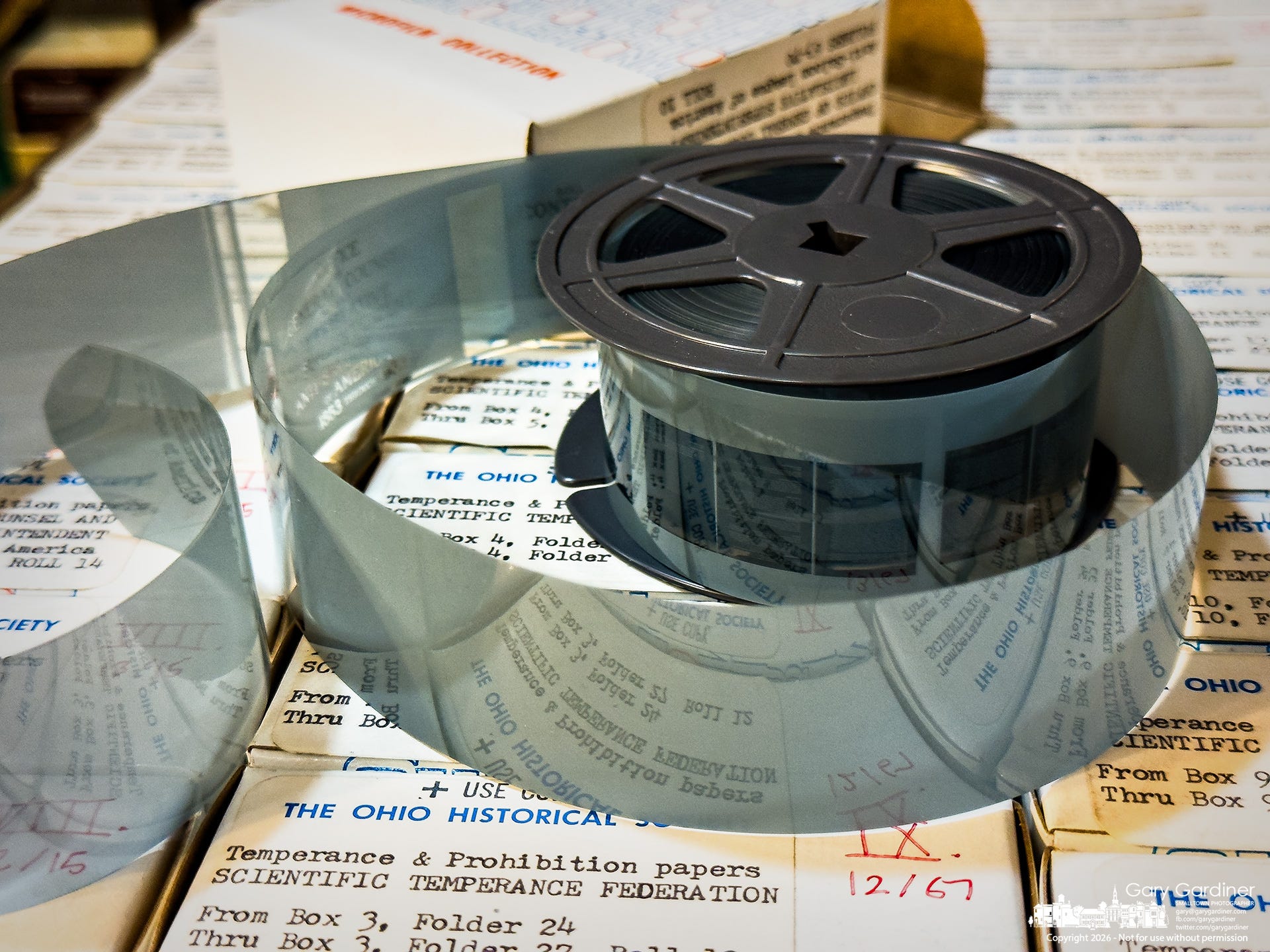
More than 107,000 pages of the Public Opinion and its predecessors are now searchable by word at the Westerville Public Library, opening more than a century of local history to researchers and the simply curious.
A name, an address, an old business, or a half-remembered event may be all someone needs to begin exploring Westerville’s past. Until recently, that search could require an appointment at the Westerville History Museum, time at a microfilm reader, and enough patience to work through reels of old newspapers, often without knowing whether the information sought would turn up.
Now, much of that history can be searched with a few keystrokes. The Westerville History Museum has digitized more than 107,000 pages of local newspapers from 1880 through March 2005, allowing visitors to the Westerville Public Library and museum to search the collection by word on public computers at no charge.
The change means researchers no longer need to know roughly when something happened before they begin looking for it. They can start with a person’s name, an address, a business, or a subject and search across decades of Westerville history.

“Being able to search the Public Opinion archive fundamentally changes our ability to access Westerville history,” museum manager Jackie Barton said. “We’re learning information about stories we think we know, and that history has largely forgotten. I can’t wait to see how this enriches our exhibits, programs, and ability to provide research support.”
The collection includes the Westerville Review (1880-1884); the Central Ohio Review (1884-1885); the Public Opinion (1887-1993); and the Westerville News & Public Opinion (1994-March 30, 2005). The newspaper continued under variations of the Westerville News & Public Opinion name until January 2023, but issues after March 2005 have not yet been digitized and remain available in print at the museum.
The difference between preserving a newspaper and being able to search it easily can be substantial. A researcher looking through microfilm typically needed some idea of when an event occurred. Knowing something happened in a particular month could make the search manageable, but knowing only a name, address, or subject could mean hours of flipping page after page with no certainty the item would be found.
Beth Weinhardt, president of the Westerville Historical Society and a former manager of the Westerville History Museum, said she spent countless hours helping people search newspaper microfilm for family genealogy, local businesses and civic and government events. The answer to a research question might be only a sentence or paragraph buried somewhere in an edition.
“This will make searching a quick and easy process,” Weinhardt said. “I am very excited about exploring so many topics of local interest.”
The ease of searching also opens the archive to people who might never think of themselves as historical researchers. Someone curious about a house, a relative or a favorite business from years ago can now conduct searches that previously might have required considerable preparation and time at a microfilm reader.
Tamara Murray, marketing manager for the Westerville Public Library, tried the new system by entering her home address and discovered an advertisement for a watch repair business that operated there in 1956. She also searched her own name and found a 1995 article listing Westerville North High School students who had made the honor roll.
“It’s also fun to see photos of businesses that are long gone, like the Gold Circle at the old Westerville Mall,” Murray said.
Those searches illustrate one of the project's most significant changes. People can start with what they know rather than first having to determine when the newspaper might have covered it. For example, someone researching a house might find advertisements, property sales, zoning disputes, or businesses that once operated there, while a family name could lead to wedding announcements, school news, sports results, club activities, or brief social items.
The newspaper recorded both the ordinary details of Westerville life and major events. Over the years, it published emergency editions, church notes, streetcar schedules, and personal news about hospital stays, vacations, visitors, and fishing trips. Such routine items can become valuable decades later because they preserve details that may not have been recorded elsewhere.
Stephen D. Grinch, archivist for Otterbein University, said he and volunteers previously could spend hours or days sifting through microfilmed newspapers to find a small but important piece of information. With the searchable archive, he could quickly settle a particularly specific question: when a duck became stuck in Professor Grabill’s chimney.
The incident occurred in late April 1950 and was reported in the May 11 edition. “This newly digitized resource will be a boon to Westerville and Otterbein researchers,” Grinch said.
The digitization project grew out of a conversation earlier this year between Barton and Michael Shearer, executive editor of The Columbus Dispatch. The situation was unusual because the Dispatch owns the rights to the Public Opinion archive, while the Westerville History Museum holds the physical archive of issues on microfilm and in print.
Shearer suggested that Barton work with Newspapers.com, owned by Ancestry.com, to digitize the collection. The arrangement required no financial investment from the museum. After the agreement was signed, the microfilm was shipped to Utah on July 24 for scanning. Murray said articles began appearing online about two months later, even before scanning was complete.
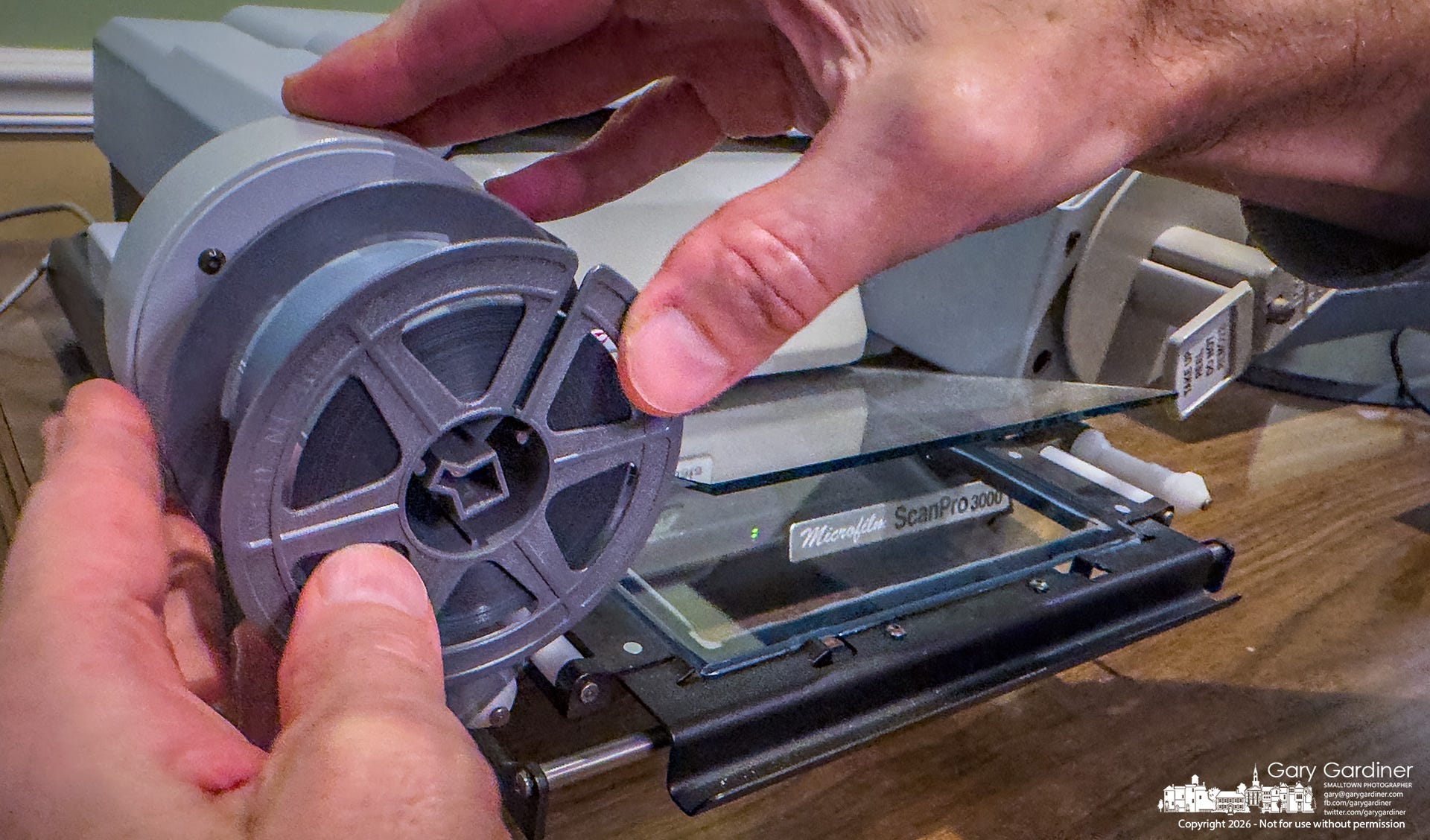
The project also expands what museum staff can do with material they have spent years organizing. Staff and volunteers have created subject files with newspaper clippings and separately digitized material such as marriage announcements and obituaries, but keyword searching lets researchers go beyond those selected subjects and find details no one may have thought to clip or index years ago.
Searching the complete newspaper also allows an article to be viewed in the context of the rest of that week’s news. For example, someone reading a wedding announcement can see who else was getting married, which restaurants were advertising, which businesses were operating, and what other issues were occupying Westerville at the time.
The collection can be searched free of charge on public computers at the Westerville Public Library and the Westerville History Museum. Searching from home requires a Newspapers.com Publisher Extra subscription. People who cannot visit Westerville can also contact museum staff for research assistance.
The newspaper project also illustrates a broader challenge facing museums and archives. Preserving materials is only the first step. Large collections must also be organized and described well enough for researchers to find what they contain, a challenge that grows as museums acquire more material created digitally from the start.
The Westerville History Museum’s future holdings include an estimated 2 million-image collection documenting Westerville since 2004. Donated by retired Associated Press photojournalist Gary Gardiner, the photographs record everyday life, construction, businesses, public events, and changes in the city's physical appearance.
When the gift was announced in 2025, Barton said the born-digital collection's size and breadth posed a unique challenge for the museum. She said that organizing and transcribing the photographs, captions, handwritten journals, and other materials would be labor-intensive, and that the museum must also decide how best to store and preserve the files.
The newspaper project also illustrates a broader challenge facing museums and archives. Preserving materials is only the first step. Large collections must also be organized and described well enough for researchers to find what they contain, a challenge that grows as museums acquire more material created digitally from the start.
The Westerville History Museum’s future holdings include an estimated 2 million images documenting Westerville since 2004. Donated by retired Associated Press photojournalist Gary Gardiner, the photographs capture everyday life, construction, businesses, public events, and changes in the city's physical appearance.
When the gift was announced in 2025, Barton said the born-digital collection's size and breadth posed a unique challenge for the museum. Organizing and transcribing the photographs, captions, handwritten journals, and other materials would be labor-intensive, she said, while the museum also worked to determine the best way to store and preserve the files.
Barton said Tuesday during a public program at the library on changing technology in photography that the museum is exploring ways to make the Gardiner collection easier to search. Responding to a question about artificial intelligence, she said the museum is considering how newer technology might help researchers find material in such a large collection.
Any system will also need to account for restrictions on how certain photographs can be used, Barton said. Much of Gardiner’s work was originally produced for newspaper and editorial use, rather than for personal or business use, creating limitations the museum will need to consider as it develops public access to the collection.
The issue highlights the difference between storing digital material and making it genuinely useful for research. A collection of millions of photographs can be preserved on computer storage systems, but without sufficient information about the people, places, dates, and events depicted in the photographs, finding a particular image can remain difficult.
Artificial intelligence and other emerging research tools could eventually help museums examine collections on a scale that would be difficult to manage manually, identifying relationships among names, locations, events, photographs, and documents. The Westerville museum’s exploration of those tools is still in development, but its newly searchable newspaper archive shows what can happen when a large historical collection becomes easier to explore.
For now, the change is immediate. A piece of Westerville history that once might have taken hours to find in reels of microfilm can now be found by entering a name, a place, or a few words in a search box.

Because this post is public, you’re encouraged to share it on social media.
The Westerville News is a reader-supported publication by Gary Gardiner, a lifelong journalist who believes hyper-local reporting is the future of news. This publication focuses exclusively on Westerville—its local news, its influence on Central Ohio, and how surrounding areas shape the community.
Reader funding, including subscribers, protects editorial independence, so coverage is guided by journalists rather than owners or corporate profit goals. It also reduces pressure to chase clicks, letting the newsroom focus on stories worth readers’ time. And it helps keep the site accessible to everyone, including people who can’t pay or live in places where a free press is under threat.
Explore more hyper-local reporting by subscribing to The Hilliard Beacon, Civic Capacity, Marysville Matters, The Ohio Roundtable, Shelby News Reporter, This Week in Toledo, and Into the Morning by Krista Steele.
