
Westerville Planning Effort Puts Public Participation In Focus After Walnut Street Dispute
With little undeveloped land remaining, the city is asking residents to identify priorities for redevelopment, housing, and infrastructure. The meeting follows City Council’s rejection of a controversial agreement for 64 E. Walnut St.
Westerville will begin a citywide planning discussion on June 23, three weeks after a dispute over a city-owned Walnut Street property intensified questions about public participation in development decisions.
The Plan Westerville Community Check-In, scheduled from 6 to 8 p.m. at the Community Center, will be the first public meeting in a roughly 10-month review of the city’s long-range plans. The review will examine demographic change, housing, infrastructure, land use, market conditions and the city’s progress toward goals established in its 2016 Community Plan.
The city has promoted the meeting and participation opportunities through its website and social media accounts. The outreach is intended to reach people beyond those who regularly attend council or planning meetings.
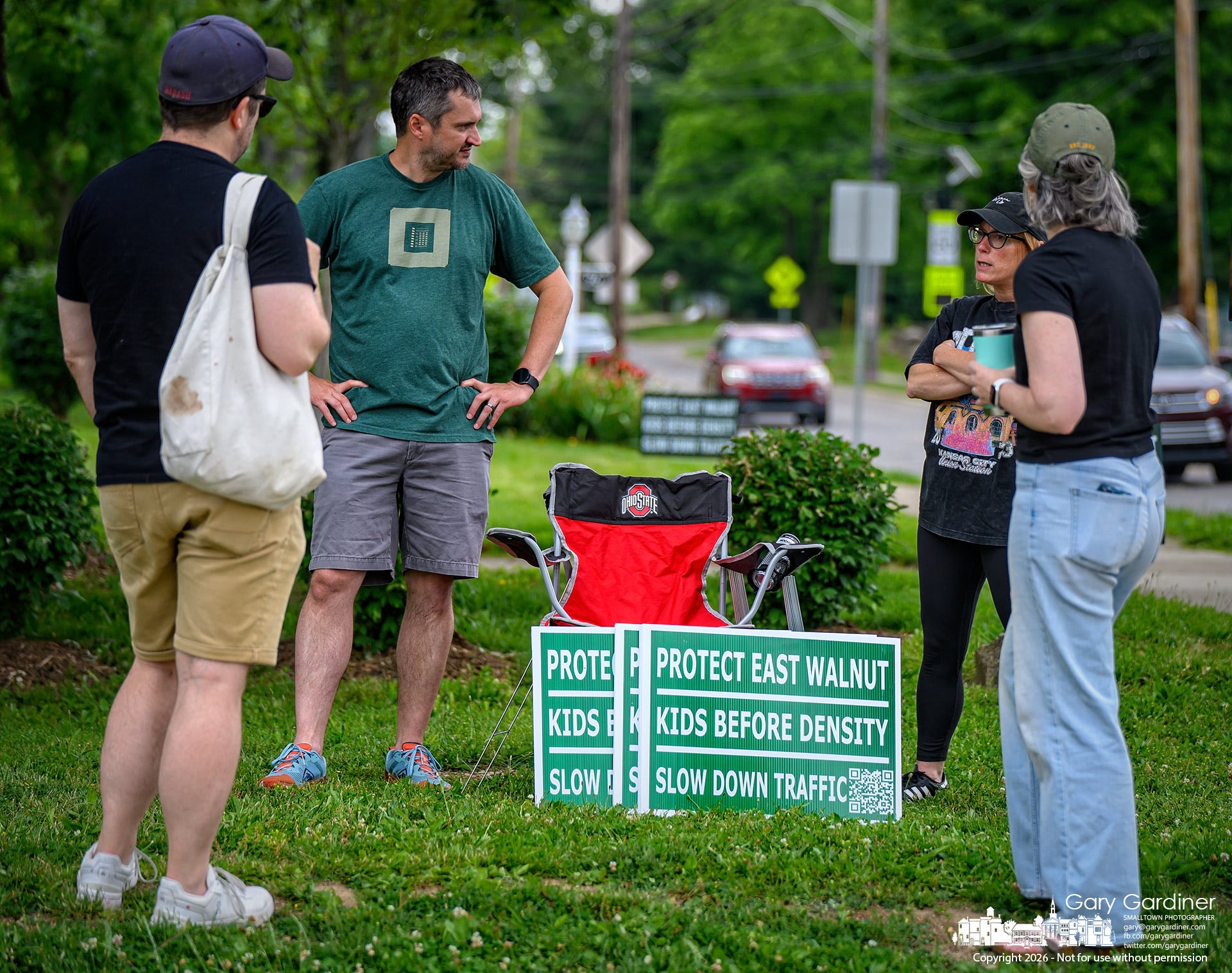
The meeting is not formally about 64 E. Walnut St. It follows, however, City Council’s unanimous June 2 rejection of a proposed sale-and-redevelopment agreement for the city-owned property after residents objected.
Critics said residents learned of the proposal only after the city had negotiated with a developer and prepared an agreement for council consideration. The dispute expanded beyond the proposed building to include concerns about how the city selects developers, values public land, and involves residents in planning.
In rejecting the agreement, the council directed the city to gather residents’ goals for the property and to explain its development and traffic review procedures. Council also called for information about how sale proceeds and tax revenue would be used and how the city determines the value of publicly owned land.
A separate public meeting about the property is scheduled for Aug. 11.
Although the citywide planning review began separately, the Walnut Street dispute may shape how residents evaluate the city’s outreach. The issue is not only what Westerville should build, but when the public should become involved in deciding what is built and where.
Planning a city with little open land
Westerville describes itself as largely built out, with regional growth pressures increasing as infrastructure ages and market conditions change. The city says it wants to move from reacting to individual proposals toward establishing clearer guidance for future decisions.
Westerville has approximately 38,645 residents within 12.6 square miles. With little vacant land available, much of its future development is likely to involve existing shopping centers, commercial properties, public land, older buildings, and sites near established neighborhoods.
Redevelopment can generate concerns that differ from those associated with construction on open land. Existing businesses may be displaced. Nearby residents may face taller buildings, additional traffic, or changes in neighborhood character. Properties familiar to residents may be classified as underused because they could accommodate more housing, commercial space, or tax-producing development.
The city also must balance the needs of residents with different economic and housing circumstances.
According to the 2024 American Community Survey five-year estimates, Westerville has a median household income of about $109,400 and a median age of 40.7. About 58% of residents age 25 and older hold at least a bachelor’s degree, and the median value of an owner-occupied home is approximately $374,500.
Those figures describe a generally prosperous, highly educated community but obscure differences among households. About 5.6% of residents live below the poverty line. Rising property values may benefit existing homeowners while making it more difficult for younger residents, workers, and older adults to find housing they can afford.
The broader Westerville community is larger and more diverse than the population within the municipal boundary.
The Westerville City School District serves an area with more than 107,000 residents, including substantial territory outside the city. Compared with the city, the district has a lower median household income and larger Black and foreign-born populations. ZIP codes 43081 and 43082 also differ in age, income, home values, and homeownership rates.
Those differences make it important for planners to identify which populations their data describe. The city controls land use within its boundaries, but its decisions also affect people who work, attend school, shop, and travel in Westerville while living elsewhere.
A review of the 2016 plan
The Community Plan Assessment and Existing Conditions Update will examine how well Westerville has carried out the plan adopted in 2016.
The review is expected to assess demographic, housing, economic, land-use, and infrastructure trends. It will also compare the 2016 plan with later policies and studies, identify emerging pressures, and recommend subjects that may require more detailed planning.
A central question will be which assumptions from 2016 remain valid.
Westerville has continued to age and grow within a rapidly expanding central Ohio region. Housing prices have risen, and retail and office markets have changed. Remote work, online shopping, and changing transportation patterns have altered how some properties are used. Infrastructure installed during earlier periods of suburban growth is also a decade older.
The city says the review will be based on data, but residents also may want to know how officials use that information to shape policy.
A finding that Westerville needs more housing choices, for example, could support apartments, townhouses, smaller homes, or other forms of development. Each could raise different questions about density, traffic, and neighborhood compatibility.
The city will need to explain both what the data show and how those findings inform its recommendations.
Public participation under scrutiny
The city says community input will be central to the planning effort. Residents, business owners and other stakeholders are expected to participate through open houses, surveys, focus groups, pop-up events and online tools.
That outreach carries added significance after criticism that residents learned too late about the proposed redevelopment of 64 E. Walnut St.
The planning process will provide several opportunities for participation. A remaining question is how the city will document that input, weigh competing views, and show how public comments influence its recommendations.
The planning process is expected to continue into late 2026 or early 2027, with additional outreach through community events and online participation.
The rejection of the Walnut Street agreement does not mean the property will remain unchanged, nor does public participation guarantee agreement on its future. It does place pressure on the city to show that consultation begins early enough to influence proposals rather than merely approve, modify, or stop them after much of the work has been completed.
For a city with little undeveloped land remaining, future growth will involve difficult decisions about places residents already know and use. The test of Plan Westerville will be whether it allows residents to help establish the principles governing those decisions before another specific proposal reaches the council.
Because this post is public, you’re encouraged to share it on social media.
The Westerville News is a reader-supported publication by Gary Gardiner, a lifelong journalist who believes hyper-local reporting is the future of news. This publication focuses exclusively on Westerville—its local news, influence on Central Ohio, and how surrounding areas shape the community.
Reader funding, including subscribers, protects editorial independence, so coverage is guided by journalists rather than owners or corporate profit goals. It also reduces pressure to chase clicks, letting the newsroom focus on stories worth readers’ time. And it helps keep the site accessible to everyone, including people who can’t pay or live in places where a free press is under threat.
Explore more hyper-local reporting by subscribing to The Hilliard Beacon, Civic Capacity, Marysville Matters, The Ohio Roundtable, Shelby News Reporter, This Week in Toledo, and Into the Morning by Krista Steele.


