
Westerville Proposes Altafiber Partnership To Extend Fiber Service Citywide
After years of planning to expand fiber-optic internet beyond its business network, Westerville announced a proposed partnership with Cincinnati-based Altafiber on Tuesday. This partnership would use the city’s WeConnect data center as the hub for citywide residential service. City officials say the plan could bring high-speed fiber access to every home that wants it by 2028, extending a network the city already uses to serve Uptown businesses at below-market rates.
Assistant City Manager Jason Bechtold informed the council that the proposal originated from discussions Altafiber started last fall as the company expanded its fiber investment across central Ohio. Over the past nine months, he stated, city staff developed a public-private partnership structure designed to achieve a long-standing council goal of providing fiber-to-the-home service to Westerville residents.
Officials introduced the plan as a way to close what they called a growing connectivity gap without forcing the city to spend tens of millions of dollars to create a residential network on its own. Bob Schaber, manager of WeConnect, explained that the city’s existing fiber system was designed for businesses rather than homes, and expanding it to serve every household independently would require a significantly larger financial investment.
That financial reality influenced the city’s case for partnering with Altafiber. Staff stated that the proposed partnership would provide residents throughout the city with access to fiber service, make Altafiber one of WeConnect’s largest customers by serving its central Ohio operations through the city’s data center, and increase fiber capacity for city utility and traffic systems.
Chris Monacelli, Westerville’s electric utility manager, said access to additional dark fiber would help the electric division improve outage isolation and strengthen future grid response. He said the added connectivity could support a system that detects trouble more quickly and reduces the number of customers affected by outages. He also said the project could help connect traffic signals across the city that are not currently linked by fiber.
Monacelli said the city’s interest in the project goes beyond just faster residential internet. He told the council that the electric division has a 10-year plan for fiber improvements linked to utility work, but that the partnership could accelerate access to essential connectivity while reducing some of the load on the city’s utility system.
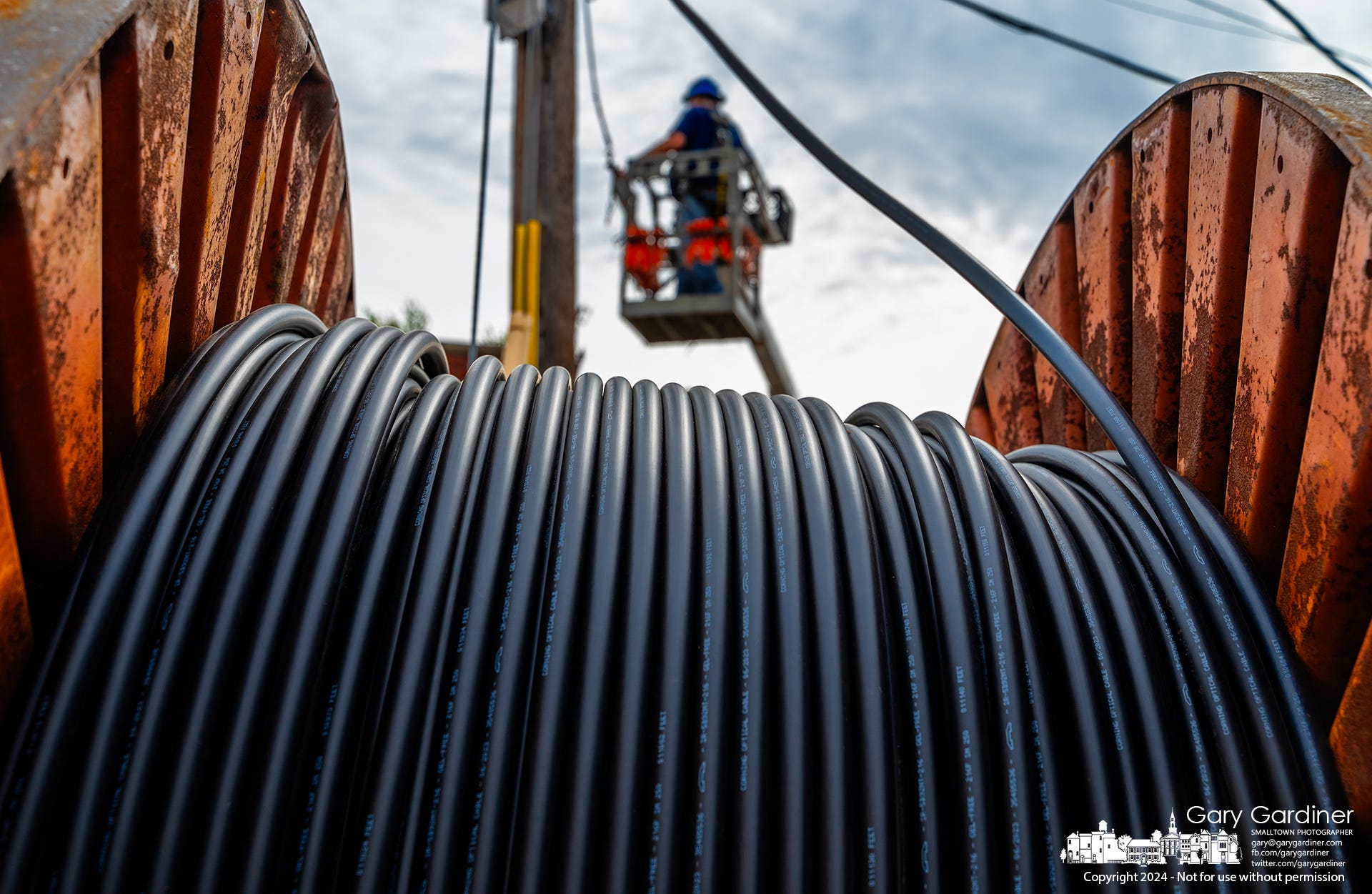
City staff said Altafiber would construct the residential network in two phases over approximately two to three years. Nate Lang, the city engineer, stated that the first phase would cover the northern half of the city, starting later this year, with the second phase in the southeastern area continuing into 2028. He mentioned that the map shown to the council was preliminary and could still be adjusted.
Lang warned that the project is likely to cause construction fatigue and lead to complaints about yards, sidewalks, and trees. He mentioned that city staff is already aware from recent utility and cable work that residents are very concerned about neighborhood impacts, and that a project of this size would add more pressure on engineering, planning, and customer service teams.
To address that, Lang said Altafiber would provide funds to support staffing and inspection needs related to the work, including third-party inspection and utility locating support. He added that these additional resources would help the city maintain service levels for this project while also managing other capital and right-of-way work already planned for the year.
Greg Dayton, the city’s customer service manager, said the proposal also includes protections for WeConnect’s existing role as a business provider. He said Altafiber has agreed that WeConnect will receive every business-to-business opportunity Altafiber encounters in Westerville, and he mentioned that this promise would be put in writing so the city’s system would not lose current or future business customers to its private partner.
Dayton mentioned that residents will also see a Westerville-specific landing page on Altafiber’s website with information about the company, FAQs, construction updates, address-based service notifications, and an online form for construction-related questions or concerns. He said that for residents who choose to sign up, the service would remain optional, Altafiber has indicated it would offer the lowest-cost service available in the area, and customers could cancel at any time.
Council members responded positively to the presentation, but they did not take any formal action on Tuesday. Mayor David Grimes said that Westerville residents expect high-quality service and emphasized that the council would need to review the details thoroughly to ensure the proposal meets those standards.
Council Chair Megan Czako said she was encouraged by the prospect of a Westerville-specific communication portal and by the emphasis on customer-friendly cancellation. She also said she would like council members to tour Altafiber’s operations before any vote on the agreement, particularly to see the company’s customer service operation firsthand.
Bechtold said that the next step, if the council remains comfortable with the framework, would be for staff to finalize negotiations and return on either April 21 or May 5 with a motion for council approval along with a communication and outreach plan. According to the timeline presented Tuesday, Altafiber would become a major WeConnect customer in May or June, construction would start in mid-2026, the first Westerville customer would likely be connected in late 2026 or early 2027, and the entire project would be finished in 2028.
For now, the proposal remains a framework rather than a final contract. Major details still need to be settled, including the specific terms of the partnership, construction and restoration standards, the amount of staffing support Altafiber will provide, and how the company’s pricing and business commitments will be defined in the final agreement.
The Westerville News is a reader-supported publication by Gary Gardiner, a lifelong journalist who believes hyper-local reporting is the future of news. This publication focuses exclusively on Westerville—its local news, influence on Central Ohio, and how surrounding areas shape the community.
Reader funding, including subscribers, protects editorial independence, so coverage is guided by journalists rather than owners or corporate profit goals. It also reduces pressure to chase clicks, letting the newsroom focus on stories worth readers’ time. And it helps keep the site accessible to everyone, including people who can’t pay or live in places where a free press is under threat.
Explore more hyper-local reporting by subscribing to The Hilliard Beacon, Civic Capacity, Marysville Matters, The Ohio Roundtable, Shelby News Reporter, This Week in Toledo, and Into the Morning by Krista Steele.


