

Westerville weighs new rules for e-bikes, scooters after safety concerns
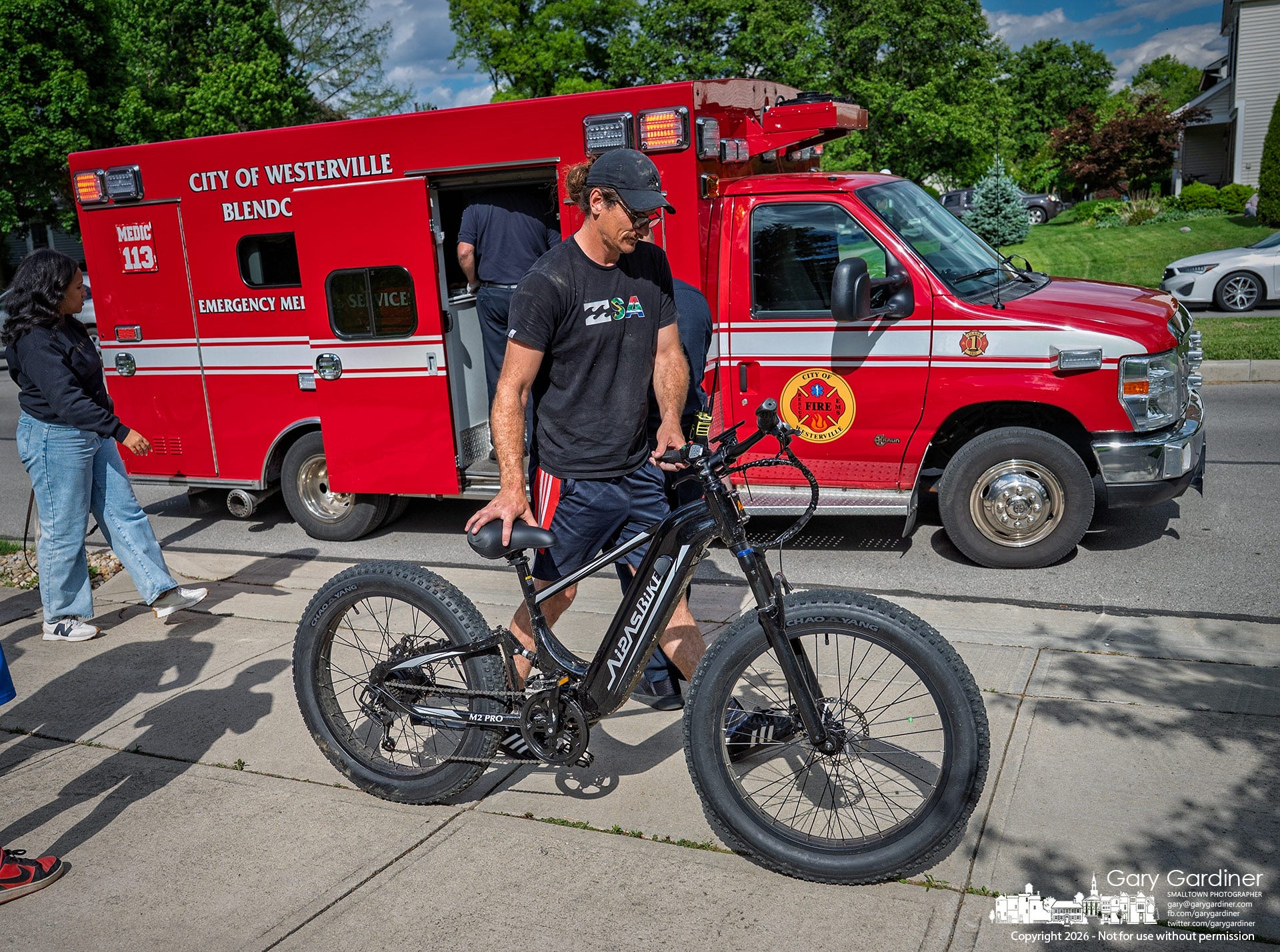
Westerville officials are considering new speed limits, helmet requirements, and riding restrictions for e-bikes, scooters, motorized skateboards, and similar devices after concerns about crashes, injuries, and conflicts with pedestrians on sidewalks and trails.
Police Chief Holly Murchland presented the proposed ordinance to City Council on Tuesday night, saying it would update the city’s traffic code to regulate bicycles, electric bicycles and a new category of “personal transportation devices,” or PTDs.
The proposal would set maximum speeds of 8 mph on sidewalks where riding is allowed, 15 mph on shared-use paths and in city parks and park trails where riding is allowed, and 20 mph in bicycle lanes. Riders on roadways would have to follow posted vehicle speed limits and could not impede the normal and reasonable movement of traffic.
The ordinance also would require anyone younger than 18 to wear a properly fitted and fastened helmet while operating or riding as a passenger on an e-bike or PTD. Adults carrying passengers younger than 18 would also have to ensure those passengers are wearing compliant helmets.
“Our focus really is on education and ensuring the safety of everybody,” Murchland told council.
City officials said the current code does not clearly address many of the newer devices now being used on streets, sidewalks and shared-use paths. The proposed PTD category would include powered scooters, motorized skateboards, electric personal assistive mobility devices such as Segways, and low-speed micromobility devices that do not already fall under existing definitions for bicycles, e-bikes, mopeds, motorcycles, or motor vehicles.
The issue has already surfaced in Westerville. In May, a rider younger than 18 who was not wearing a helmet lost control of an e-bike on Spring Road near Highlands Park and struck a light pole. The rider was taken to a hospital; their condition was unknown.
Murchland said the ordinance grew out of safety concerns tied to the increased use of electric bikes, scooters and other micromobility devices. During an April council discussion, she said the city has seen more serious injuries, including fractures and head trauma, and said some devices can be fast, heavy, and difficult for young or inexperienced riders to control.
Under the proposal, e-bikes and PTDs generally could be operated on roadways, bicycle lanes, and shared-use paths unless signs prohibit them. Riding on sidewalks in business districts and shopping centers would be prohibited unless the area is posted or otherwise designated for permitted use.
The ordinance would also restrict use in city parks, on park trails, and on certain other paths unless signs or other provisions allow it. Devices would be prohibited on hiking, equestrian, mountain biking, single-track, and natural-surface trails unless signs specifically authorize their use.
Operators in shared areas must yield to pedestrians at all times and give an audible signal before passing.
The proposed rules could have direct implications for Uptown Westerville, one of the city’s busiest pedestrian areas.
“As e-bikes and other personal transportation devices become more common, education and awareness are critical,” Uptown Westerville Inc. Director Lynn Aventino said. “Public spaces work best when everyone takes ownership of them.”
Aventino said Uptown Westerville Inc. appreciates the city’s focus on helping people understand how to safely and respectfully use public spaces “so Uptown remains accessible and enjoyable for all.”
Westerville Uptown Merchants Association President Debbie Benatti also welcomed the city’s attention to the issue.
“I’m just so glad they are addressing this issue, as we and every other community are seeing this problem,” Benatti said.
Several residents spoke about safety concerns before the ordinance was introduced. Nancy Chappell, who said she frequently uses the path near the pedestrian bridge over County Line Road, said fast-moving e-bikes are difficult for pedestrians to identify or report because riders often pass quickly and quietly.
Her husband, David Chappell, said the city should go further, arguing that some e-bikes function more like quiet motorcycles than bicycles.
David Roseman, a founding member of the city’s Active Transportation Advisory Committee and a Westerville Path Watch volunteer, said he supported updating the bicycle code but urged council to align the ordinance with Westerville’s mobility plan, Ohio law and rules in neighboring communities.
Council members also questioned how the ordinance would be enforced.
Mayor David Grimes asked whether parents could be cited for violations beyond the helmet requirement, such as knowingly allowing a child to ride a device where it is not allowed. Law Director Andrew Winkel said the parental accountability language, as drafted, applies only to the helmet requirement.
Grimes also asked whether helmet requirements could be extended to minors riding traditional bicycles. Murchland said the proposal focuses on e-bikes and scooters because of their speed, weight, and difficulty of control, but said broader bicycle helmet requirements could be considered.
Council member Aaron Glasgow asked whether police could impound a bike or device if they observe a minor violating the rules and creating a safety problem. Winkel said the ordinance would allow police to impound a bicycle, an electric bicycle, or a PTD in that situation.
Council member Kelley Stocker asked how riders would know how fast they are going, noting that not all e-bikes have speedometers. Murchland said speedometers are required on some devices, such as Class 3 e-bikes, and can be purchased separately for others. Stocker said that could be part of the city’s education effort for parents.
Stocker also asked how often officers would be able to observe unsafe riding on trails. Murchland said enforcement is more difficult on trails than on roads, but the department has bicycle officers who are more likely to be deployed on bike paths during the summer.
Council members also raised concerns about residents who use mobility devices because of disabilities. Winkel said the proposed ordinance incorporates language from the Americans with Disabilities Act and would allow people with mobility disabilities to use wheelchairs, motorized wheelchairs or other power-driven mobility devices in places where pedestrians are allowed, subject to applicable speed and safety rules.
A violation of the helmet section would be a minor misdemeanor. The ordinance also would make a helmet violation a primary offense, meaning an officer could stop a rider for that violation alone, without first observing another traffic offense.
Officers could issue a verbal or written warning instead of a citation, particularly for a first offense or when the rider promptly obtains a compliant helmet.
A parent, guardian, or legal custodian could be cited if they knowingly allow a minor in their care to violate the helmet requirement.
The ordinance will be presented to the City Council three times before members vote on whether to adopt it.

Because this post is public, you’re encouraged to share it on social media.
The Westerville News is a reader-supported publication by Gary Gardiner, a lifelong journalist who believes hyper-local reporting is the future of news. This publication focuses exclusively on Westerville—its local news, influence on Central Ohio, and how surrounding areas shape the community.
Reader funding, including subscribers, protects editorial independence, so coverage is guided by journalists rather than owners or corporate profit goals. It also reduces pressure to chase clicks, letting the newsroom focus on stories worth readers’ time. And it helps keep the site accessible to everyone, including people who can’t pay or live in places where a free press is under threat.
Explore more hyper-local reporting by subscribing to The Hilliard Beacon, Civic Capacity, Marysville Matters, The Ohio Roundtable, Shelby News Reporter, This Week in Toledo, and Into the Morning by Krista Steele.
