
Westerville’s Hidden Harvest
Wild berries, pawpaws and old fruit trees offer glimpses of the farmland and natural abundance that still survive within the suburban landscape.
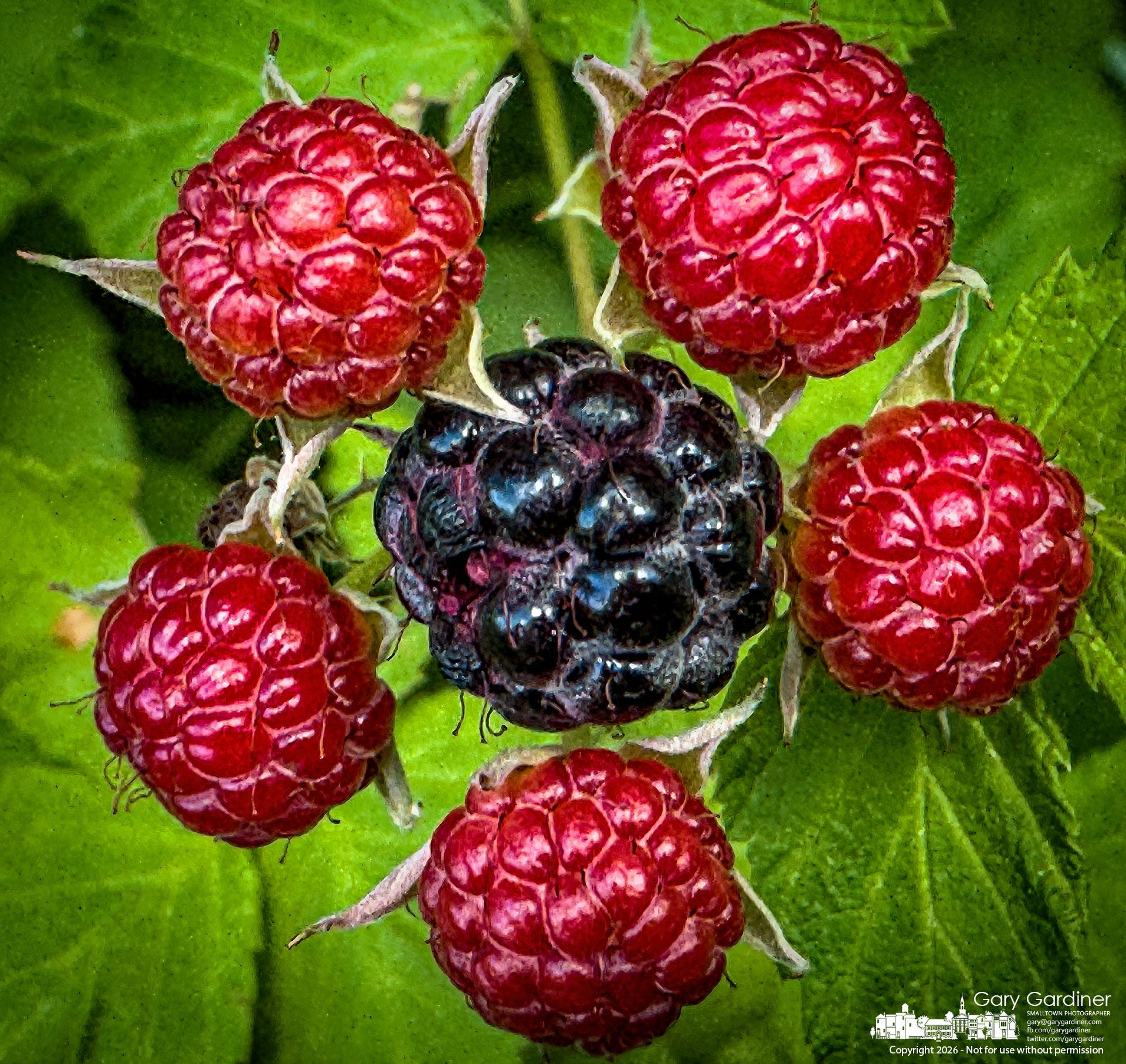
The temptation is easy to understand. A family follows a park trail on a summer afternoon, and along the edge of the path, black raspberries hang low on thorny canes, dark and soft and ready to fall. A child notices first. Then everyone stops.
A few berries are picked, eaten on the spot, and the walk continues. For many people, that small trailside taste is part of the pleasure of being outdoors. It is not a harvest. It is not a plan. It is a moment of discovery, a reminder that the true value of wild fruit lies in noticing it, not taking it. It is the kind of moment that makes a child look more closely the next time a vine curls along the edge of a field or a tree drops fruit on the pavement.
In and around Westerville, those discoveries are common in a good year. Black raspberries, blackberries and mulberries grow along trails, at woodland edges and beside open fields. Pawpaws ripen in the fall. Old pear trees, left behind by farms that disappeared beneath roads, reservoirs and subdivisions, still produce fruit long after anyone stopped pruning or picking them.
But in public parks, even abundance comes with limits. Westerville city ordinances prohibit removing vegetation from public property, said Adam Williams, the city’s parks forestry manager.
“We appreciate your interest in helping us preserve these natural areas for the community,” Williams wrote.
That rule applies not only to wildflowers and tree limbs, but also to edible plants people are most likely to notice, including berries beside a path, mulberries overhanging water, pears from an old farm tree and pawpaws that soften and fall in autumn.
Metro Parks takes a similar position. Jennifer Round, naturalist at Sharon Woods Metro Park, said she understands why visitors ask about berries. She also understands why the answer is to leave them.
“Sharon Woods, we have over 100,000 visitors a year,” Round said. “If every visitor even only picked one blackberry, we’d wipe it out for the animals that we come to the park to see. We don’t need to take. We can buy ours at the store. They can’t.”
That may be the clearest way to understand the tension. One blackberry does not seem like much. One family tasting a few berries along a trail does not look like damage. But parks are managed at the scale of thousands of visitors, not one afternoon walk, and that scale is why the rule matters.
Round said Metro Parks follows an 80-20 approach, with most land left wild for animals and a smaller portion set aside for people. “Eighty percent of the land in the park should be left wild for the animals, and 20% should be used by humans,” she said. The human portion, she added, is basically “the trail and the bathroom.”
In that view, the fruit belongs to the wilder part of the park, even when it grows close enough for a passing hiker to touch. The berries remain one of the easiest ways to notice the season, and one of the clearest examples of what Westerville’s wild harvest means.
At Sharon Woods Metro Park, the paths through the open fields often have berries ready near the trail. Hikers follow routes shaped by generations of movement across land once owned by the family whose name now identifies one of the five-lane roads bordering the park. An interstate highway forms another boundary, while one of Westerville’s earliest subdivisions anchors the north side.
Within those modern borders, the berries still follow an older calendar. Black raspberries darken from red to deep purple. Blackberries swell and soften on thorny canes. Mulberries fall onto paths and pavement, leaving dark stains beneath the trees.
Below the dam, black raspberries grow along the edge of a mowed field where the grass gives way to the rocky, slate-lined creek shore. Their canes hang low to the ground, sometimes heavy with fruit, but their survival is not guaranteed.
A mower can erase the patch in a single pass. Berries ready for picking this summer may not return the next if landscaping crews cut the brambles too aggressively. A slight change in a mowing route can mean the difference between a thriving patch and bare grass.
A similar patch once grew along the woods near the playground at Olde Town Park in Westerville. After the playground was rebuilt, subsequent mowing removed the brambles, berry bushes, and other plants bordering the tree line. To many visitors, the change may have looked like routine maintenance. To those who knew where the berries grew, it marked the loss of a familiar seasonal stop.
Park maintenance has practical purposes. Crews must keep paths open, maintain sightlines, protect play areas, and manage vegetation. Thorny brambles may spread into places where people walk or children play. Low branches can interfere with recreation. Still, each decision about where to mow or what to trim shapes the landscape visitors experience and what they can notice, keep, or lose.
That shaping can be read in different ways. A patch of brambles can be seen as brush. It can also be habitat, food, and a place where children learn to recognize a native fruit. A mulberry branch may interfere with an angler’s cast. It also carries fruit. An old pear tree may no longer fit neatly into a maintained park. It may also preserve the memory of a farm and the people who once lived there.
Near the water’s edge at a small park beside the reservoir, two fruit trees remain from the land’s earlier life. A pear tree and a mulberry tree once stood near a family home, before the adjacent creek was dammed and the rising water created the lake. The family left. The trees stayed.
Neither is tended now. Poison ivy winds around the pear tree’s trunk, and new shoots rise from near its base. Its branches spread without pruning, carrying fruit that ripens largely unnoticed.
The mulberry tree has met a different fate. Anglers seeking a clearer, safer cast along the lagoon shoreline have roughly trimmed some of its low-hanging limbs, including branches that once carried fruit. The limbs left untouched extend over the narrow lagoon, where ripe mulberries fall beyond the reach of park visitors and become food for fish or other wildlife.
Together, the two trees continue to bear fruit without the care they once received. They are survivors of a farm landscape now used for fishing, walking, and recreation.
Another pear tree stands on a corner lot where an old two-lane country road meets a newer, wider road. Fast-moving traffic now carries suburban residents to and from homes built on land that once held orchards and pasture for cattle and horses. The tree remains as a small piece of that earlier landscape, surrounded by pavement, traffic, and suburban homes, with office and industrial buildings nearby.
These trees are easy to overlook. They are not part of a working orchard, and they are not marked as landmarks. Yet each year they continue a cycle that began before the roads widened and the subdivisions arrived, a quiet reminder of the landscape beneath the present one.
Pawpaws add another season to Westerville’s wild harvest. They grow along the bike trail just east of Uptown and ripen in the fall. Unlike berries that can be eaten moments after they are picked, pawpaws must be fully ripe before their soft, custard-like flesh is ready. Those who know the trees watch for the brief period when the fruit begins to soften and fall.
Walkers are not the only ones interested. Raccoons, opossums, squirrels, foxes, birds and insects also feed on ripe or fallen pawpaws. Berries and other fruits support wildlife throughout the season, and animals help carry seeds into new places.
That is one of the quiet cautions built into every act of foraging. Anything taken by a person is no longer available to the animals, birds, and insects that depend on the same plants. That does not make a trailside taste an act of harm. It is simply a reminder that the harvest is shared.
The more difficult problems begin when wild food becomes something to collect in quantity, dig from the ground or sell. Each spring, debate returns over ramps, the native wild leek that has become popular with cooks, restaurants and home foragers. Some collectors remove entire plants, including the bulbs and roots. Digging the whole plant kills it, and repeated harvesting can damage a patch that may take years to recover.
The same concern extends to American ginseng, mushrooms, and other native edible or medicinal species. Once a wild plant becomes fashionable or commercially valuable, personal gathering can turn into extraction. That is why the rules for public parks are simple: Do not harvest native plants and wild foods from public land.
People who want ramps should look to private property, with the landowner’s permission, or grow them where conditions allow. Even then, permission does not guarantee that a harvest is sustainable. The method matters. The amount matters. So does the life cycle of the plant.
For people who want the experience of gathering plants in the woods, Round points to a different kind of opportunity. Metro Parks volunteers help remove invasive plants such as garlic mustard, work that allows people to pull, collect, and carry plants while improving habitat. At Sharon Woods, Round has worked with Annehurst Elementary students along the Annehurst Connector Trail, where fourth graders help remove garlic mustard and learn to care for the park rather than harvest from it.
That distinction is important. Foraging does not have to mean filling buckets, digging bulbs or selling plants taken from public land. At its smallest scale, it can be a way of noticing, and that is the habit this landscape asks visitors to keep.
It is the moment when a child learns that a black raspberry begins red and darkens as it ripens. It is the recognition that the tree beside the reservoir once stood near someone’s home. It is the understanding that a strip of brambles along a mowed field may be food, habitat and history at the same time.
The best way to enjoy these plants may be with attention and restraint: learn what they are, notice when they ripen, admire their abundance and leave most of the harvest for the park itself.
The value of Westerville’s wild fruit is not measured by how many pies, jars or bowls it might fill. Its value lies in the way it reveals the landscape and teaches restraint.
The pear trees recall farms that disappeared beneath roads, reservoirs and subdivisions. The berry patches mark the shifting boundary between woods and mowed fields. The pawpaws follow a seasonal rhythm that continues despite traffic, offices and development around them.
These plants reward people who slow down enough to see them. A walk becomes a lesson in ripening and weather. A tree becomes evidence of an old homesite. A thicket beside a field becomes something more than brush.
The fruit will not remain forever. A storm may take a limb. A mower may cut the canes. A playground may expand. An old pear tree may finally stop producing. For now, the berries still hang beside the paths, the pawpaws still ripen in fall, and the old fruit trees continue to bear traces of the land that came before.
The temptation to pick a few berries may be part of the experience. So is the choice to leave the rest. The pleasure is in finding them, tasting the season with the eyes as much as the tongue, and remembering that the harvest belongs to more than us.
Because this post is public, you’re encouraged to share it on social media.
The Westerville News is a reader-supported publication by Gary Gardiner, a lifelong journalist who believes hyper-local reporting is the future of news. This publication focuses exclusively on Westerville—its local news, its influence on Central Ohio, and how surrounding areas shape the community.
Reader funding, including subscribers, protects editorial independence, so coverage is guided by journalists rather than owners or corporate profit goals. It also reduces pressure to chase clicks, letting the newsroom focus on stories worth readers’ time. And it helps keep the site accessible to everyone, including people who can’t pay or live in places where a free press is under threat.
Explore more hyper-local reporting by subscribing to The Hilliard Beacon, Civic Capacity, Marysville Matters, The Ohio Roundtable, Shelby News Reporter, This Week in Toledo, and Into the Morning by Krista Steele.


