

What Story Gets Told And By Whom?
What survives depends on what we choose to remember - An Editorial

The Story We Choose to Forget Shapes What We Become
Cities don’t always hold onto themselves. Growth often demands forgetting. But in Westerville, memory still has weight.
The city’s landscape carries the shape of what came before. Farms that became neighborhoods. Trails that trace old rail lines. Names that outlast the people who gave them. Here, the future doesn’t arrive by clearing the past, but by layering onto it.
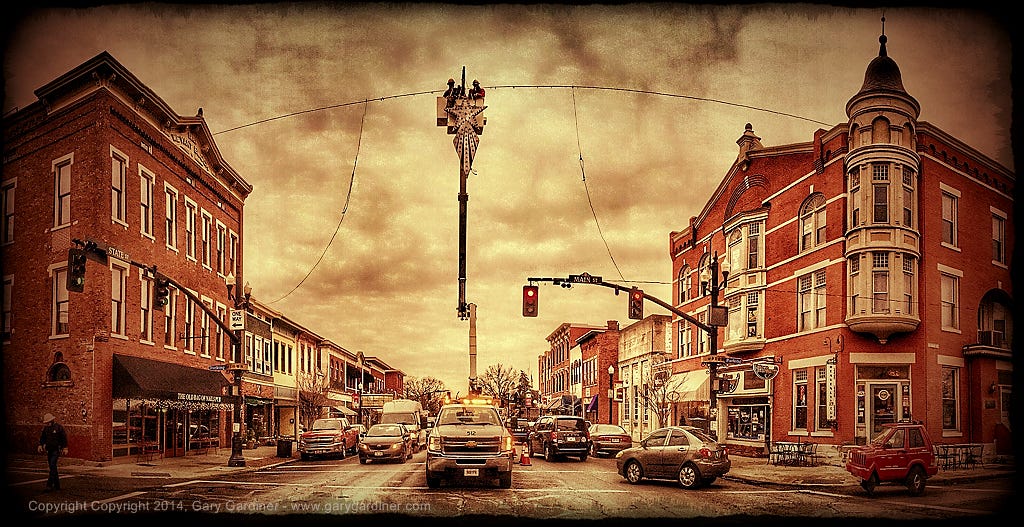
That layering is most visible in Uptown, where the past isn’t just remembered—it’s lived. Generations have passed through without erasing the imprint of those who came before. It is not a historic district in name only. It is a place where time feels continuous.
Brick streets and original buildings frame a downtown that still functions as the city’s civic heart. It isn’t preserved in amber. It’s used, adapted, and kept alive—through maintenance, through intention, through policy. Some places maintain their identity this way. Uptown Westerville is one of them. It’s so distinct that if someone stepped out of a sensory deprivation chamber and found themselves there, they might think they’d landed in a rural town—not a suburb of Columbus, part of a region with over two million people.
But no city remains unchanged. Even in a place so rooted in its past, growth leaves its mark. The last forty years in Westerville tell that story clearly. A small town doesn’t become a growing city without altering the landscape that shaped it.
Farms gave way to subdivisions. Small shops were replaced or relocated. Roads widened. Schools expanded. New buildings rose where older stories once lived.
A log cabin once stood on the site of the Holmes Hotel in Uptown. It was built by the Westervelt family—whose name helped inspire the city’s own. The McVay farm, where horses once raced, and summer carnivals lit up fields near Big Walnut Creek, is now a neighborhood of winding streets.
That same creek, transformed into a reservoir, now helps supply drinking water to Columbus, twelve miles away. Cleveland Avenue, which once ended at Alum Creek, now stretches across it, carrying five lanes of traffic through what used to be bottomland farmland. That land once provided fresh produce for the region and hosted a farm market along the railroad tracks. Those tracks, part of a system abandoned as long-haul trucks and highways replaced trains, have since been converted into a bike and walking path. Today, they form part of the Ohio to Erie Trail, connecting Lake Erie to the Ohio River.
Growth is often seen as progress. And in many ways, it is. But progress has another side. It creates new opportunity by building over what once was. What gets added can also obscure what gets left behind. A city moves forward—but not without cost.
In physics, entropy is the tendency toward disorder—the gradual decline of systems from order to chaos. In a community, entropy looks different. It’s not just physical decay. It’s the slow loss of meaning.
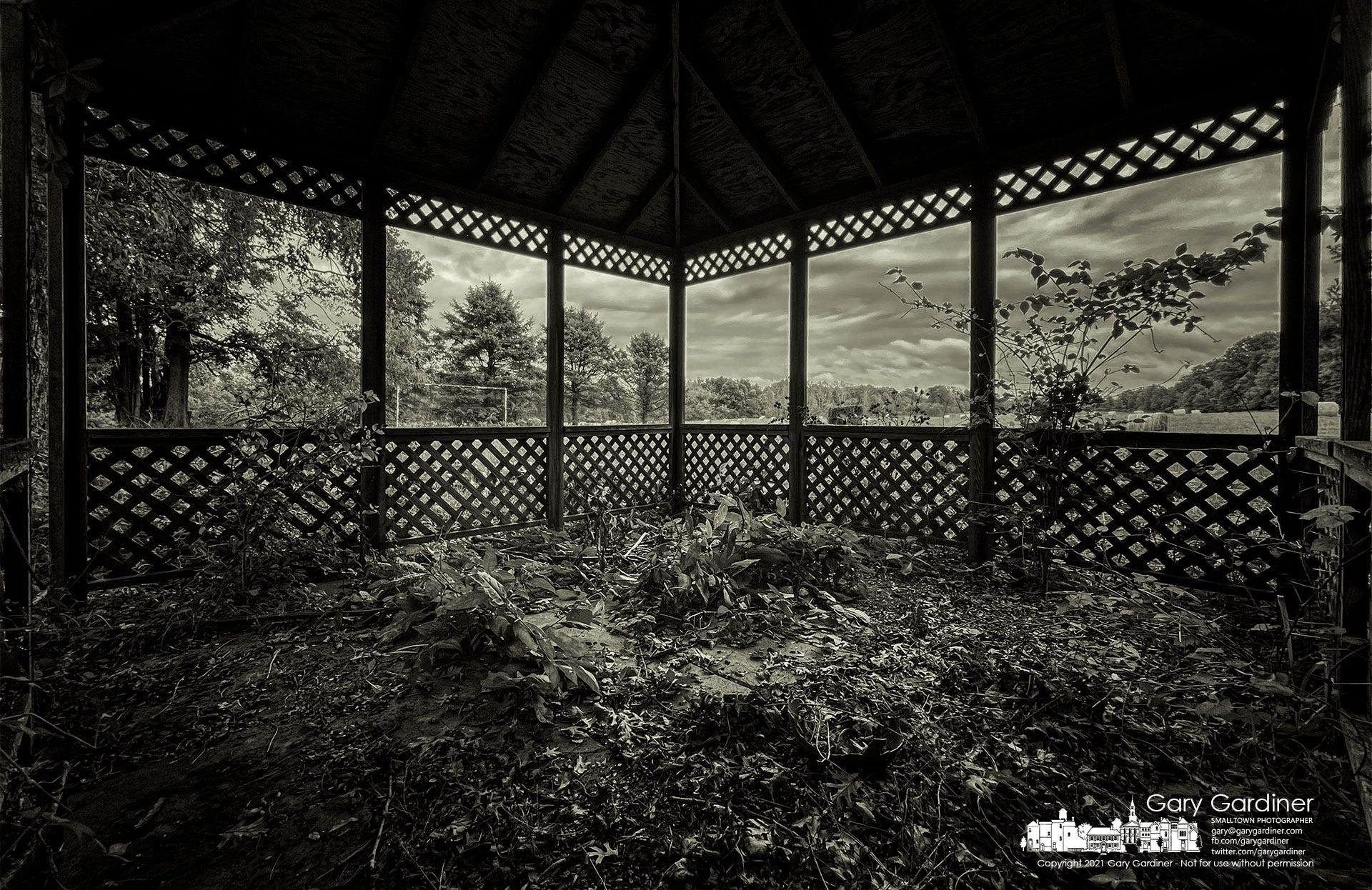
A building begins to decline when no one knows what to do with it. A farmstead becomes vulnerable when the story that once anchored it is forgotten. A landmark weakens when its significance is no longer passed on.
Civic entropy doesn’t arrive all at once. It spreads where attention fades. Purpose slows it down. Indifference speeds it up.
Sometimes entropy comes from neglect. But just as often, it’s a byproduct of progress. As Westerville expands, new development is layered over earlier forms. Roads cut through farmland. Businesses rise where barns once stood. A neighborhood’s name outlives the family it honors. This is not unusual. It’s how cities grow.
That pattern resembles a coral reef. Coral builds outward—but each bright new layer rests on the hardened skeletons of the generations before. A reef is both living and dead at once—sustained by what it adds, and shaped by what it leaves behind.
Cities grow the same way. Each layer of development carries life forward, but it also buries what came before. What survives depends on what we choose to remember.
That tension—between remembering and forgetting—can be seen at one of Westerville’s busiest intersections, where a historic house now rests in quiet limbo. Once filled with family life and local meaning, it now belongs to a developer whose plans were turned away by the city. From the street, it still looks like a home. The lawn is trimmed. The shrubs are shaped.
But inside, entropy has begun its quiet work. The paint softens and pulls away. Gutters sag. Wood darkens with moisture. The house remains standing—but its story has grown faint. What once held meaning now drifts toward emptiness, not because it’s forgotten, but because no future has been imagined for it.
Cities behave like living systems. Not because they are conscious, but because they follow patterns. A city adapts. It shifts resources toward what keeps it alive—housing, infrastructure, revenue, public investment. Over time, it lets go of what no longer contributes to its vitality. This isn’t always neglect. It’s metabolism.
Old houses without a purpose. Programs without participants. Traditions no longer passed down. These begin to drift toward the edges. They become the city’s calcified remains—places that belong more to memory than to daily life. A community forgets not all at once, but gradually, by shifting focus.
It remembers when people choose to remember. It forgets when no one speaks for what still matters.
The real force that resists entropy is narrative.
Just as the value of an antique depends on its provenance, the meaning of a place depends on the story attached to it. A building isn’t preserved simply because it’s old. It’s preserved because people remember where it came from and why it mattered. Provenance gives shape to memory. It turns wood and stone into landmarks. It turns spaces into civic inheritance.
Age alone cannot protect anything. What keeps a place alive is the story a community chooses to tell about it. When people can say, “This mattered, and here is why,” time becomes a sculptor. It deepens the character of that place. When the story is lost or never spoken, time becomes a solvent. It wears meaning away, starting at the edges.
The cabin that once stood at the center of town is long gone, but its story remains rooted in the city’s name. That connection already exists. What remains is the choice to make it visible. The story can still inform the city’s identity—not just its label.
Policy plays a role in that storytelling. Zoning decisions, redevelopment plans, historic designations, public investments—these are not just bureaucratic acts. They are narrative choices. When a city preserves a historic house, it strengthens a story. When it rezones farmland for commercial use, it closes a chapter. Each decision alters the direction of civic memory, just as shifts in water temperature shape the life of a coral reef.
The landscape becomes a kind of clock. A restored landmark shows time guided with purpose. An abandoned storefront shows time left to run on its own. The faster something deteriorates, the clearer it becomes that its meaning has faded. The more something thrives, the more obvious it is that the community has chosen to invest its story there.
If time shapes a community, then stewardship becomes a civic responsibility. Markets alone cannot decide what should last. Sentiment cannot preserve what is not supported. What matters is intention—choosing which places deserve continuity, which stories should be passed forward, and which histories must remain visible as the next layer of the city takes form.
Westerville’s future won’t be measured in years alone. It will be measured in the choices its people make—where they allow entropy to settle, where they resist it, and where they carry memory forward.
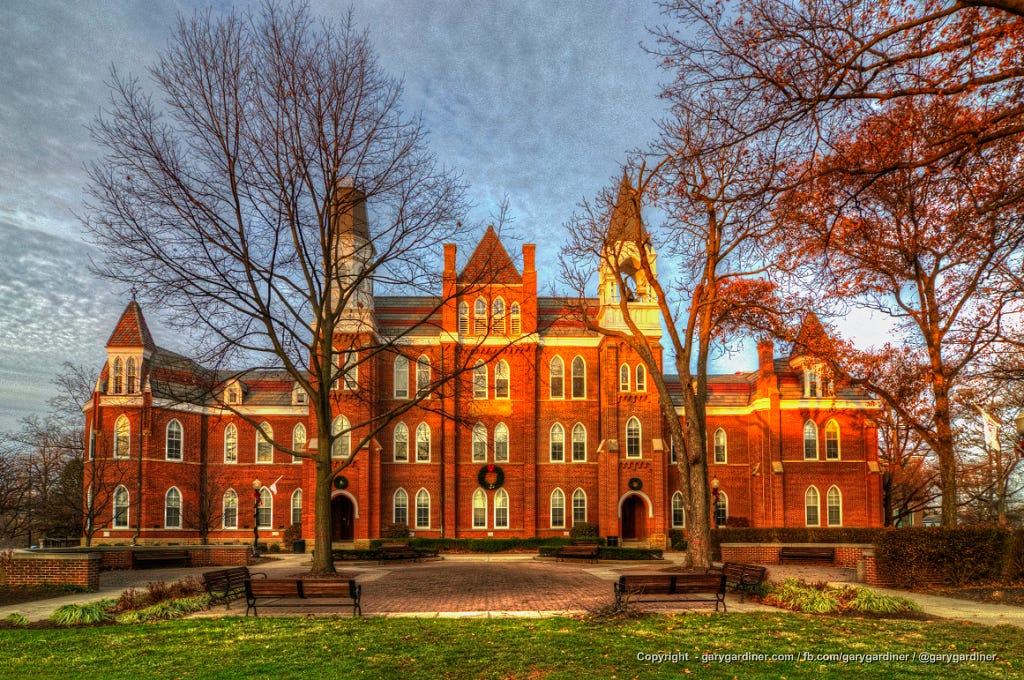
Time does more than pass. It teaches. It reveals. And in the quiet space between growth and forgetting, it leaves behind one question for all of us to answer.
What story will we leave behind?
And more importantly: Who will tell it?
That responsibility can’t be outsourced. It doesn’t belong to government alone, or to developers, or to policy. It belongs to the people who live here. Only the community can carry its own memory forward. When residents give up that role, the story loses its shape. When they step into it, the narrative stays alive.
What lasts is what we choose to hold in common.
What Story Do We Want to Survive Us?
Cities do not always hold onto themselves. Growth often demands forgetting. But in Westerville, memory has weight. The city’s landscape carries the shape of what came before. Farms that became neighborhoods, trails that trace old rail lines, names that outlasted the people who gave them. Here, the future does not arrive by clearing the past, but by layering onto it.
That layering is most visible in Uptown, where the city’s past is not just remembered, but lived. Generations have passed through without erasing the imprint of those who came before. It is not a historic district in name only. It is a place where time feels continuous.
Brick streets and original buildings frame a downtown that still functions as the civic heart. It is not preserved in amber.
Some places maintain their identity through care, intention, and policy. Uptown Westerville is one of them. It is so distinct that if someone stepped out of a sensory deprivation chamber and found themselves there, they might think they were in a rural town rather than a suburb of Columbus, a region of over two million people.
But no city remains unchanged. Even in a place so rooted in its past, growth leaves its mark. The last forty years in Westerville tell that story clearly. A small town does not become a growing city without altering the landscape that made it. Farms gave way to subdivisions. Small shops were replaced or relocated. Roads widened. Schools expanded. New buildings rose where older stories once lived.
A log cabin once stood on the site of the Holmes Hotel in Uptown. It was built by the Westervelt family, whose name helped inspire the city’s own. The McVay farm, where horses once raced and summer carnivals lit up the fields near Big Walnut Creek, is now a neighborhood of winding streets.
That same creek, transformed into a reservoir, now helps supply drinking water to Columbus, twelve miles away. Cleveland Avenue, which once ended at Alum Creek, now stretches across it, carrying five lanes of traffic through what was once bottomland farmland. That land once provided fresh produce for the region and hosted a farm market along the railroad tracks. Those tracks, part of a system abandoned as long-haul trucks and highways replaced trains, have since been converted into a bike and walking path. Today, they form part of the Ohio to Erie Trail, connecting the state’s two major waterways: Lake Erie and the Ohio River.
Growth is often seen as progress. But progress has another side. It creates new opportunities by building on what once was. What gets added can also obscure what gets left behind. A city moves forward, but not without cost.
In physics, entropy is the tendency toward disorder — the gradual decline of systems from order to chaos. In a community, entropy looks different. It is not just physical decay. It is the loss of meaning. A building begins to decline when no one knows what to do with it. A farmstead becomes vulnerable when the story that once anchored it is forgotten. A landmark weakens when its significance is no longer passed on.
Civic entropy does not arrive suddenly. It creeps in where attention fades. Purpose slows it down. Indifference speeds it up.
Sometimes entropy comes from neglect. But just as often, it is the byproduct of progress. As Westerville expands, new development is layered over earlier forms. Roads cut through farmland. Businesses rise where barns once stood. A neighborhood’s name outlives the family it honors. This is not unusual. It is how cities grow.
The pattern resembles a coral reef. Coral builds outward, but each bright new layer rests on the hardened skeletons of the generations before. A reef is both living and dead at once — sustained by what it adds, and shaped by what it leaves behind. Cities grow the same way. Each layer of growth carries life forward, but it also buries what came before. What survives is shaped by what we choose to remember.
That tension between remembering and forgetting appears at one of Westerville’s busiest intersections, where a historic house rests in quiet limbo. Once filled with family life and local meaning, it now belongs to a developer whose plans were turned away by the city. The lawn is trimmed. The shrubs are neatly shaped. From the street, it still looks like a home.
But inside, entropy has begun its quiet work. The paint softens and pulls away. Gutters sag along the edges. Wood darkens with the slow persistence of moisture. The house remains standing, but its story has grown faint. What once held meaning now drifts toward emptiness, not because it is forgotten, but because no future has been imagined for it.
Cities behave like living systems. Not because they are conscious, but because they follow patterns. A city adapts. It shifts resources toward what keeps it alive — housing, infrastructure, revenue, public investment. Over time, it releases what no longer contributes to its vitality. This is not neglect. It is metabolism.
Old houses without a purpose. Programs without participants. Traditions no longer passed down. These begin to drift toward the edges. They become the city’s calcified remains, places that belong more to memory than to daily life. A community forgets not all at once, but gradually, by shifting focus.
It remembers when people choose to remember. It forgets when no one speaks for what still matters.
The real force that resists entropy is narrative.
Just as the value of an antique depends on its provenance, the meaning of a place depends on the story attached to it. A building is not preserved simply because it is old. It is preserved because people remember where it came from and why it mattered. Provenance gives shape to memory. It turns wood and stone into landmarks. It turns spaces into civic inheritance.
Age alone cannot protect anything. What keeps a place alive is the story a community chooses to tell about it. When people can say, “This mattered, and here is why,” time becomes a sculptor. It deepens the character of that place. When the story is lost or never spoken, time becomes a solvent. It wears meaning away, starting at the edges.
The cabin that was once at the center of town is long gone, but its story remains rooted in the city’s name. That connection is already in place. What remains is the choice to make it visible. The story can still inform the city’s identity, not just its label.
Policy plays a role in that storytelling. Zoning decisions, redevelopment plans, historic designations, and public investments are not just bureaucratic steps. They are acts of narrative. When a city preserves a historic house, it strengthens a story. When it rezones farmland for commercial use, it closes a chapter. Each decision alters the direction of civic memory, just as changes in water temperature shape coral reef growth.
The landscape becomes a kind of clock. A restored landmark shows time guided with purpose. An abandoned storefront shows time left to run on its own. The faster something deteriorates, the clearer it becomes that its meaning has faded. The more something thrives, the more obvious it is that the community has chosen to invest its story there.
If time shapes a community, then stewardship becomes a civic responsibility. Markets alone cannot decide what should last. Sentiment cannot preserve what is not supported. What matters is intention — choosing which places deserve continuity, which stories should be passed forward, and which histories must remain visible as the next layer of the city takes form. Westerville’s future will not be measured in years alone. It will be measured in the choices its people make, where they allow entropy to settle, where they resist it, and where they carry memory forward.
Time does more than pass. It teaches. It reveals. In the quiet space between growth and forgetting, it leaves us with one question to answer.
What story will we leave behind?
And more importantly, who will tell it?
That responsibility cannot be outsourced. It does not belong solely to the city government, developers, or policy. It belongs to the people who live there. Only the community can carry its own memory forward. When residents give up that role, the story loses its shape. When they step into it, the narrative stays alive.
What lasts is what we choose to hold in common.

The Westerville News is a reader-supported publication by Gary Gardiner, a lifelong journalist who believes hyper-local reporting is the future of news. This publication focuses exclusively on Westerville—its local news, influence on Central Ohio, and how surrounding areas shape the community.
Explore more hyper-local reporting by subscribing to The Hilliard Beacon, Civic Capacity, Marysville Matters, The Ohio Roundtable, Shelby News Reporter, This Week in Toledo, and Into the Morning by Krista Steele.
