

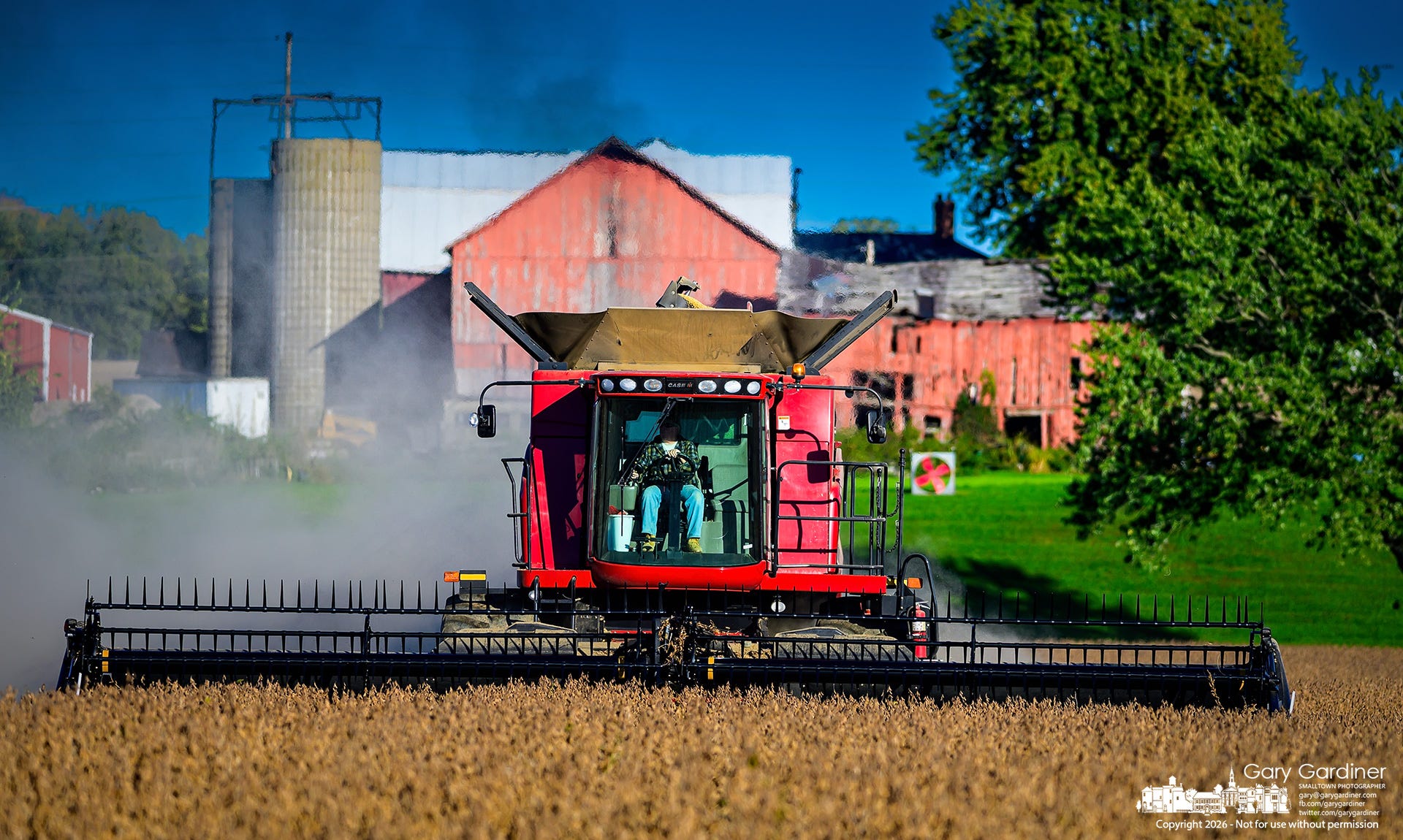
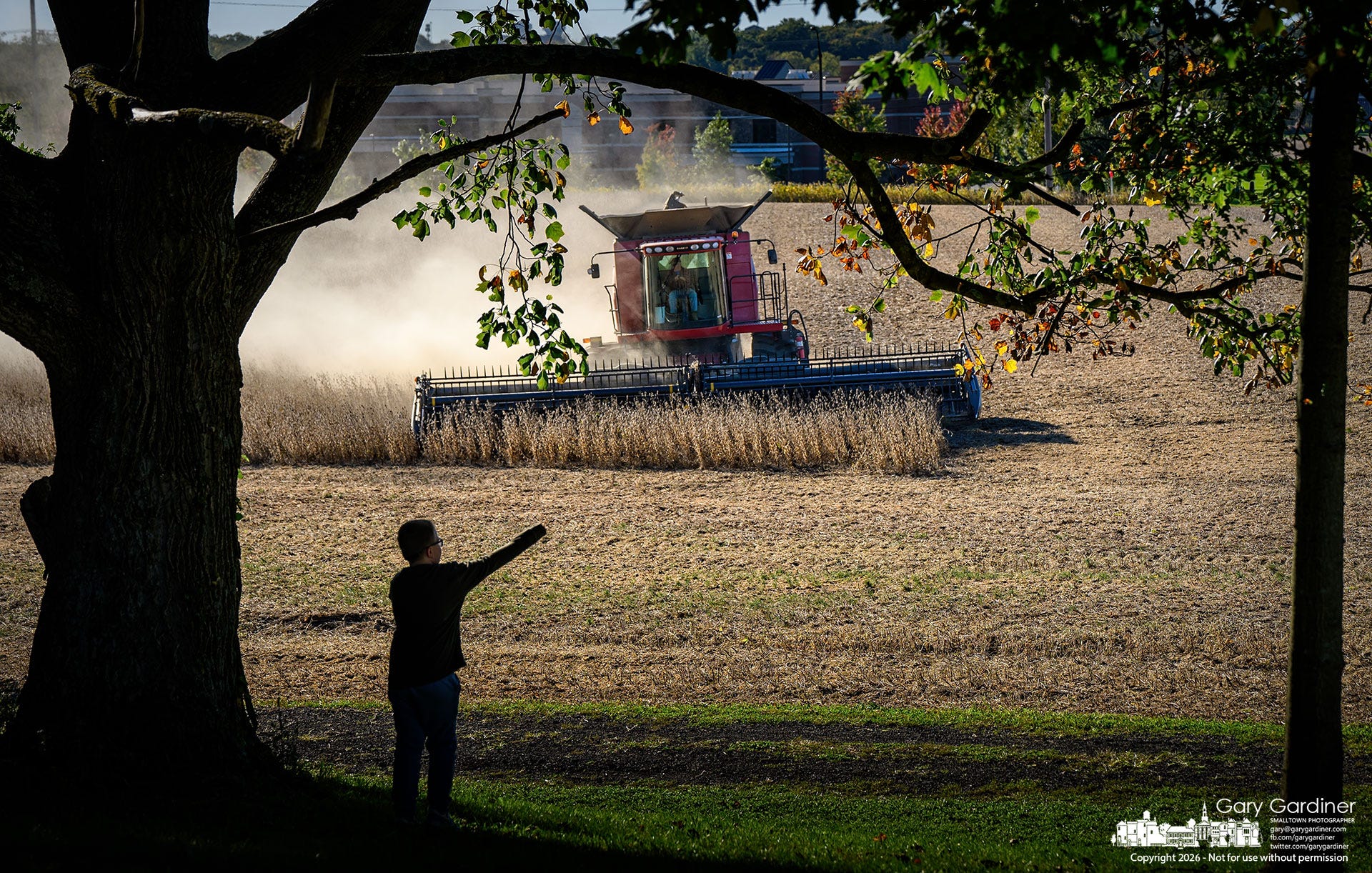
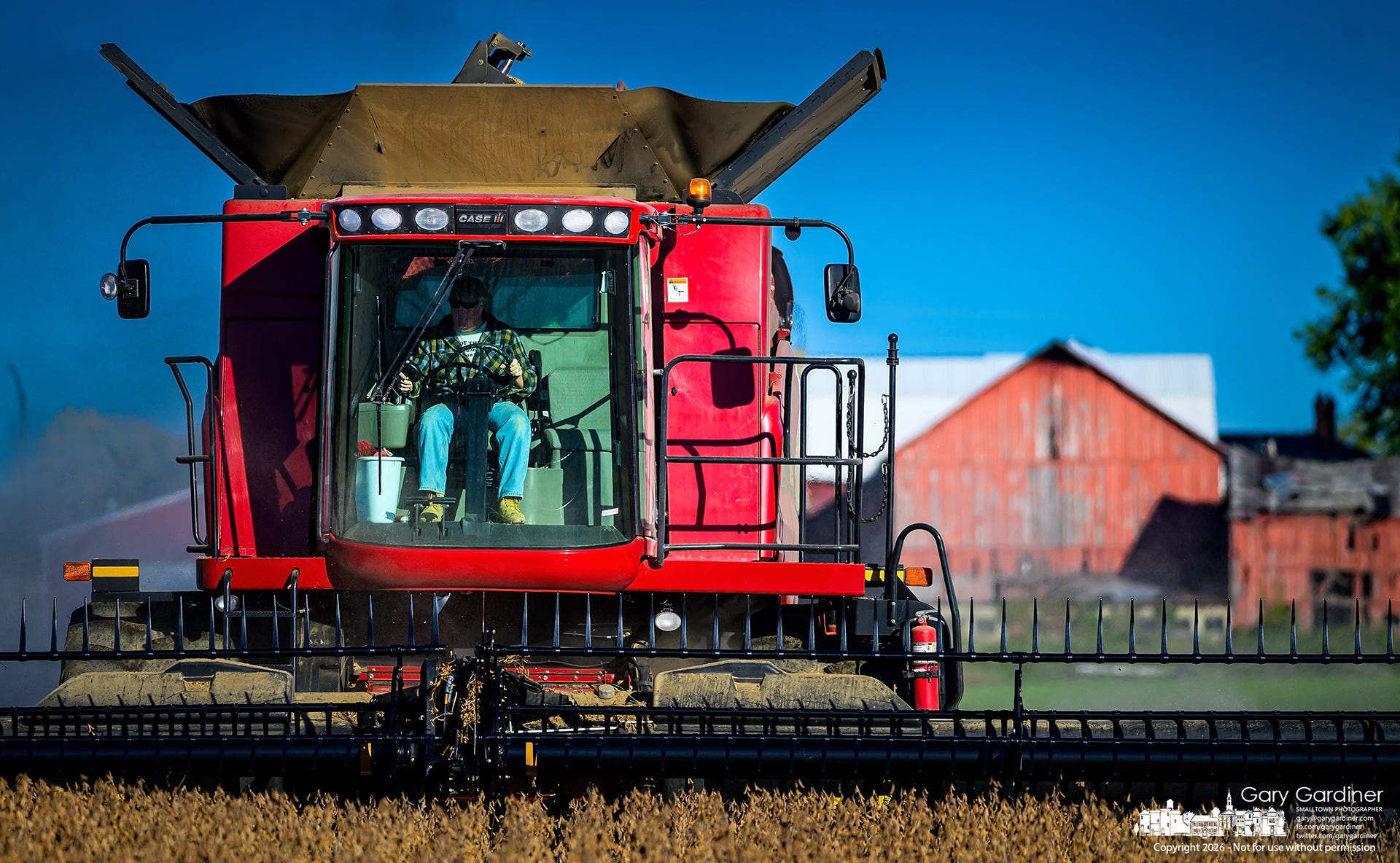
From the shade of a tree near the hilltop at the center of his family’s farm, Duane Yarnell watched a combine move through the soybean fields, cutting dry stalks and sending clouds of dust across the city’s remaining working farm.
Operating the equipment were the sons and grandsons of the elder McNamara, whose family has been friends with the Yarnells since Duane’s youth. The McNamaras cleared the eastern field Monday and finished the western field Tuesday, completing another fall harvest on land the Yarnell family has farmed for generations.
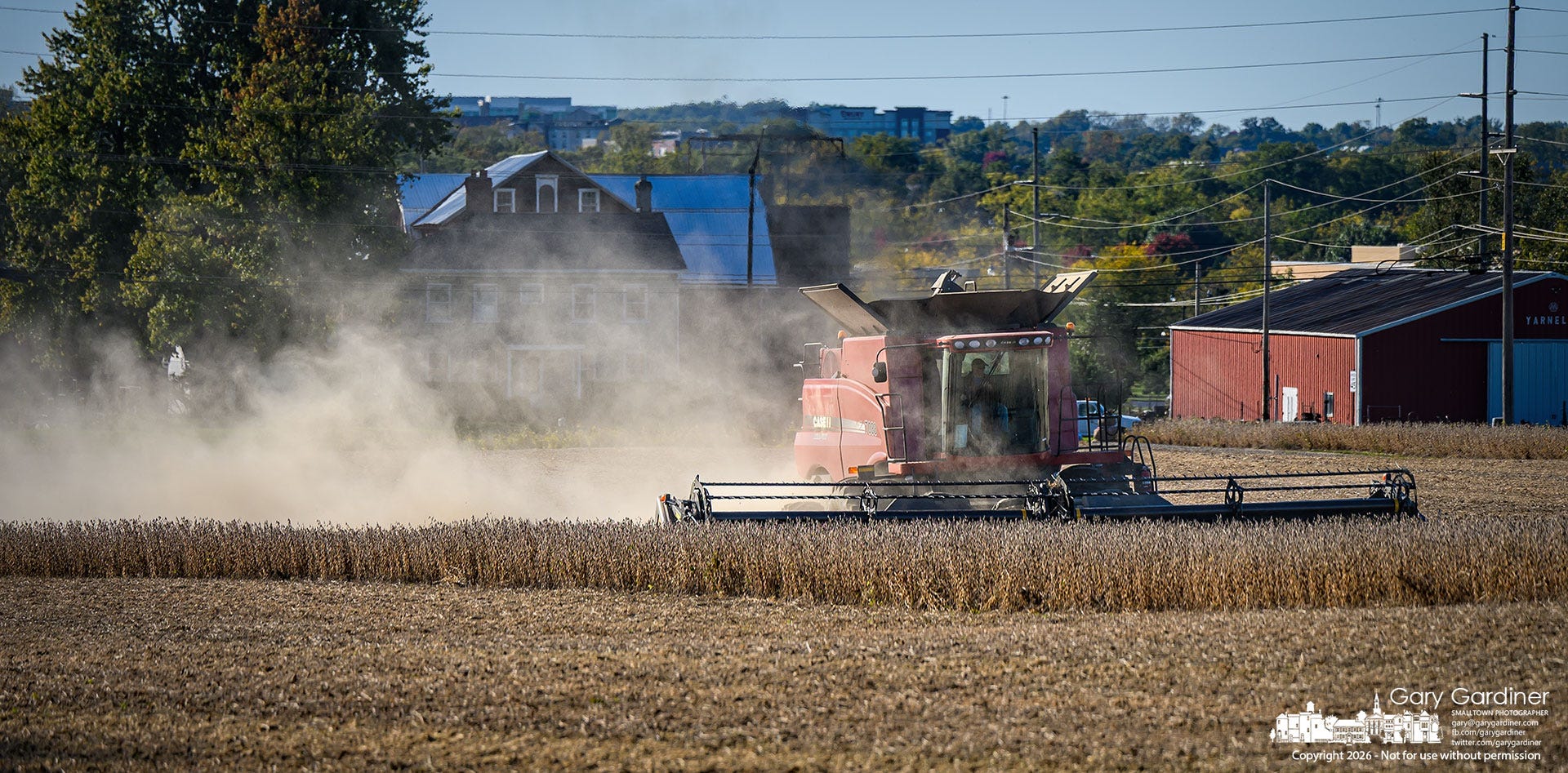
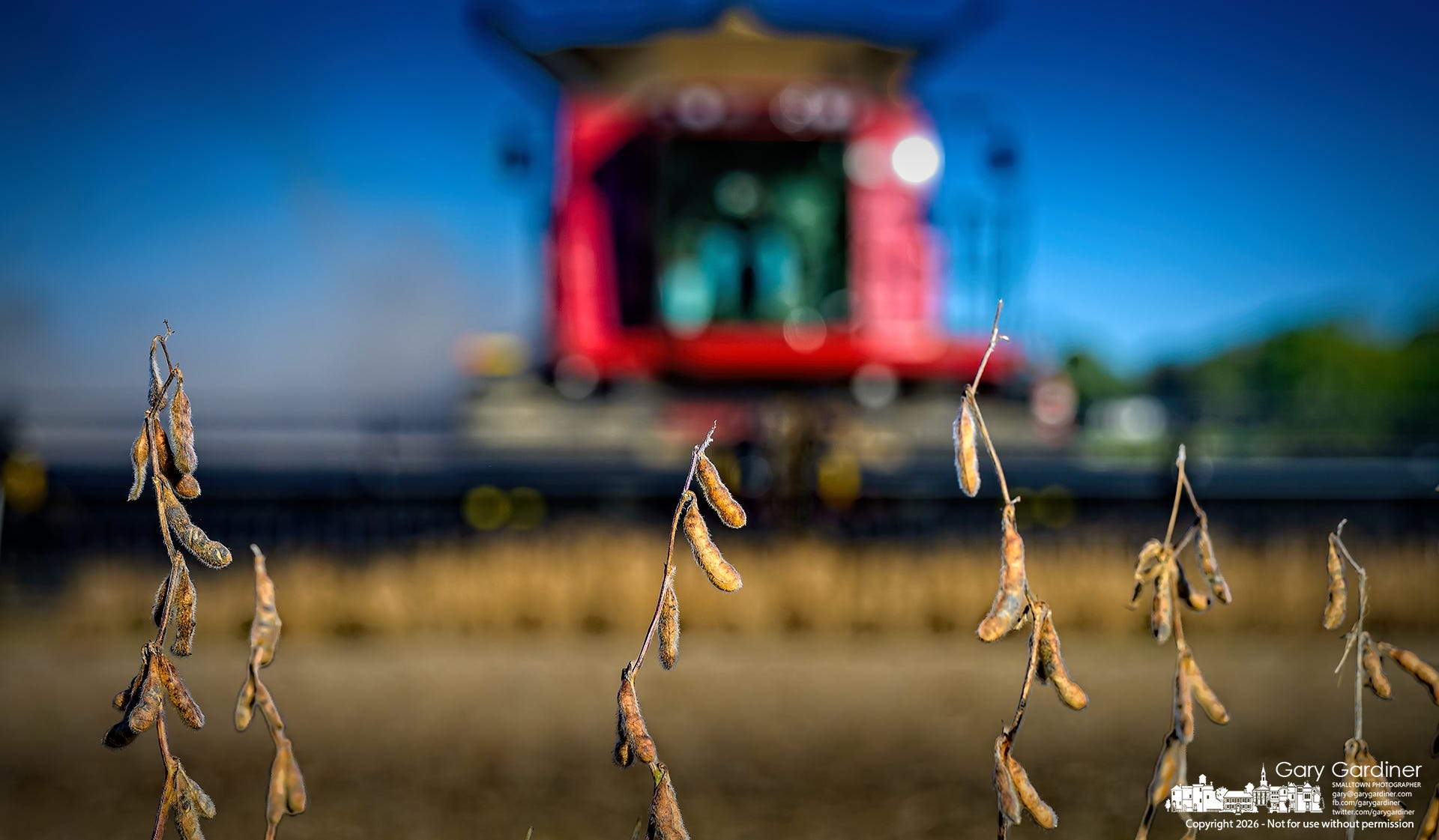
The two-day operation left bare ground where mature soybeans had stood just hours earlier, marking the end of another growing season on farmland increasingly surrounded by residential and commercial development near Africa and County Line roads.
The Yarnell family owns about 50 acres of farmland in Westerville, most of it leased for growing soybeans and corn. Yarnell continues to cut and bale hay himself in a smaller field along Africa Road, while the McNamaras handle the larger crop fields. Soybeans have become the preferred crop as declining corn prices have made planting corn less attractive.
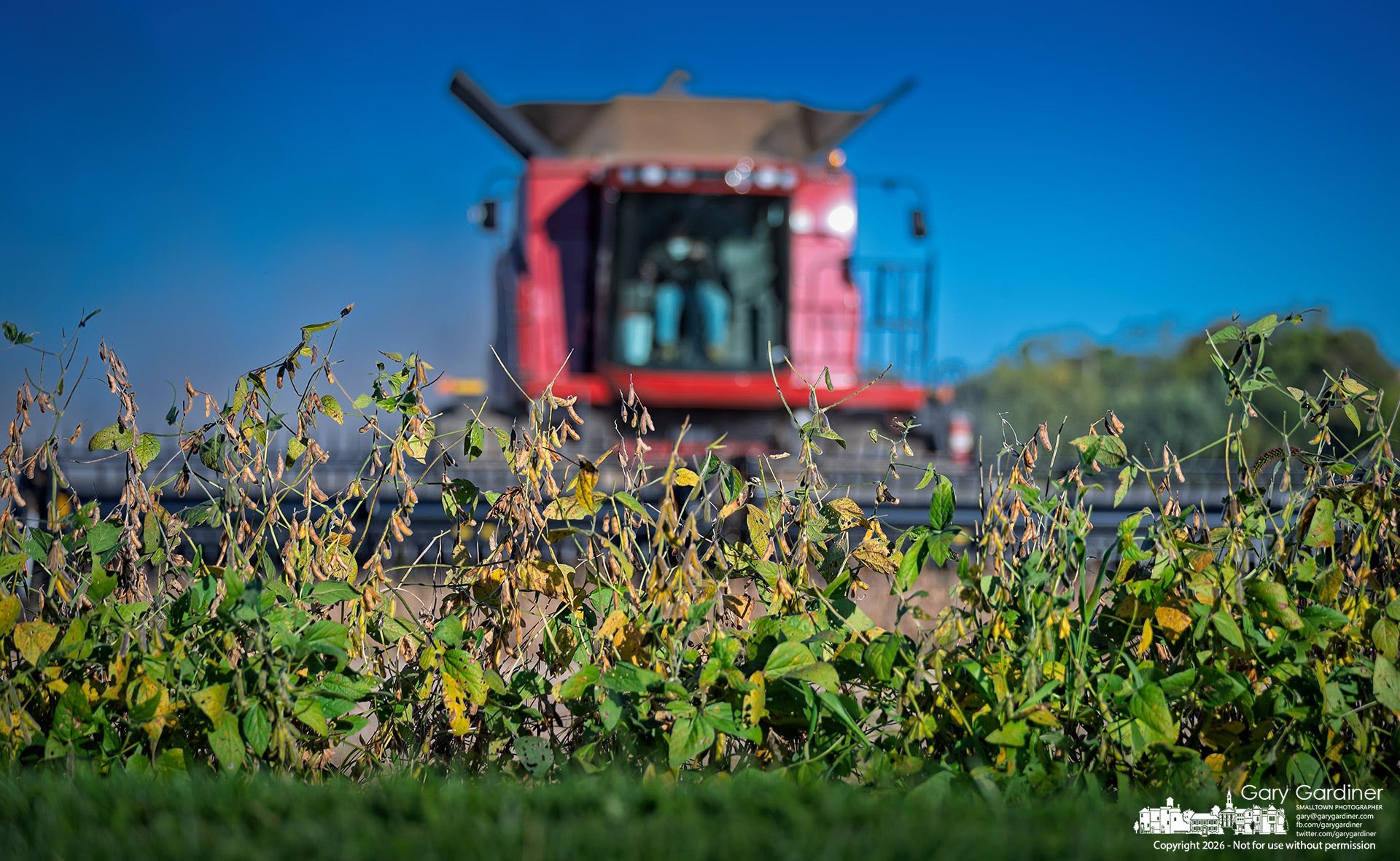
Along the edges of the fields near Africa Road and Cleveland Avenue, narrow strips of soybeans were left standing. Bright streetlights along the roads have kept those plants growing longer than the rest of the crop, leaving them too green to harvest. Mixing them with the dry soybeans would raise the moisture content and reduce the load's value. The McNamaras plan to return in several days to mow down the remaining plants.
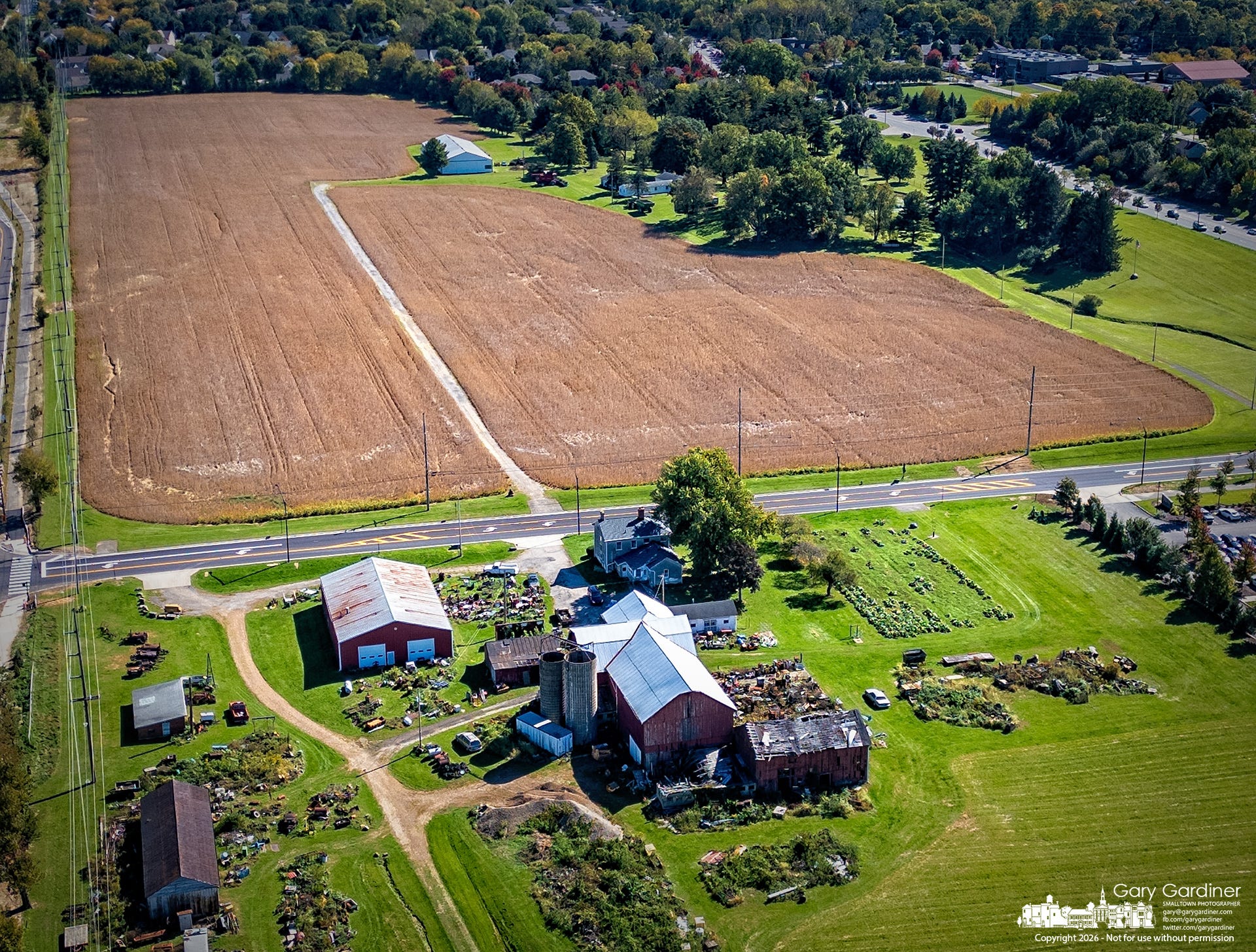
The historic Yarnell barn stood behind the combine as it worked the western field Tuesday, a reminder of the property’s agricultural history. The barn is among the remaining buildings from a time when the family’s farming operations covered several hundred acres of what is now developed Westerville.
Yarnell remembers when his grandfather raised cattle and dairy cows on farmland that stretched across much of what is now developed Westerville. The family later operated a popular farmers’ market that drew visitors from across the area. Today, the historic barns and remaining fields are reminders of a time when farming, rather than development, defined this part of the city.
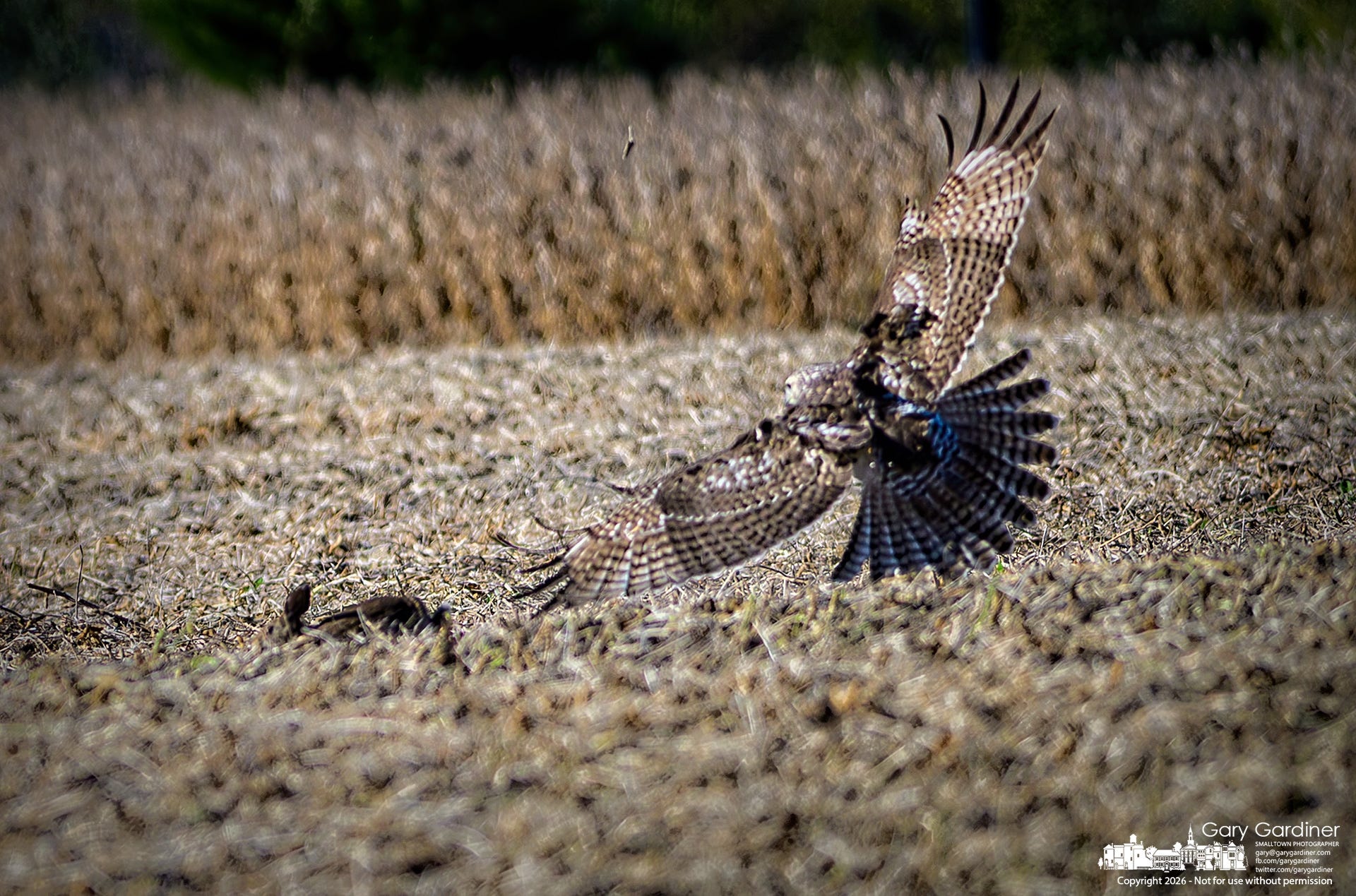
Monday’s work also offered glimpses of life around the farm. A resident red-tailed hawk swooped across the harvested ground in pursuit of a rabbit, spreading its wings as it closed in before the rabbit escaped. Nearby, a neighbor’s young son stood beneath a tree and waved to the combine operator as the machine worked through the eastern field.
The scenes unfolded against a changing landscape where working farmland borders neighborhoods, busy roads, and new construction. From above, the contrast is especially clear, with the Yarnell fields surrounded by development that has gradually replaced much of the area’s agricultural land.
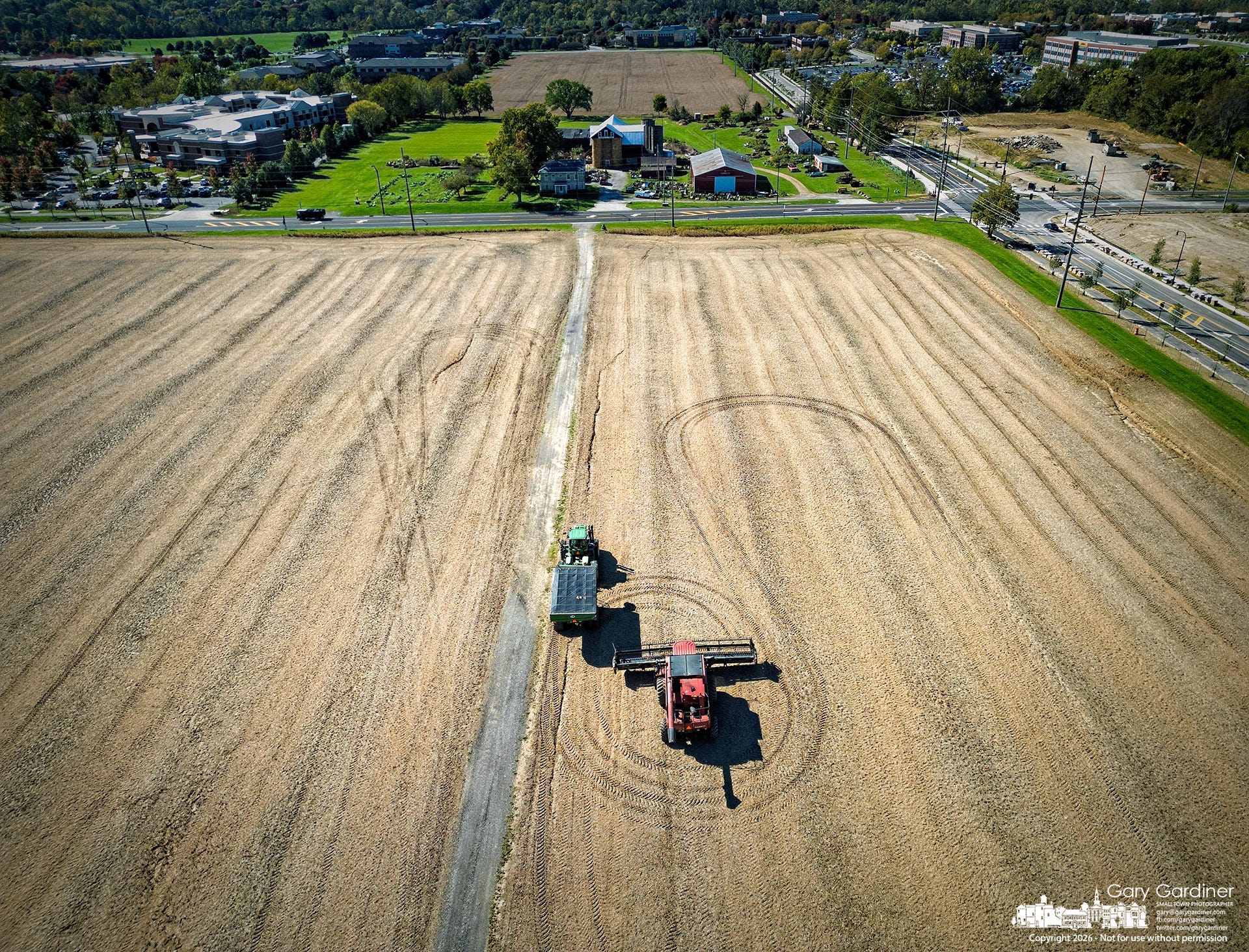
The fields will remain largely undisturbed through winter before the McNamaras return in spring to plant another crop of soybeans or corn. For now, the dust has settled, and the land lies bare, waiting for another growing season on one of the remaining pieces of Westerville’s farming past.

More about the Yarnell Farm
The Last Farmer in Westerville

At the corner of Africa and County Line roads, Westerville’s past is cut, dried, baled, loaded by hand, and hauled away in a hay wagon.
Because this post is public, you’re encouraged to share it on social media.
The Westerville News is a reader-supported publication by Gary Gardiner, a lifelong journalist who believes hyper-local reporting is the future of news. This publication focuses exclusively on Westerville—its local news, its influence on Central Ohio, and how surrounding areas shape the community.
Reader funding, including subscribers, protects editorial independence, so coverage is guided by journalists rather than owners or corporate profit goals. It also reduces pressure to chase clicks, letting the newsroom focus on stories worth readers’ time. And it helps keep the site accessible to everyone, including people who can’t pay or live in places where a free press is under threat.
Explore more hyper-local reporting by subscribing to The Hilliard Beacon, Civic Capacity, Marysville Matters, The Ohio Roundtable, Shelby News Reporter, This Week in Toledo, and Into the Morning by Krista Steele.
